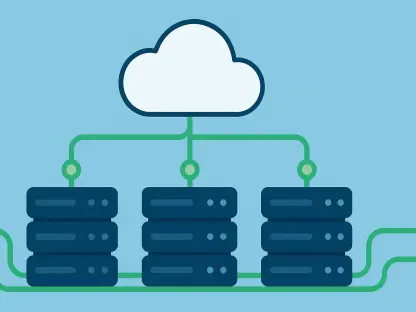

The once-ubiquitous dream of a frictionless global internet has collided with a world of rigid legal borders and digital fences, forcing every technology executive to rethink where their information lives and who holds the keys to it. For years, the prevailing wisdom suggested that data was a nebulous cloud of ones and zeros that transcended geography, but the current geopolitical climate of 2026 has definitively proven otherwise. Today, the location of a server is not just a technical detail; it is a matter of legal survival and corporate integrity. As regional powers assert their authority over the digital realm, data sovereignty has transformed from a niche compliance concern into the central nervous system of any viable long-term IT architecture.
The sudden shift in perspective reflects a broader realization that digital independence is non-negotiable. When a single legislative update in a foreign capital can effectively disconnect a company from its customer database or render its primary cloud storage illegal, the illusion of the “borderless” web evaporates. Strategic planners now treat information assets with the same territorial caution previously reserved for physical factories or oil reserves. This movement toward digital autonomy is not merely a defensive posture against fines; it is a proactive attempt to decouple business operations from the unpredictable whims of international politics and changing jurisdictional mandates.
The strategic conversation has moved from the backrooms of the IT department to the forefront of the boardroom. Executives now understand that the failure to govern data according to local laws can result in more than just a slap on the wrist. It can lead to the total seizure of operational assets or a permanent loss of market access. In this environment, the “where” and “how” of data management have become as critical to a brand’s value as the products it sells. Control is the new currency, and those who cannot prove they possess it are finding themselves at a severe competitive disadvantage.
The End of the “Borderless” Data Illusion
The digital world was once envisioned as a vast, open frontier where innovation moved faster than any government could regulate. This assumption allowed companies to prioritize speed and scale above all else, often ignoring the physical infrastructure that made the internet possible. However, the current reality of 2026 is one of “splinternets” and localized digital zones. Data sovereignty—the concept that information is governed by the laws of the territory in which it resides—is no longer a theoretical debate among scholars. It is a daily operational reality that dictates how software is built, where it is deployed, and how it is serviced.
The shattering of the borderless illusion has forced a massive re-evaluation of global IT footprints. In the past, an enterprise might have hosted its entire global operation from a handful of data centers in North America or Europe. Today, that approach is a liability. Every new market expansion now requires a deep dive into local data residency requirements, as governments increasingly demand that information about their citizens remains within their physical borders. This is not just about keeping the lights on; it is about ensuring that a company’s most valuable intellectual property is not subject to foreign subpoenas or arbitrary seizures.
As these borders harden, the strategy for digital expansion has become inherently fragmented. Companies are moving away from the “one-size-fits-all” global infrastructure model toward a more decentralized approach that respects local sensitivities. This transition has birthed a new era of localized technology stacks, where regional autonomy is prioritized over global efficiency. The goal is no longer just to reach as many people as possible, but to do so in a way that ensures the organization maintains its legal and operational sovereignty, regardless of how the geopolitical landscape might shift in the coming months.
Why Control Is the New Currency in a Globalized Economy
In the current economic environment, the stakes of data governance have escalated from a matter of IT policy to a fundamental risk management priority. The financial risks associated with losing control over information assets are staggering and potentially ruinous. With the average cost of a data breach now approaching $4.9 million, the price of an oversight is far too high for any modern enterprise to ignore. This financial pressure is a primary driver behind the elevation of data sovereignty to a board-level issue, where the focus has moved beyond simple security to the broader concept of digital self-determination.
The regulatory landscape has exploded into a complex patchwork of requirements that differ wildly from one region to another. From the established norms of GDPR to the rapidly evolving mandates across Asia and North America, staying compliant requires an unprecedented level of granular visibility. Organizations must now be able to prove not just that their data is secure, but exactly where every byte is stored at any given moment. This demand for transparency has turned data residency into a competitive differentiator; businesses that can guarantee sovereign control are winning the trust of high-value clients who are equally concerned about their own legal exposures.
Moreover, sovereignty is increasingly viewed through the lens of operational continuity. In a world where trade wars and political sanctions can lead to the sudden termination of service from global providers, having total control over one’s data is the only way to ensure the business remains functional. The focus has shifted toward protecting the company’s most valuable assets from external interference. This means that sovereignty is no longer just a box to check on a compliance form; it is a strategic hedge against a volatile global economy where information can be weaponized as easily as any physical resource.
The Three Pillars of Modern Sovereignty: Location, Control, and Portability
True autonomy in the digital age is a multi-dimensional puzzle that requires more than just knowing the physical address of a server. To build a truly sovereign IT strategy, organizations must address the three interconnected pillars of geographic residency, administrative authority, and workload portability. The first pillar, residency, remains the most visible, yet it is often the most misunderstood. Knowing that a server sits in a specific city is only the beginning; IT leaders must now investigate the jurisdictional authority of the service providers themselves. If a local server is managed by a foreign company, that data may still be subject to the laws of the provider’s home country, creating a “jurisdictional trap.”
The second pillar involves closing the administrative access gap, which is often the weakest link in a sovereign strategy. It is no longer enough to secure the data itself; organizations must identify exactly who holds the “keys to the kingdom.” This requires strict protocols to ensure that administrative access is restricted to authorized personnel who reside within the same jurisdiction as the data. By preventing foreign government overreach through administrative backdoors, companies can maintain a much higher level of trust with their local stakeholders. This level of oversight demands a fundamental change in how IT teams are structured and how they interact with their global service providers.
Finally, the pillar of portability addresses the persistent threat of provider lock-in. True sovereignty is impossible if an organization is technically or financially trapped within a specific vendor’s ecosystem. If the cost or complexity of moving data to another provider is too high, the organization has effectively ceded control to that vendor. To combat this, modern strategies prioritize the use of open standards and containerized applications that can be moved across different clouds or back to on-premises environments without massive re-engineering. This ability to “vote with their feet” is the ultimate insurance policy for any enterprise seeking to maintain its digital independence.
Navigating the Cloud Dilemma Through Hybrid Architectures
The initial enthusiasm for the public cloud was driven by the promise of unlimited scale and reduced overhead, but it often came at the cost of visibility and control. In 2026, the strategy has matured, moving toward a tiered approach that utilizes hybrid and multi-cloud models to maintain a “sovereign-by-design” posture. Rather than entrusting all workloads to a single global hyper-scaler, IT leaders are carefully distributing their assets across a mix of private clouds, local providers, and traditional on-premises systems. This ensures that the most sensitive and highly regulated data remains under the closest possible supervision.
Innovation in hardware and infrastructure has also provided new tools for navigating this dilemma. The rise of modular data centers and containerized “AI pods” allows companies to deploy sovereign compute capacity directly on their own premises, bypassing the constraints of overcrowded public data centers and strained power grids. These modular solutions provide the same agility as the cloud but with the physical security of a private facility. This allows organizations to keep their most critical processing tasks close to home, ensuring that they can maintain operations even if their connection to the broader cloud is interrupted or compromised.
Furthermore, the convergence of resilience and governance has been solidified by updated security frameworks like NIST CSF 2.0. These standards now emphasize governance as a core pillar of cybersecurity, acknowledging that technical defenses are insufficient if an organization lacks the oversight to manage how its data flows during a crisis. A resilient strategy is now defined by the ability to maintain sovereignty even under pressure. By building governance into the very fabric of their infrastructure, businesses are creating a more robust foundation that can withstand both technical failures and the shifting winds of global regulation.
AI Sovereignty: The Next Strategic Frontier
As Artificial Intelligence becomes the primary engine of business value, the conversation about sovereignty has expanded to include the models themselves and the insights they generate. AI sovereignty is now a top-tier priority, as organizations realize that training proprietary models on third-party platforms could result in the loss of their most valuable intellectual property. There is a growing concern that the “intelligence” derived from a company’s unique data could be inadvertently absorbed into a provider’s global model, effectively diluting the organization’s competitive advantage and ceding control of its decision-making logic.
Relying on external AI services also introduces a new form of “black-box” dependency risk. If an organization’s core business processes are tied to an AI model hosted in a foreign jurisdiction, that organization is vulnerable to changes in that country’s laws or the provider’s terms of service. This has led to a surge in demand for localized AI environments where models can be trained and run within the organization’s own sovereign borders. Strategy now involves a rigorous vetting process for the entire AI supply chain, from the origins of the training data to the location of the live inference servers, to ensure total alignment with sovereign requirements.
Securing this AI supply chain is not just a technical challenge but a strategic imperative. Forward-thinking companies are investing in private AI infrastructure that allows them to maintain full ownership of their weights, biases, and outputs. By doing so, they protect their intellectual property and ensure that their AI-driven insights remain a private, sovereign asset. This approach prevents the creation of a new digital divide where only a few global entities control the most advanced intelligence tools, allowing individual organizations to chart their own course in the AI-driven economy.
Frameworks for Building a Sovereign-First IT Strategy
The transition toward a sovereign-aware strategy required a fundamental overhaul of how digital systems were conceptualized. Organizations moved beyond simple storage solutions and began implementing comprehensive inventory mapping and data classification systems. They categorized information not just by its sensitivity or its use case, but by its jurisdictional requirements, ensuring that high-value assets were kept in the most tightly controlled environments. This structured approach allowed businesses to visualize their digital footprint with enough clarity to identify potential sovereign risks before they became active liabilities.
Successful enterprises also adopted workload portability standards as a core technical requirement. By utilizing technologies like Kubernetes and advanced containerization, IT teams ensured they could shift applications between different regions or cloud providers without the need for massive re-engineering projects. They treated portability as a non-negotiable feature in every procurement cycle, effectively future-proofing their architecture against the threat of vendor lock-in. This flexibility gave leadership the confidence to explore new markets, knowing that they could withdraw or relocate their digital assets if the local regulatory environment became unfavorable.
Ultimately, the process of establishing sovereignty-centric vendor assessments became a mandatory part of corporate governance. Procurement teams updated their protocols to include rigorous audits of provider access logs, legal headquarters locations, and data movement policies. They demanded that service providers offered the same level of transparency and local accountability that the enterprise itself was required to provide. These steps created a culture of accountability where every partner in the digital ecosystem was expected to align with the organization’s sovereign goals. By embedding these principles into the design and procurement phases, leaders ensured that their digital infrastructure remained a resilient foundation for growth rather than a source of hidden legal risk.