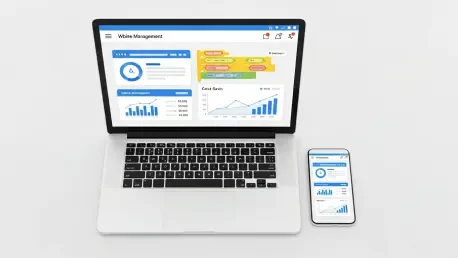

Providing essential water and wastewater services to approximately sixteen million people across London and the Thames Valley requires a digital infrastructure that is as resilient as the physical pipes running beneath the streets. Over the recent years, the organization witnessed a seismic shift in how its customers choose to interact, with digital touchpoints doubling to represent more than sixty percent of all engagement. This transition necessitated a website that functioned not merely as a digital brochure but as a high-performance transactional hub capable of handling billing, service reporting, and account management. To address these demands while maintaining fiscal responsibility, the company undertook a strategic overhaul of its content management system. By moving away from a complex proprietary platform toward a streamlined open-source solution, the utility managed to achieve a ninety percent reduction in its operational costs while improving site performance and user experience.
Identifying the Need for a New Platform
The Financial Strain: Assessing Proprietary Limitations
The previous content management system, Sitecore, was originally designed to support enterprise-level commerce and marketing automation, features that far exceeded the practical requirements of a regional utility provider. Maintaining such a high-end platform introduced a significant financial burden that became difficult to justify as the organization sought to optimize its spending. Expensive annual licensing fees were only the beginning of the expenditure, as the proprietary nature of the software also necessitated high hosting costs to ensure stability under heavy traffic loads. Furthermore, the complexity of the ecosystem required a niche set of specialized developers who commanded premium salaries in the competitive technology market. This combination of recurring costs created a rigid financial structure that limited the company’s ability to pivot or invest in other areas of digital innovation that might directly benefit the customer base in more tangible and effective ways.
Shifting away from a legacy proprietary system allowed the leadership team to align their technical stack with realistic budgetary constraints and operational realities without sacrificing core functionality. The decision-makers recognized that the massive overhead associated with their previous setup was largely paying for features that remained dormant or underutilized in a utility context. By identifying these financial inefficiencies, the utility provider was able to build a business case for a more flexible and cost-effective alternative that prioritized essential services over unnecessary marketing bells and whistles. The transition was not merely about saving money but about reclaiming control over the digital roadmap and ensuring that every dollar spent contributed to a more reliable user experience. This strategic move signaled a broader shift in philosophy, prioritizing pragmatic technology choices that offer high value and sustainable long-term maintenance costs for the company.
Resolving Operational Challenges: Streamlining Internal Workflows
Beyond the purely financial considerations, the legacy system presented significant operational hurdles that hindered the internal team’s ability to respond to customer needs in a timely manner. The interface was notoriously difficult for non-technical employees to navigate, creating a dependency on IT specialists for even the most basic content updates or layout changes. This bottleneck became particularly problematic during periods of high demand or when service alerts needed to be published across the site immediately to inform the public. When technical barriers prevent communications staff from posting urgent updates about water quality or infrastructure repairs, the resulting delay can lead to increased call volumes and customer frustration. The need for a more intuitive, user-friendly interface became a top priority for the digital department, as they sought to empower content creators and reduce the time spent on manual administrative tasks.
The implementation of a more accessible platform allowed for a decentralized content strategy where different departments could take ownership of their specific sections without fear of breaking the site’s architecture. Modernizing the workflow meant that emergency notifications, such as alerts about burst water mains or planned service interruptions, could be deployed in a matter of seconds rather than hours. This increased agility was essential for a company responsible for critical public infrastructure, where clear and immediate communication can directly affect the daily lives of millions of residents. By removing the friction from the publishing process, the organization fostered a more proactive digital environment where information was kept current and relevant for the end-user. The shift toward a platform that favored usability over complexity ultimately allowed the utility to better serve its community while reducing the internal frustration that had previously existed.
Strategic Implementation: The Transition to Umbraco
Platform Migration: Adopting Open-Source Solutions
The selection of Umbraco as the primary content management system marked a pivotal turning point in the utility provider’s digital transformation journey. Unlike the previous proprietary model, this open-source platform offered a flexible architecture that could be tailored specifically to the unique needs of a large-scale water utility without the burden of restrictive licensing. The migration process involved moving vast amounts of data and ensuring that existing integrations with customer billing systems and service maps remained intact during the switch. By utilizing a cloud-based infrastructure, the technical team was able to improve the site’s scalability, allowing it to handle sudden spikes in traffic during major weather events or service outages. This move to the cloud also simplified the deployment process, enabling developers to push updates more frequently and with greater confidence in the system’s stability for users.
Adopting an open-source framework also provided the organization with access to a broader pool of development talent and a vibrant community of experts who contribute to the platform’s ongoing security and improvement. This reduced the reliance on expensive, specialized agencies and allowed the internal team to collaborate with a wider range of partners to drive digital innovation forward. The inherent flexibility of the new system meant that the utility could integrate third-party tools and APIs more easily, creating a more cohesive ecosystem for customer interactions. From a development perspective, the shift meant less time spent managing the underlying platform and more time focused on building features that improve the customer journey. This technical liberation was key to the project’s success, as it allowed the company to remain agile in a digital landscape where customer expectations for speed and reliability are constantly evolving.
Analyzing the Results: Efficiency and Scalability
The most immediate and striking result of the migration was the realization of a ninety percent reduction in costs specifically related to the content management system and its associated maintenance. This massive saving was achieved by eliminating the high annual licensing fees of the proprietary software and moving to a more efficient, usage-based hosting model in the cloud. Such a significant budget reclamation provided the utility with the financial flexibility to reinvest in other critical areas of its digital roadmap, such as improving the mobile application and enhancing self-service tools for account management. These efficiencies were not just limited to direct financial outlays but also included the time saved by the internal teams who no longer had to struggle with a complex and unintuitive system. The return on investment for the project was realized much faster than initially projected, proving that open-source solutions deliver performance.
Beyond the financial gains, the site’s performance metrics showed significant improvements in load times and overall stability, which directly translated to higher customer satisfaction scores for digital interactions. The utility now manages a platform that can grow alongside its user base, providing the scalability needed to support sixteen million customers as more of them migrate to digital-first communication. The success of this project has served as a blueprint for other departments within the organization, demonstrating the benefits of choosing pragmatic, fit-for-purpose technology over generic enterprise solutions. By focusing on the core needs of the business and its customers, the company has built a digital foundation that is both robust and sustainable for the long term. This lean approach to technology management has positioned the provider as a leader in digital efficiency, showing that it is possible to modernize legacy infrastructure.
The successful migration from a proprietary content management system to an open-source alternative demonstrated that large-scale utility providers can achieve significant digital modernization without incurring exorbitant costs. By prioritizing platform usability and financial sustainability, the organization established a more responsive infrastructure that better served its vast customer base during critical service periods. Moving forward, the focus should remain on leveraging the newfound agility of the cloud-based system to integrate advanced data analytics and personalized customer interfaces. Organizations facing similar financial pressures might consider auditing their current technology stacks to identify where underutilized features are inflating operational budgets unnecessarily. The shift toward modular, open-source frameworks provided a clear path for future-proofing digital assets while ensuring that resources were allocated to areas of greatest impact. The transition proved that strategic technical decisions lead to superior results.