
The digital infrastructure that sustains modern civilization relies on a sprawling, often invisible web of open-source software that powers everything from global banking systems to the latest generative artificial intelligence models. To safeguard this essential foundation, an unprecedented coalition of industry leaders, including Google, Microsoft, Amazon, Anthropic, and OpenAI, has committed a collective $12.5 million to fortify the security of the global open-source ecosystem. This move signals a fundamental shift in how the world’s most powerful corporations perceive community-driven code, transitioning from viewing it as a convenient, free resource to recognizing it as a critical piece of national and economic infrastructure. By providing this substantial financial and technical backing, these organizations are attempting to mitigate the systemic vulnerabilities that have long plagued the “internet’s backbone,” ensuring that the transition into a more automated future remains secure for billions of users worldwide.
Coordinating Industry Oversight and Addressing Modern Risks
Strategic Management: The Role of Specialized Foundations
The successful deployment of such a significant investment requires a highly structured administrative framework to ensure that funds reach the most vulnerable and impactful areas of the software supply chain. Consequently, the distribution of these resources is being managed by the Alpha-Omega Project in coordination with the Open Source Security Foundation (OpenSSF). These entities act as the central nervous system for the initiative, utilizing their deep ties within the developer community to identify high-risk projects that lack the institutional support necessary to withstand modern cyberattacks. By funneling capital through these established non-profit organizations, the coalition provides volunteer maintainers with the professional-grade security tools and financial stipends required to conduct deep-dive audits and implement long-term stability fixes. This collaborative model moves the industry away from reactive, one-off patches toward a sustainable lifecycle of digital resilience.
Beyond mere financial aid, this structured oversight addresses the fundamental disconnect between corporate users and the independent creators of open-source libraries. For many years, large enterprises integrated community-built code into their proprietary products without contributing back to the maintenance of those original sources. The current initiative seeks to rectify this imbalance by establishing a permanent support structure that treats open-source maintenance as a professional discipline rather than a hobbyist pursuit. By providing a reliable stream of funding and expert guidance, Alpha-Omega and OpenSSF are helping to professionalize the “digital commons.” This ensures that when a critical vulnerability is discovered in a widely used library, there is a clear, well-resourced path to remediation that does not rely solely on the spare time of a few exhausted developers working in isolation.
The Impact of AI-Driven Threats on Global Repositories
The urgency defining this new security mandate is driven largely by the rapid evolution of artificial intelligence, which has fundamentally altered the cybersecurity landscape between 2025 and 2026. While legitimate software engineers use generative AI to accelerate development, malicious actors are simultaneously leveraging these same tools to automate the discovery and weaponization of software flaws at an unprecedented scale. This technological arms race has placed an immense strain on the open-source community, as hackers can now launch thousands of sophisticated probes against public repositories in a fraction of the time it previously took. The result is a dangerous escalation where the speed of offensive operations threatens to outpace the defensive capabilities of human maintainers, necessitating a complete rethink of how global codebases are monitored and protected.
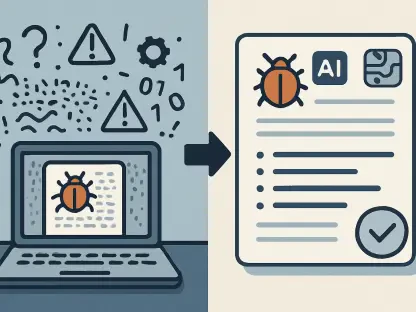
This surge in automated aggression has given rise to a phenomenon known as “vulnerability noise,” where AI models flood open-source repositories with thousands of automated bug reports. While some of these reports identify genuine issues, a vast majority are either low-priority, redundant, or entirely spurious, creating an overwhelming administrative burden for the volunteers who manage these projects. This influx of data creates a “denial of service” effect on human attention, leading to maintainer burnout and a higher probability that a truly critical zero-day exploit will be lost in the shuffle of AI-generated noise. The industry coalition recognizes that without institutional intervention, this cycle of fatigue could lead to a collapse in developer confidence, potentially causing key maintainers to abandon projects that are vital to the functionality of the modern internet.
Implementing AI-Driven Defenses and Securing Future Growth
Scaling Proactive Solutions: From Detection to Autonomous Repair
To counter the rise of automated exploits, the tech coalition is moving beyond traditional, reactive security measures in favor of proactive, AI-driven remediation strategies. Google has been at the forefront of this movement, introducing specialized frameworks like Big Sleep and CodeMender to transform how vulnerabilities are handled in real-time. Big Sleep utilizes large language models to act as a sentinel within the code review process, searching for complex patterns that human auditors or standard “linter” tools might overlook. This system has already proven its worth by identifying high-consequence zero-day flaws in widely used software like SQLite before they could be exploited by threat actors. This capability demonstrates that while AI has created new risks, it also provides the only viable means of defending a digital landscape that has become too vast for manual oversight.
Building upon the detection capabilities of Big Sleep, the introduction of CodeMender represents the next phase of autonomous defense by focusing on the actual repair of compromised code. CodeMender operates as an intelligent agent that can analyze a detected flaw, suggest a logically sound patch, and even rewrite faulty code segments in real-time with minimal human intervention. This shift from “discovery” to “remediation” is critical because it addresses the bottleneck that occurs after a vulnerability is found. By automating the creation of high-quality patches, these tools allow human maintainers to focus on high-level architectural decisions rather than getting bogged down in repetitive security fixes. This synergy between human expertise and machine speed ensures that the window of opportunity for hackers to exploit a known flaw is reduced from weeks or months to just a few minutes.
Protecting the Economic Engine and Supporting Human Talent
The motivation behind this $12.5 million investment is not merely altruistic; it is a calculated effort to protect the global economy from the cascading failures that result from insecure software. Modern commercial platforms, cloud environments, and enterprise services are almost entirely built upon a stack of open-source dependencies, meaning a single flaw in a common library can jeopardize thousands of businesses and millions of end-users. By securing these foundational blocks, tech giants are effectively insuring their own commercial products and the digital stability of their clients. This initiative acknowledges the hard reality that while open-source software is “free” to download, the cost of maintaining its integrity is substantial. Continued investment is required to ensure that the libraries powering global finance, healthcare, and logistics remain robust against the sophisticated threats emerging in the current era.
The final component of this strategic effort focuses on the human element by addressing the growing “crisis of confidence” among the independent developers who maintain the world’s most important code. By putting advanced AI-driven security tools directly into the hands of these maintainers, the tech coalition is helping to transform the tide of automated noise into actionable, manageable tasks. This level of institutional support validates the decades of uncompensated labor provided by the open-source community and sends a clear message that the responsibility for global digital safety should not rest on the shoulders of individuals alone. As the industry looks toward 2027 and 2028, the focus must remain on fostering a collaborative environment where technical innovation and human stewardship work in tandem to keep the internet’s backbone stable, open, and resilient against the complexities of the machine-learning age.