
The rapid evolution of AI in software development has introduced a powerful paradox, offering unprecedented coding speed while simultaneously raising profound security concerns about autonomous agents handling sensitive digital infrastructure. With AI poised to move beyond simple code suggestions to full-fledged development, the industry has been grappling with a critical question: how can organizations unleash this potential without handing over the keys to the kingdom? OpenAI’s latest offering, a desktop command center for managing AI agents, directly confronts this challenge, proposing a framework where autonomy and security can coexist.
When AI Agents Get the Keys to the Codebase Who Holds the Leash
The primary barrier to adopting fully autonomous AI in software development has been the issue of trust. Granting an AI agent the ability to write, modify, and deploy code introduces significant risks, from the unintentional introduction of vulnerabilities to the potential for unauthorized access to critical systems. Without robust controls, these agents represent a powerful but unpredictable force within a secure environment, making many enterprise leaders hesitant to integrate them into core workflows.
This hesitation has created a clear demand for solutions that provide guardrails for AI autonomy. Developers need tools that allow them to delegate complex tasks to AI agents without constantly supervising every line of code. Consequently, the industry has been searching for a system that provides both the efficiency of automation and the assurance of human-centric control, a balance that has remained elusive until now.
The Promise and Peril of Truly Autonomous Software Development
The allure of autonomous software development is undeniable. It promises a future where entire features are conceptualized and built by AI agents working in parallel, freeing human engineers to focus on high-level architecture and innovation. This model could dramatically shorten development cycles and automate the more tedious aspects of coding, such as bug fixes and routine maintenance, leading to a monumental leap in productivity.
However, this promise is shadowed by significant peril. The prospect of multiple AI agents working on the same codebase simultaneously raises concerns about code conflicts, integration challenges, and a general lack of oversight. The central fear is a loss of control, where automated processes introduce complex errors that are difficult to trace and even harder to fix, potentially undermining the very efficiency they were designed to create.
A Command Center for Code Unpacking OpenAI’s New Approach
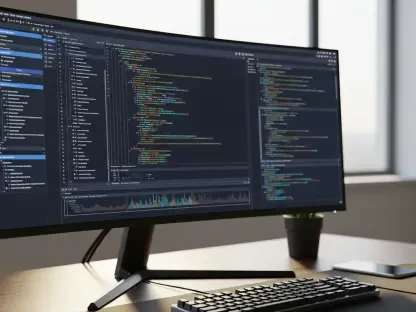
In response to these challenges, OpenAI has introduced a desktop application designed to serve as a command center for orchestrating AI coding agents. Moving far beyond simple code completion, this platform allows developers to manage multiple autonomous agents, each capable of working on complex tasks for extended periods. This represents a strategic shift from AI as a co-pilot to AI as an orchestrated team of specialized developers.
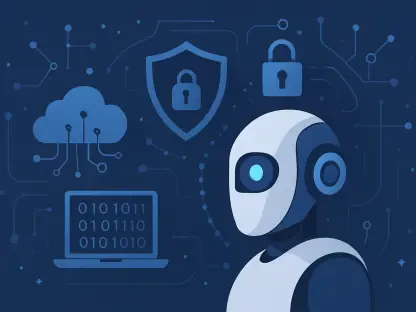
Security is the cornerstone of this new model. The application features a native, system-level sandbox that isolates each AI agent, confining its operations to specific files and directories. Any attempt by an agent to access resources beyond its designated permissions requires explicit approval from the human developer. To foster trust and transparency, OpenAI has made this critical sandbox component open source, allowing the security community to audit its architecture.
Proof in Production OpenAI’s Internal Success Stories and a Transformational Tool
Before its public release, the new platform was rigorously tested within OpenAI, where it has already demonstrated its value. Internal teams have reported significant acceleration in project delivery, with CEO Sam Altman describing the application as a “transformational” and highly prized internal tool. This early success serves as powerful validation of its potential to reshape development workflows.
A compelling case study is the creation of the Sora Android app, a project completed by a small team of just four engineers in only 18 days. This rapid development cycle was attributed to the team’s ability to delegate major features to orchestrated AI agents, showcasing the tool’s capacity to amplify the productivity of small, agile teams. Such results position the application as a proven asset for enterprise-level software development.
From Co-Pilot to Conductor How to Leverage Orchestrated AI in Your Workflow
The transition from using AI as a simple assistant to directing it as a conductor of an autonomous team marks a fundamental evolution in a developer’s role. Instead of focusing on line-by-line coding, engineers can now architect solutions at a higher level, assigning complex tasks and entire features to AI agents. These agents operate within isolated “worktrees,” preventing code conflicts and ensuring that each contribution can be reviewed and integrated seamlessly.
With its availability through ChatGPT subscriptions, the platform has already seen adoption by over a million developers, signaling a strong appetite for more sophisticated AI development tools. This tool provides a clear path for organizations to begin integrating secure, autonomous AI into their processes. By embracing this new paradigm, development teams moved beyond passive assistance, actively orchestrating AI to build more complex software faster and more securely than ever before.