
The rapid advancement of artificial intelligence has introduced powerful digital assistants into our daily lives, yet this progress often comes at the cost of personal data privacy and user control. A new open-source project, however, is challenging this paradigm by empowering individuals to run a fully localized personal AI agent on their own hardware. Developed by Peter Steinberger and a dedicated community, this TypeScript-based system offers a compelling alternative to cloud-centric solutions by integrating with leading large language models while ensuring that user data remains securely on local devices. By bridging popular messaging applications like WhatsApp, Telegram, and iMessage with a local-first gateway, it allows memories and data to be stored as simple Markdown files, giving users unprecedented command over their digital autonomy and privacy.
1. Gateway and Agent Architecture
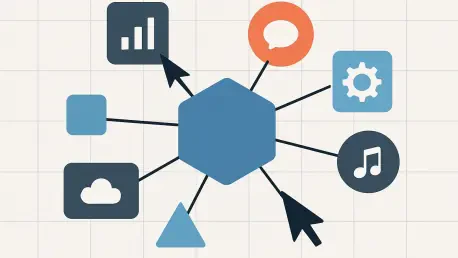
At the heart of the system is a sophisticated architecture that separates its core functions into two main components: a gateway daemon and an agent brain. The gateway is responsible for managing all messaging integrations, binding to a local port to create a secure, private communication channel. This setup allows for secure remote access via SSH tunneling, enabling users to interact with their agent from anywhere without exposing it to the public internet. The gateway also supports multi-channel inboxes, efficiently routing messages to isolated workspaces tailored for different tasks or users. This segregation ensures that contexts do not bleed into one another, maintaining organization and focus. Furthermore, the installation process is streamlined for accessibility, requiring just a few commands via npm to set up a persistent service on macOS, Linux, or Windows, making it approachable for those with a foundational level of technical skill.
The agent component serves as the “brain” of the operation, powered by large language models from providers like Anthropic and OpenAI. This is where the true intelligence lies; the agent can execute shell commands, manage the local filesystem, browse the web, and install dynamic “skills.” These skills are pre-built integrations that connect the agent to a wide array of popular services, including Notion, Spotify, Philips Hue, and Gmail, vastly expanding its capabilities out of the box. For maintenance and security, the system includes built-in tools such as a doctor command for performing security audits and an update command for seamlessly switching between stable, beta, and development channels. This robust design provides a flexible yet powerful framework for creating a highly personalized and adaptable AI assistant that operates entirely under the user’s control, evolving with their needs through a growing ecosystem of community-developed plugins and skills.
2. Real-World Deployments and Automation
The practical applications of a locally controlled AI agent are already being demonstrated across a spectrum of complex tasks, showcasing its potential to revolutionize both personal and professional productivity. Users are deploying the system on spare hardware, such as a Mac Mini, to create an always-on assistant for handling background development work and life administration. For instance, one developer configured their agent to monitor coding sessions via Telegram, where it could pull a code repository, open it in an editor, run tests, generate fixes, and commit the changes if the tests passed cleanly. This same agent also managed calendar alerts by integrating with traffic APIs to provide timely departure notifications. These examples illustrate a shift away from reliance on third-party automation platforms, as users can now create sophisticated, local cron jobs for tasks like monitoring RSS feeds and automatically creating corresponding entries in a to-do application.
Beyond structured professional tasks, the agent demonstrates a remarkable ability to handle dynamic, real-world problems. In one notable instance, a user tasked their agent with making a dinner reservation. When the initial attempt to book through an online service failed, the agent autonomously used its integrated text-to-speech and telephony skills to call the restaurant directly and complete the reservation over the phone. This highlights one of the system’s most compelling features: its capacity for self-improvement and learning. Users have found that the agent can acquire new skills simply by being asked, making it an incredibly malleable tool. This teachable nature transforms it from a simple command-executor into a proactive problem-solver, capable of navigating unforeseen obstacles and adapting its strategy to achieve a user’s goals, truly embodying the concept of a personal digital assistant.
3. Technical Edge and Community Momentum
The system’s technical foundation is both modern and accessible, built on Node 22+ and released under a permissive MIT license that encourages widespread adoption and modification. For declarative setups on macOS and Linux, Nix packages are available, simplifying deployment and ensuring reproducibility. Its versatility is further extended through a rich set of integrations that handle complex data types. It can perform audio transcription using Groq’s Whisper API, generate speech with ElevenLabs, and even manage phone calls by orchestrating Twilio, Deepgram, and ElevenLabs stacks. Users only need to provide their API keys and a simple prompt to have the agent build the necessary skills for these services. Customization is also a core principle, with the agent’s personality defined in an editable SOUL.md file, and entire workspaces can be managed as Git repositories, allowing for version control and easy rollback of configurations.
This powerful technical core is amplified by a vibrant and rapidly growing community that actively contributes to the project’s evolution. A central hub serves as a repository for shared skills and plugins, enabling users to quickly expand their agent’s capabilities without having to build everything from scratch. This collaborative environment fosters rapid innovation, with discussions on platforms like Reddit exploring advanced integrations such as Obsidian synchronization for knowledge management. The development team maintains a brisk pace of releases, continuously fixing bugs, adding features like Vercel AI Gateway support, and optimizing performance to reduce API token costs. Privacy and security remain a focus, with features like per-segment execution approvals and elevated modes for chained commands giving users granular control. This combination of a solid technical base and strong community engagement has created a self-improving, steerable, and open personal agent that stands apart in the AI landscape.
4. Challenges and Cost Realities
Despite its groundbreaking approach, the adoption of a local AI agent is not without its challenges, primarily centering on cost and technical complexity. The heavy reliance on external large language models for processing can lead to significant API costs. One early adopter reported consuming 180 million Anthropic API tokens in just over a week, a figure that underscores the financial commitment required to run a highly active agent. While the system supports the use of local models, which can mitigate these costs, the most powerful models currently remain cloud-based. Furthermore, the setup process demands a certain degree of technical expertise. Users must be comfortable with the command line, manage API keys securely within their operating system’s keychain, and configure permissions for shell access, which can present a barrier for non-technical individuals.
Security is another paramount consideration, as granting an AI agent extensive permissions on a local machine introduces potential risks. The documentation explicitly warns users to be cautious with skills that enable browser automation, as the agent could potentially access sensitive information stored in cookies. While the system incorporates features designed to mitigate these dangers, such as policy audits and mandatory approvals for executing commands, the ultimate responsibility lies with the user to manage the agent’s access levels prudently. This trade-off between power and security is a central theme in the broader conversation about agentic AI. While competitors are exploring hybrid models that run agents in cloud-based workspaces, the project’s local-first ethos continues to resonate strongly with users who prioritize data ownership and are willing to navigate the associated complexities to achieve it.
Forging a Path Toward Agentic Futures
The emergence of this powerful, user-controlled AI framework signaled a definitive shift in the landscape of personal computing. It fundamentally altered perceptions of what a personal AI could be, moving beyond simple chat interfaces toward a future of proactive, context-aware digital companions. The system demonstrated that it was possible to have an agent that was not only highly capable but also inspectable, programmable, and entirely owned by the user. Its on-demand adaptability and deep integration with a user’s digital life presented a compelling vision that resonated deeply within the tech community, suggesting a potential disruption to established app ecosystems. This new paradigm, where intelligence was local and malleable, laid the groundwork for a future where technology served the individual with unprecedented personalization and privacy.