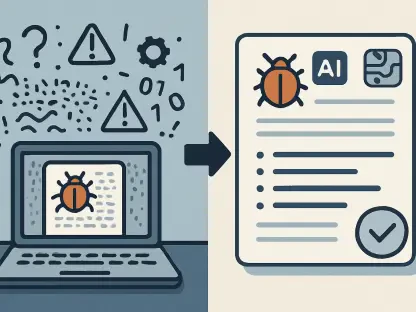

The moment a critical system failure strikes at three in the morning, the fundamental difference between a resilient organization and a failing one emerges not in the complexity of the code but in the immediate psychological response of the engineering staff. In many traditional environments, such a crisis triggers a predictable and costly ritual where developers insist the software functioned perfectly on their local machines while operations teams scramble to stabilize an infrastructure they did not help design. This friction represents far more than a minor technical bottleneck; it serves as a high-interest “cultural tax” that aggressively drains corporate productivity, employee morale, and market agility. When departments operate as isolated islands of expertise, the business loses the inherent speed required to compete in a software-driven global economy. The true measure of a successful transition into modern workflows is found not in the sophistication of automated scripts, but in how quickly the invisible walls between teams collapse to facilitate the solving of shared problems.
As organizations move through 2026, software delivery has shifted from being a supporting function to becoming the primary core competency for nearly every industry. However, a significant gap remains between the massive capital expenditures in cloud infrastructure and the actual realization of business value. While firms spend millions on CI/CD pipelines and advanced orchestration tools, these investments often languish atop fragmented organizational structures that instinctively resist change. A strong DevOps culture functions as the essential connective tissue between high-level business goals and ground-level technical execution. Without a fundamental shift in human behavior—prioritizing radical transparency over defensive silos and institutional learning over individual blame—even the most expensive automation suites will merely serve to accelerate existing inefficiencies. As digital transformation cycles compress, the ability to align human cooperation with technical velocity has become the ultimate competitive differentiator.
The High Cost: Navigating the “Not My Problem” Mindset
The financial implications of a fragmented work culture are often hidden within the line items of delayed releases and high employee turnover. When an organization permits a “not my problem” attitude to persist, it creates a vacuum where responsibility disappears the moment a task leaves a specific department. Developers who are incentivized only by the speed of feature delivery often overlook the operational stability of their code, while operations teams, measured by uptime alone, become incentivized to resist any new changes that might threaten system equilibrium. This inherent conflict of interest creates a stagnant environment where innovation is sacrificed at the altar of risk aversion. The resulting delays in time-to-market can be devastating, as competitors with more integrated cultures seize opportunities while the legacy firm is still debating internal ticket priorities.
Moreover, the psychological impact on the workforce creates a secondary layer of damage that is difficult to quantify but impossible to ignore. Talented engineers often experience burnout not from the difficulty of the technical challenges, but from the bureaucratic friction required to see their work reach production. When the organizational structure treats human beings as modular components rather than collaborative partners, engagement levels plummet. High-performing individuals eventually migrate toward organizations that value cross-functional impact and shared success. Consequently, the “not my problem” mindset acts as a double-edged sword, simultaneously slowing down the technical pipeline while driving away the very talent needed to fix it. Resolving this requires a holistic rethink of how teams are structured and how success is defined within the corporate hierarchy.
The Value Proposition: Why Cultural Transformation Dictates Technical ROI
Investing in technology without addressing the underlying culture is akin to placing a high-performance engine in a vehicle with a broken transmission; the energy is generated, but it never reaches the wheels. Many modern enterprises fall into the trap of believing that the mere presence of advanced tools like Kubernetes or serverless architectures will automatically result in faster delivery. In reality, these tools require a high degree of trust and communication to function effectively. A culture that prioritizes documentation over conversation or hierarchy over expertise will find that modern tools only highlight these internal flaws. To achieve a genuine return on investment, the human operating system of the company must be upgraded alongside the software stack. This ensures that when a new capability is introduced, the team is socially and professionally prepared to leverage it to its fullest extent.
The strategic alignment of human cooperation with technical speed transforms DevOps from a buzzword into a reliable profit center. When teams move toward a state of total transparency, the business gains the ability to pivot with a level of precision that was previously impossible. This agility allows for a more responsive approach to customer feedback, as the distance between an idea and a deployed feature is drastically reduced. Furthermore, a collaborative culture minimizes the “knowledge silos” that often make organizations vulnerable to the departure of a single key employee. By democratizing information and shared responsibility, the business creates a robust ecosystem where collective intelligence drives the technical roadmap. This synergy between people and platforms is what allows market leaders to maintain their dominance in an increasingly volatile digital landscape.
The Core Foundation: The Four Pillars of a Sustainable DevOps Environment
Establishing a resilient culture requires more than just a mandate from the executive suite; it necessitates the construction of four foundational pillars that support every aspect of the delivery lifecycle. The first pillar is radical collaboration that extends far beyond the traditional Dev-Ops divide. In a modern context, this includes the seamless integration of security (DevSecOps) and quality assurance from the very inception of a project. By embedding security protocols and testing frameworks into the earliest stages of development, organizations avoid the “bottleneck” phase where a product is finished but cannot be released due to late-stage vulnerabilities or bugs. This proactive approach ensures that stability and safety are built into the DNA of the product rather than being treated as a final hurdle to be cleared before launch.
The second pillar focuses on shared ownership and the adoption of a blameless philosophy. This requires a shift from individual task management to a model where the entire team owns a feature throughout its entire lifetime, from conception through its eventual retirement in production. Central to this pillar is the implementation of “blameless post-mortems” following any system failure. Instead of searching for a scapegoat to penalize, the organization investigates the systemic weaknesses that allowed the error to occur. This creates a psychologically safe environment where engineers are encouraged to experiment and innovate without the paralyzing fear that a single mistake will end their career. When the focus remains on systemic improvement, the entire organization benefits from the data provided by every failure.
The third pillar involves the psychological integration of automation as a partner rather than a replacement. To overcome the pervasive fear of job displacement, leadership must frame automation as a vital tool to eliminate “toil”—the repetitive, manual, and soul-crushing tasks that lead to professional stagnation and burnout. A healthy culture maintains a “human-in-the-loop” approach, reinforcing the idea that automation exists to amplify the strategic value of the human workforce. By offloading the mundane aspects of deployment and monitoring to software, engineers are freed to focus on high-level architecture and creative problem-solving. Finally, the fourth pillar is iterative learning and the redefinition of failure. A mature culture treats every missed deadline or technical glitch as a valuable learning opportunity. This commitment to continuous improvement ensures the organization remains adaptable, allowing teams to integrate new technologies such as AI-driven workflows with confidence.
The Executive Mandate: Shaping the Cultural Landscape
The evolution of a corporate culture is not a grassroots movement that happens by accident; it is a top-down initiative that requires active leadership. Executives must move beyond simply signing checks for new software and begin modeling the very accountability and transparency they expect from their engineering departments. When leadership demonstrates a willingness to own their strategic failures and break down departmental barriers at the highest levels, it sets a powerful precedent for the rest of the organization. If the C-suite continues to operate in silos, it is unrealistic to expect the development and operations teams to do otherwise. True cultural change begins with leaders who are willing to participate in the process of dismantling the bureaucratic red tape that hampers technical progress.
Aligning incentives with DevOps outcomes is perhaps the most critical task for modern leadership. Traditional Key Performance Indicators (KPIs) often pit teams against one another, rewarding developers for the sheer volume of code produced while rewarding operations for the absolute stability of the environment. These conflicting goals naturally lead to friction. Effective leaders realign these incentives to reward shared business outcomes, such as reducing the “lead time for changes” or improving the overall mean time to recovery. When everyone is measured by the same yardstick of success, the natural tendency toward departmental conflict disappears. Furthermore, leaders must provide “bounded autonomy,” which grants teams the freedom to choose their own tools and methods while remaining aligned with the broader corporate strategy. This balance empowers grassroots innovation while preventing the chaotic proliferation of disconnected technical silos.
Practical Strategies: Implementation Tactics for Cultural Evolution
Moving from the theoretical to the practical requires a series of deliberate interventions designed to dismantle existing silos. This often starts with the physical and digital reorganization of teams to ensure that cross-functional communication is the path of least resistance. Removing the bureaucratic hurdles that prevent a developer from speaking directly to a security analyst or a database administrator can significantly speed up the resolution of complex issues. This might involve restructuring reporting lines so that diverse specialists report to a single product owner, or implementing shared digital workspaces where all information regarding the software pipeline is accessible to every stakeholder. Transparency is the natural enemy of the silo, and it must be enforced through both policy and practice.
Recruitment and education must also evolve to prioritize cultural fit alongside technical expertise. Hiring processes should move away from isolated technical puzzles and toward collaborative assessments, such as pair programming exercises that reveal how a candidate interacts with others under pressure. Organizations that value teamwork must explicitly seek individuals who demonstrate empathy, communication skills, and a willingness to share knowledge. Simultaneously, the organization must provide “protected time” for existing staff to pursue certifications and workshops. This investment in human capital signals that the company values long-term growth over short-term output. When engineers are given the space to learn without the immediate pressure of project deliverables, they are much more likely to contribute to the cultural health of the organization.
Finally, a healthy culture must operationalize feedback loops to ensure that the voices of those closest to the work are heard by those making the strategic decisions. Leaders should establish clear, accessible channels for bottom-up feedback, allowing engineers to suggest process improvements that make the culture feel organic and inclusive. Furthermore, technical metrics should always be interpreted through a cultural lens. While deployment frequency and error rates provide technical data, they often tell a much deeper story about the human interactions within the team. If a specific bottleneck persistently appears, leaders must investigate whether it is a tooling issue or a sign of a breakdown in collaboration. By using data to inform cultural adjustments, an organization can ensure its DevOps transition remains on track and continues to deliver meaningful business success.
The transformation into a DevOps-centric organization was never a purely technical journey. It required a profound shift in how people perceived their roles, their colleagues, and the nature of failure itself. By the time these strategies were fully implemented, the artificial barriers between departments had vanished, replaced by a unified front dedicated to delivering value. Leadership played a vital role by recalibrating incentives and fostering an environment of psychological safety. The shift toward shared ownership ensured that every success was a collective victory and every failure was a lesson learned. Ultimately, the integration of automation served to elevate human potential rather than diminish it, allowing the organization to operate with a level of agility that was previously unimaginable. This comprehensive approach to cultural engineering proved that the human element remained the most powerful engine of innovation in a digital world. Moving forward, the most successful firms will be those that treat culture as a living architecture, requiring constant maintenance and intentional design to thrive in an ever-changing technological landscape.