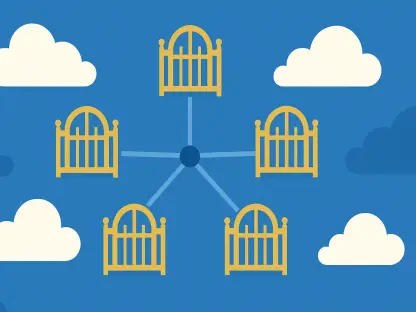

A senior cloud architect sitting in a modern office today faces a paradox that would have seemed entirely impossible a decade ago: the more options that become available, the less those options actually differ in their core technical substance. Hundreds of hours are often spent agonizing over whether to deploy mission-critical applications on Amazon Web Services, Microsoft Azure, or Google Cloud Platform, yet the final operational outcome is frequently identical. This sense of indecision stems from a marketing-induced fog that obscures a fundamental truth: the “Big Three” have reached a state of functional parity. Whether the task involves spinning up a high-performance database or a standard virtual machine, the experience for the developer has become remarkably uniform across all major platforms. This phenomenon suggests that the fierce competition between these tech giants has led to a plateau where technical differences are no longer the primary drivers of business value.
Beyond the Glossy Brochures: The Reality of Functional Convergence
The reality of the current market is that the fierce competition for market share has forced every major provider to replicate the successes of its rivals almost instantly. When one provider introduces a specific instance type or a new networking feature, the others typically follow suit within a few quarters. This rapid imitation has created a landscape where the “unique” selling points mentioned in glossy brochures are often thin veneers over identical underlying capabilities. For most engineering teams, the day-to-day reality involves interacting with APIs and dashboards that, while visually distinct, serve the exact same purpose with nearly identical latency and reliability profiles.
This convergence means that the technical risk associated with picking the “wrong” provider has diminished significantly for standard enterprise workloads. In the past, a specific architectural choice might have been impossible on one platform, but today, the limitations are more likely to be found in a team’s internal skill set rather than the provider’s catalog. While marketing teams work tirelessly to highlight proprietary magic, the truth is that a well-architected system will perform with indistinguishable efficiency regardless of whether the logo at the top of the console is orange, blue, or multicolored.
The Maturity Paradox: Why Cloud Uniformity Matters for Modern Enterprise
The push toward cloud standardization is not a sign of stagnation but rather a signal of a maturing market that has finally stabilized. In the early days of cloud computing, choosing a provider meant choosing a specific philosophy of IT, where one might prioritize developer ease while another focused on legacy integration. Today, it is more akin to choosing a utility provider; the electrons delivered to a factory are the same regardless of which company owns the power lines. This shift is vital because enterprises are moving away from the novelty phase of cloud adoption and into a phase of rigorous cost management and operational efficiency.
Understanding that the core infrastructure has become a commodity allows leadership to stop chasing marginal performance gains and focus on what actually moves the needle for the business. This maturity paradox suggests that as the platforms become more similar, the value shifts from the infrastructure itself to the way an organization manages it. The primary concerns for a Chief Information Officer have evolved from “Which cloud has the best hypervisor?” to “Which provider offers the best integration with my existing business processes and long-term financial commitments?” This environment rewards reliability and scale over the pursuit of unproven, proprietary features.
The Pillars of Parity: Deconstructing Compute, Storage, and AI Requirements
The vast majority of global cloud spending is concentrated in “center of gravity” services that have become virtually indistinguishable among the major players. Compute instance variety is perhaps the most visible example of this uniformity. Whether an organization needs general-purpose resources, memory-optimized clusters, or compute-heavy powerhouses, the menus offered by the leaders feature nearly identical specifications. RAM-to-vCPU ratios, processor architectures from Intel, AMD, or ARM, and even the networking throughput are calibrated to match the same industry standards, leaving little room for meaningful technical differentiation.
The evolution of storage follows a similar trajectory toward total commoditization. Object storage has transitioned from a simple, slow backup tool to the foundational layer for complex data lakes and high-velocity modern applications. All three providers offer nearly identical durability ratings, often cited at eleven nines, along with performance tiers and pricing structures that mirror each other almost perfectly. Furthermore, the burgeoning AI infrastructure requirements have acted as a massive equalizer. While the top-level software frameworks and pre-trained models might vary, the underlying hardware—the massive compute scaling and high-speed networking required for training—relies on the same commoditized silicon, reinforcing the importance of basic, reliable infrastructure.
Strategic Stickiness: How Providers Use Specialized Services to Mask Uniformity
To combat the commoditization of their core business, cloud providers lean heavily into proprietary services designed to create strategic stickiness. This “feature theater” involves the launch of niche tools for serverless orchestration or specialized graph databases that offer high margins for the provider but are applicable to only a small fraction of enterprise workloads. By encouraging customers to build on these proprietary frameworks, providers make it technically difficult and expensive to migrate, even when the underlying compute power is available for a lower price elsewhere. The goal is to move the conversation away from the price per hour of a virtual machine and toward the perceived “innovation” of a locked-in ecosystem.
Economic-driven selection has become the primary tool for navigating this environment. Expert analysis suggests that as technical gaps close, the decision to stay with or join a provider is increasingly based on existing enterprise agreements, bundled software licensing, and the specific skill sets of the internal engineering team. For many, the choice of Azure is dictated by a pre-existing commitment to Microsoft’s productivity suite, while AWS is chosen for its massive ecosystem of third-party integrations. These are business decisions masquerading as technical ones, proving that the competitive battleground has shifted from the data center floor to the procurement office.
The Pragmatist’s Playbook: A Framework for Objective Cloud Selection
Enterprises can avoid the trap of feature chasing by applying a disciplined strategy to their cloud architecture. The first step involves categorizing workloads by their level of commoditization. Identifying which projects truly require specialized, provider-specific tools and which can thrive on standard, interchangeable infrastructure allows a company to maintain future flexibility. By treating the majority of the cloud footprint as a commodity, businesses retain the power to move workloads if a competitor offers a more favorable total cost of ownership.
Prioritizing operational fit over technical hype ensures that the cloud management layer aligns with internal compliance, security, and governance frameworks. Rather than focusing on marginal performance gains, successful organizations evaluate how a provider’s identity management or logging systems mesh with their existing security operations center. Finally, building for portability through containerization and open-source standards remains the ultimate hedge against vendor lock-in. By utilizing these tools, a business can leverage the inherent parity of the Big Three to negotiate better rates, essentially treating their cloud presence as a tradable commodity in a highly competitive market.
The investigation into the landscape of modern cloud computing confirmed that the perceived differences between major providers were largely the result of branding rather than technical disparity. The research indicated that organizations which embraced the commoditized nature of the cloud achieved greater financial predictability and reduced their reliance on proprietary ecosystems. Leaders who implemented container-based architectures and standardized their data layers successfully mitigated the risks of vendor lock-in. These findings suggested that the most effective next step for any enterprise involved a comprehensive audit of their current cloud services to identify where they had unnecessarily adopted proprietary tools. By shifting toward an infrastructure-agnostic mindset, businesses positioned themselves to capitalize on the ongoing price wars between providers. The data ultimately showed that the true value of the cloud was found not in the provider’s unique features, but in the organization’s ability to remain agile and independent in a standardized market.