

The sudden recalibration of revenue expectations by one of the world's leading IT services firms highlights a complex divergence between the rapid adoption of emerging technologies and the persistent stagnation of traditional infrastructure projects. Infosys recently announced a significant

Modern retail environments have reached a critical juncture where relying solely on price increases to drive revenue has become an unsustainable strategy for long-term growth and market stability. The pressure is on for ecommerce businesses to expand through like-for-like volume growth and

Modern data centers increasingly struggle with the dual pressures of managing skyrocketing virtualization costs and the relentless threat of sophisticated ransomware attacks that can cripple infrastructure in minutes. The shift in the landscape of enterprise hypervisors has accelerated rapidly as

Modern financial institutions operate within a landscape where sophisticated criminal networks exploit microscopic cracks in global trade, yet the defense mechanisms remain tethered to the rigid logic of the previous century. For decades, the primary defense against money laundering in the United

The massive volume of siloed data in enterprise environments often acts as a heavy weight rather than a fuel for innovation in the modern corporate world. The recent launch of SAP Business Data Cloud Connect for BigQuery signifies a major shift in how enterprise data is handled within cloud

The digital architecture of modern global commerce produces a staggering volume of information that renders traditional, rule-based monitoring systems effectively obsolete in the face of increasingly sophisticated cyber threats. For years, security teams relied on manually defined thresholds to

Chloe Maraina is a distinguished expert in Business Intelligence, renowned for her ability to transform vast streams of big data into clear, actionable visual narratives. With a professional background rooted in data science, she brings a forward-thinking perspective to the complexities of data
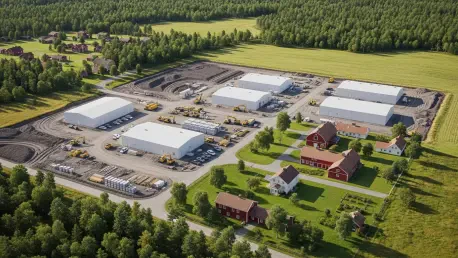
Across the rolling hills of the American Midwest and the quiet valleys of the Appalachian range, a silent but massive industrial revolution is fundamentally altering the horizon as windowless, gray monoliths rise where corn and soy once dominated the landscape. This migration of digital

The rapid transition from experimental generative models to industrial-grade autonomous agents has pushed modern data centers to their physical limits, forcing a radical rethink of how compute resources are delivered at a global scale. As enterprises move beyond the initial phase of training

The retail landscape has entered a period of intense pressure where businesses must prioritize volume growth through productivity gains rather than relying on standard price adjustments. Current analysis from major data platforms indicates a fundamental shift toward like-for-like volume growth,


