
Google’s 22-year commitment to Finnish nuclear power represents one of the longest energy procurement contracts ever signed by a major technology corporation for AI. This massive fifteen-billion-dollar investment, targeted for full implementation across 2027 and 2028, addresses the critical intersection of rapid technological scaling and the global energy scarcity that currently threatens to stall progress in generative computation. As hyperscale data center operators seek to bypass the infrastructure “traffic jam” caused by overloaded local grids, this strategic move in Finland provides a scalable blueprint for the next decade of digital growth. By securing consistent, carbon-free electricity long before the hardware even arrives on-site, the company is positioning itself to handle the immense power draw of next-generation GPU clusters. This approach moves beyond traditional real estate expansion, focusing instead on the fundamental requirement of energy certainty to ensure that the most advanced AI tools remain accessible to a global market without interruption or excessive operational costs.
Strategic Expansion: Regional Infrastructure and Local Advantages
The decision to concentrate resources in Finland stems from the nation’s unique energy profile, particularly in the northern regions where electricity generation consistently exceeds local consumption. Cities such as Hamina, Kajaani, Muhos, and Vaala offer an ideal environment for high-density AI infrastructure due to the presence of a robust national grid managed by Fingrid, which can accommodate the massive electrical loads required for modern training and inference tasks. Unlike other tech hubs where grid congestion has become a primary bottleneck for expansion, Finland’s northern corridor provides the physical and electrical headroom necessary for immediate and future growth. This regional advantage allows for the deployment of massive server arrays that can operate at peak capacity without straining local resources or requiring expensive, time-consuming utility upgrades. By leveraging these existing strengths, the tech giant is effectively building a stable operational heart for its European operations that can reliably support the most demanding machine learning models in production today.
Operational sustainability and regulatory compliance further reinforce the strategic importance of this Finnish expansion, as the company seeks to align its physical footprint with stringent European standards. The existing Hamina data center already demonstrated the viability of utilizing raw seawater for industrial-grade cooling, a technique that will be expanded and refined in the newer facilities to maximize energy efficiency. This process is paired with innovative heat recovery systems that capture waste energy from AI processing and redirect it into local district heating networks, effectively heating regional homes and businesses with the byproduct of data computation. Beyond environmental benefits, the placement of such massive infrastructure within the borders of the European Union addresses critical concerns regarding data sovereignty and residency. For enterprise and government clients who must navigate complex privacy regulations, having access to localized sovereign cloud services ensures that sensitive data remains under local legal jurisdiction while still benefiting from global processing power.
Energy Strategy: The Landmark Pivot to Finnish Nuclear Power
A central element of this infrastructure strategy is the twenty-two-year Power Purchase Agreement signed with the Finnish utility provider Fortum, which secures a significant portion of the output from the Loviisa nuclear plant. This landmark deal marks the company’s first venture into nuclear energy outside of the United States, signaling a broader industry shift toward “always-on” carbon-free power to meet the constant electricity needs of artificial intelligence. Unlike wind or solar, which are subject to weather-related fluctuations, nuclear power provides a stable baseload that ensures server clusters remain operational twenty-four hours a day without relying on carbon-intensive backup sources. By committing to such a long-term contract, the firm is providing the financial certainty required for Fortum to maintain and upgrade its existing facilities, thereby securing a steady supply of clean energy through the middle of the century. This relationship underscores the evolving role of technology companies as major players in national energy markets, influencing the long-term viability of critical power infrastructure.
The financial backing provided by this massive investment directly facilitates the life extension of the Loviisa plant, which was previously facing a potential decommissioning as early as 2030. Google’s long-term revenue guarantee allows the facility to continue providing roughly ten percent of Finland’s total electricity for several additional decades, preserving a vital component of the national grid. Furthermore, the partnership includes a Memorandum of Understanding to explore the implementation of Small Modular Reactors, which could revolutionize how data centers are powered in the future. These smaller, more flexible nuclear units offer the potential for decentralized power generation that can be scaled alongside the data center’s growth, reducing the need for extensive transmission infrastructure. By exploring these next-generation energy solutions today, the company is preparing for a future where modular, carbon-free power becomes a standard component of global technology hubs, allowing for rapid expansion in regions where the traditional grid might otherwise be unable to support such growth.
Competitive Moats: Resilient Energy Portfolios and Grid Stability
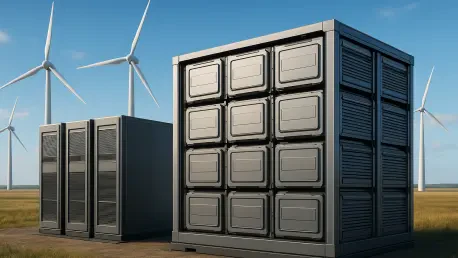
To ensure a truly resilient and carbon-free energy ecosystem, the Finnish investment also encompasses a diversified portfolio of renewable assets, including over six hundred megawatts of new onshore wind capacity. Collaborations with regional energy firms like Valorem and Suomen Hyötytuuli are bringing these projects online between 2026 and 2028, significantly boosting the total volume of clean energy available to the regional market. Recognizing the variable nature of wind production, the company is simultaneously commissioning a 94-megawatt battery storage system near Kajaani to act as a critical grid stabilizer. This industrial-scale battery will store excess power during peak wind conditions and release it back into the system during periods of low production or increased electrical demand. This multifaceted approach—combining nuclear for constant baseload, wind for carbon-free volume, and high-capacity batteries for flexibility—creates a robust energy platform capable of supporting the most energy-intensive AI operations without sacrificing the company’s environmental sustainability goals.
This strategic control over the energy supply chain creates a formidable infrastructure moat that places smaller AI developers and mid-sized enterprises at a significant competitive disadvantage. In the current technological landscape, access to consistent, high-density power has become just as valuable as the raw computing power of specialized chips or the complexity of software algorithms. By locking in half of a nuclear plant’s generation capacity and building out proprietary energy storage networks years in advance, the company is securing the resources necessary to maintain its market leadership. Smaller competitors, who often lack the capital to engage in multi-billion dollar utility contracts, find themselves forced to rely on more expensive and less reliable public power, which can lead to higher operational costs and limited scalability. This trend indicates that the future of AI dominance will be dictated by those organizations that can successfully integrate large-scale industrial energy management into their core business operations, transforming the data center into a unified power and processing asset.
Sustainable Growth: Shifting Paradigms in Power Procurement
The decision to commit fifteen billion dollars to the Finnish energy and technology sectors represented a fundamental shift in how hyperscale cloud providers approached the challenges of the late 2020s. Analysts noted that the success of this model hinged on the seamless integration of nuclear baseloads and renewable storage, which allowed for unprecedented levels of operational uptime and environmental compliance. During the period between 2026 and 2028, the expansion of the Hamina and Kajaani facilities demonstrated that geographic selection based on energy surplus was a more sustainable long-term strategy than expanding in traditional but power-constrained tech hubs. This period also saw the solidification of Finland as a major player in the global AI landscape, as the nation provided the stability and resources that other regions struggled to maintain. Ultimately, the multi-decade energy contracts established during this era set a new industry standard for corporate responsibility and infrastructure planning, proving that technological growth was inextricably linked to national energy security.
Enterprises that observed this transition recognized that the reliability of AI services was increasingly dependent on the physical resilience of the underlying energy supply chain rather than software alone. This realization prompted a wave of similar investments from other global players, although few were able to match the scale or the twenty-two-year duration of the Finnish nuclear deal. Moving forward, the industry began to prioritize partnerships with national utility providers as a primary prerequisite for any major infrastructure project, ensuring that digital growth did not come at the expense of local grid stability. Strategic planners encouraged organizations to evaluate their technology partners based on their ability to secure long-term, carbon-free power, as this became the most accurate predictor of cost stability and service reliability. This new era of industrial-tech synergy shifted the focus of innovation from the virtual world back to the physical realities of power generation, ensuring that the next generation of artificial intelligence was built on a sustainable and secure foundation for the foreseeable future.