
Chloe Maraina understands that data is the lifeblood of the modern world, but she sees it through a lens that few others do—as a sprawling, visual narrative that bridges the gap between terrestrial constraints and cosmic potential. As a leading expert in Business Intelligence and data science, Chloe has spent years analyzing how massive datasets can be transformed into actionable strategies, making her uniquely qualified to dissect the recent financial and technological maneuvers of the world’s most ambitious aerospace firm. Today, we sit down with her to explore why a company synonymous with rockets is suddenly making a massive play for the AI and data center markets, and what this shift means for the future of global infrastructure. We will discuss the strategic integration of hardware and software, the logistics of hosting compute power in orbit, and how the company plans to bypass the energy and chip shortages currently stifling the artificial intelligence revolution.
How does the recent public debut of SpaceX reshape our understanding of the company as more than just a transportation service for satellites and astronauts?
The move on June 12 was a defining moment because it invited investors to look past the smoke and fire of launch pads and see a sophisticated, integrated infrastructure play. By opening at $150 a share with over 555 million shares on offer, the company established itself as the largest IPO in Nasdaq history, signaling that its value lies in a trifecta of assets: compute, data, and energy. This isn’t just about making life multiplanetary or building a moon base; it’s about creating a closed-loop system where the hardware that launches the data also houses the intelligence. We are seeing a transition where the company provides the resident processors and the energy to run them, effectively becoming a vertically integrated tech giant that happens to operate in the vacuum of space. It is a bold statement that the most valuable assets of the future will be found at the intersection of orbital connectivity and advanced AI resources.
What is the strategic logic behind moving AI data centers into orbit, and how does the space environment solve terrestrial problems like cooling and power?
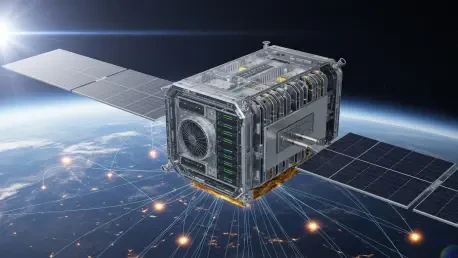
The company’s S-1 filing with the Securities and Exchange Commission outlines a fascinating vision for “orbital AI compute” satellites that could be deployed as early as 2028. On Earth, data centers are hitting a massive wall regarding power consumption, forcing companies to look at desperate measures like onsite nuclear reactors or specialized microgrids. By positioning these centers in Sun-synchronous orbit, they can tap directly into unfiltered solar energy for power while utilizing the natural, extreme cold of the space environment for cooling. This setup allows them to handle energy-intensive AI workloads, such as inference demand, at a scale and efficiency that terrestrial alternatives simply cannot match. It’s a brilliant way to turn the “universal” constraint of energy into a competitive advantage by literally moving the problem off the planet.
Given the massive scale of the Colossus and Colossus II data centers in Memphis, how do these Earth-bound resources integrate with the company’s broader AI ambitions?
The Memphis-based Colossus facilities represent the massive, heavy-lifting side of the current xAI subsidiary, providing the raw horsepower needed for generative AI chatbots like Grok. These centers are the terrestrial anchors for an ecosystem that integrates directly with the X social media platform, creating a real-time feedback loop between human data and machine intelligence. When you look at the sheer scale of these operations, you realize they are the testing grounds for the software that will eventually reside on those 2028 orbital satellites. There is a palpable sense of urgency in these facilities; you can almost feel the heat of the processors as they churn through petabytes of data to refine Grok’s capabilities. This terrestrial foundation is essential because it proves the software’s viability before it is sent into the high-stakes, low-maintenance environment of Earth’s orbit.
How critical is the Terafab initiative in ensuring that the company doesn’t fall victim to the semiconductor shortages currently plaguing the rest of the tech industry?
Elon Musk has been very clear that semiconductor production is a universal bottleneck, which is why the Terafab initiative—a partnership between Tesla and Intel—is so vital to the company’s roadmap. By securing its own chip-making pipeline, the company can mitigate the risk of shortages that might otherwise delay the launch of its next-generation AI satellites or Starlink upgrades. This move toward self-sufficiency is a hallmark of the company’s strategy since its founding in 2002, reflecting a deep-seated desire to control every link in the supply chain. If you are going to build a constellation of AI compute satellites, you cannot be at the mercy of external chip delivery timelines that change by the week. Controlling the silicon means controlling the speed of innovation, and Terafab is the insurance policy that ensures the vision for 2028 remains on schedule.
With other major players like Anthropic and OpenAI filing for their own IPOs, what makes this specific approach to AI infrastructure more resilient than a purely software-focused model?
While Anthropic and OpenAI submitted their confidential S-1 filings in early June, their path to market is primarily through software and model refinement, which leaves them dependent on others for physical infrastructure. In contrast, this integrated approach bridges the gap between the digital and physical worlds by owning the rockets, the satellites, the energy source, and the data centers. There is a certain sensory weight to this strategy; while others are writing code in silicon valley offices, this company is pouring concrete for Memphis data centers and fabricating chips through Terafab. It creates a moat that is incredibly difficult for a software-only company to cross because you cannot simply “program” your way into orbit or build a global satellite network overnight. By owning the “pipes” and the “power” as well as the “brain,” they are positioning themselves as the indispensable backbone of the future AI economy.
What is your forecast for the role of orbital data centers in the global economy over the next decade?
I believe that by the mid-2030s, we will see a shift where the “cloud” is no longer a metaphor for terrestrial server farms, but a literal description of a vast, orbital shell of intelligence surrounding the Earth. As terrestrial power grids become increasingly strained by the demands of a fully AI-integrated society, the efficiency of Sun-synchronous AI satellites will make them the preferred choice for high-level inference and global data processing. We will likely see a bifurcated system where latency-sensitive tasks remain on the ground in places like Memphis, while massive, background AI training and complex global simulations are offloaded to the stars. This transition will not only relieve the ecological pressure on our planet’s resources but will also provide a level of data security and accessibility that is currently impossible. The infrastructure being built today is the first step toward a future where intelligence is a truly global, and celestial, utility.