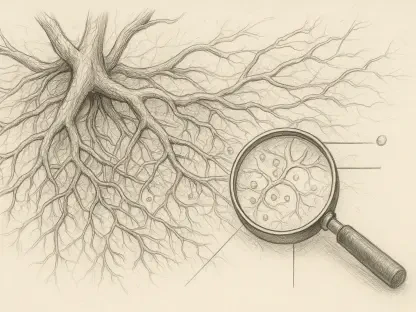
Scientific knowledge is currently being weighed and measured by the very metrics that were meant to organize it, transforming citations into a form of academic currency that is increasingly vulnerable to forgery and manipulation. Node embeddings and graph neural networks provide a mathematical representation of a journal’s position, revealing patterns that indicate organized citation manipulation. In the current academic climate, bibliometric metrics such as the h-index and Journal Impact Factor (JIF) serve as the primary currency for career advancement, institutional funding, and global rankings. However, this high-stakes environment has given rise to a growing crisis of citation manipulation, where the integrity of scholarly influence is compromised by artificial inflation. A recent study published in the journal Information Systems Frontiers by a multi-institutional team—including researchers from Dalian University of Technology, RMIT University, and Warwick Business School—introduces a sophisticated technological intervention to address this issue. The researchers developed a novel graph learning framework specifically designed to uncover coordinated groups of journals and authors who exchange citations to illegitimately boost their metrics. By applying complex network theory and deep learning, the study provides a systemic solution to citation cartels and citation stacking—problems that have historically been difficult to quantify or detect through manual auditing or simple arithmetic filters. This computational approach marks a significant shift toward using scholarly big data to safeguard the credibility of scientific publishing and ensure that metrics accurately reflect intellectual contribution.
The Rising Threat: Bibliometric Fraud and Manipulation
Incentives for Misconduct: The Economics of Citations
The motivation for developing this framework is rooted in a series of high-profile failures in research integrity that have surfaced as recently as late 2024. During that period, nearly twenty journals were stripped of their impact factors by major indexing services due to suspected citation stacking, highlighting a trend where citations are treated more like financial assets than measures of scholarly utility. This environment creates a powerful incentive for editors and authors to engage in deceptive practices to enhance their market value and prestige. In an industry where library subscription rates and university rankings are tied directly to these numbers, the temptation to bypass ethical standards for commercial gain is immense. The scientific community is currently grappling with the reality that these metrics, originally designed to assist researchers in finding high-quality work, have become targets for sophisticated manipulation. As a result, the reliability of the entire academic record is under threat, necessitating tools that can distinguish between genuine intellectual influence and manufactured prominence. This pressure is not localized; it affects the global research ecosystem, influencing how budgets are allocated and how the next generation of scientists is evaluated by their peers and institutions.
To combat these issues effectively, the study categorizes fraudulent activities into three main types: citation cartels, citation stacking, and coercive citation. Cartels involve circular, reciprocal agreements between entities—often across different institutions or countries—to cite one another systematically. This creates an appearance of high impact that is entirely self-contained and deceptive to external observers. Citation stacking involves a disproportionate volume of citations directed at specific outlets, often within a very short timeframe, to manipulate annual impact factor calculations before the indexing windows close. Coercive citation is perhaps the most insidious, occurring when editors or reviewers force authors to include unnecessary references to specific journals as a condition for publication, effectively weaponizing the peer-review process. Each of these practices distorts the global map of scientific influence and misleads funding agencies into awarding grants based on fraudulent or inflated data. By identifying these specific behaviors, the graph learning framework can look for the fingerprints of coordination that define these activities, moving beyond simple observation to a more investigative and structural form of data analysis that identifies the underlying intent of the citation clusters.
Identifying Limitations: Why Conventional Tools Fail
Historically, the scientific community has relied on simple threshold-based rules to identify misconduct, such as flagging journals with high self-citation rates or unusual spikes in citation counts. The researchers argue that these methods are blunt instruments that savvy manipulators can easily circumvent by distributing their exchanges across multiple nodes to stay just below detection limits. For instance, a sophisticated cartel might ensure that no single journal in the group exceeds a fifteen percent self-citation rate, yet the collective group may be exchanging thousands of references that serve no legitimate scholarly purpose. These arithmetic filters are inherently reactive and often fail to account for the nuance of different academic disciplines, where smaller, highly specialized fields may naturally have higher citation density and more frequent self-references. Consequently, traditional systems often produce a high number of false positives or, more dangerously, miss the most complex and damaging networks of fraud entirely. This inadequacy has led to a cat-and-mouse game where manipulators adapt their strategies to evade whatever simple filters are put in place by indexing services.
Furthermore, traditional tools often focus on isolated pairs of journals, failing to capture the broader, macro-level patterns of citation flow. When detection is limited to observing how Journal A cites Journal B, it misses the larger ecosystem of manipulation where five or ten journals might be working in a synchronized loop. This pairwise analysis is insufficient because it treats each citation event as an independent variable rather than part of a broader structural strategy. The shift toward a graph-based perspective allows researchers to see how information and credit flow through the entire network, revealing anomalies that are invisible at the granular level. By moving away from simple count-based metrics, the scientific community can begin to understand the topology of fraud. This involves looking at the density of connections, the direction of flow, and the proximity of nodes within the academic landscape, providing a much clearer picture of whether a journal’s influence is organically grown or artificially constructed through a network of hidden alliances. Without this structural context, detection systems remain blind to the most sophisticated forms of coordinated misconduct that are currently undermining the prestige of top-tier academic journals.
A Structural Approach: Leveraging Graph Learning
The Heterogeneous Advantage: Modeling Complex Relationships
A central innovation of this research is the transition from homogeneous to heterogeneous networks in the analysis of academic data. While standard tools treat the citation graph as a flat list of papers or a simple list of journals, this framework models the ecosystem as a multi-layered graph involving different types of nodes—such as papers, authors, and journals—and various types of links, including publication, citation, and editorial relationships. By encoding these relationships into a single model, the framework can trace suspicious flows that would otherwise be invisible in a simplified data representation. For example, it can correlate a sudden surge in citations with specific editorial board changes or publication patterns that coincide with impact factor calculation periods. This holistic view is necessary because citation manipulation is rarely a single-layered event; it is an organized effort that spans multiple levels of the academic hierarchy, from the individual researcher to the journal’s management level. By including metadata such as institutional affiliations and editorial roles, the framework creates a rich tapestry of data that makes it much harder for manipulators to hide their tracks behind a facade of legitimate scholarly activity.
This multi-level representation is essential because manipulation is rarely confined to a single layer of the academic hierarchy. A cartel might manifest through specific papers, but it is often supported by the overarching editorial strategies of the journals involved. For instance, an editor might encourage authors to cite specific sister journals to boost the overall prestige of a publishing house’s portfolio. By capturing these complex interdependencies, the framework provides a more comprehensive view of how citation behavior deviates from legitimate scholarly exchange. It recognizes that citations are not just links between documents; they are links between social and professional entities with specific motives. Mapping these connections allows the system to identify communities that are built on mutual benefit rather than shared scientific interest. This structural depth is what allows the graph learning framework to outperform traditional models, as it understands the context in which a citation is made, rather than just the fact that it exists. This approach effectively bridges the gap between digital forensic science and bibliometric analysis, providing a tool that is robust enough to handle the complexities of the modern global research enterprise.
Detecting Anomalies: Integrating Local and Global Signals
The technical architecture of the system integrates two distinct signals to identify fraud: behavior similarity and node embeddings. Local signals measure how much a group’s citation behavior resembles its immediate neighborhood. In a healthy scientific environment, researchers typically cite work based on topical relevance and shared methodology, leading to a messy but logical web of references that cross-pollinate different sub-fields. In contrast, cartels exhibit highly insular, mutually reinforcing loops where the same group of actors cites each other repeatedly with little outside interaction. These tight clusters stand out because they are functionally decoupled from the broader scholarly community; they act like an island in the middle of a vast ocean, with almost all their trade happening internally. By calculating similarity scores for these local neighborhoods, the framework can flag clusters that appear too coordinated to be the result of natural scientific discovery or independent peer review. This local analysis is the first line of defense, identifying the specific “neighborhoods” where the rules of normal citation behavior are being systematically ignored for individual gain.
On a global scale, the framework uses graph neural networks (GNNs) to learn node embeddings, which are mathematical representations of a node’s position within the entire network. This allows the system to treat the identification of citation groups as a sophisticated anomaly detection task. By analyzing these learned representations, the tool can identify clusters that occupy an atypical structural role, such as receiving a massive volume of citations from a closed, isolated set of sources while contributing very little to the wider field. The use of GNNs is particularly effective because these models can pass messages between nodes, allowing the system to understand the influence of a journal’s neighbors and their neighbors in turn. This means that even if a journal tries to hide its tracks by citing several degrees away, the mathematical representation will still reveal its structural dependence on a specific, suspicious group. This global perspective is the ultimate defense against high-level manipulation that seeks to obscure its origins through complexity. By translating abstract relationships into a high-dimensional mathematical space, the framework makes the invisible patterns of coordination visible to investigators and research integrity officers.
Implementation and Integrity: Safeguarding the Future
Practical Utility: A Decision-Support Tool for Stakeholders
The framework is designed to act as a decision-support tool rather than an autonomous judge, providing a bridge between automated data analysis and human expertise. It functions as an early warning system for publishers and indexing services, flagging suspicious clusters for human investigation before formal sanctions or public retractions are applied. This contextual approach is more equitable than traditional metrics, as it helps distinguish between legitimate, niche research communities and actual fraudulent cartels. For example, a highly specialized field like theoretical high-energy physics or certain sub-fields of mathematics may have high self-citation rates due to the small number of active researchers, but its structural position within the global network would still appear healthy compared to a fabricated citation ring. By providing this layer of nuance, the tool helps maintain the reputation of honest researchers while ensuring that the limited resources of integrity offices are directed toward the most egregious cases of misconduct. This balance between automation and oversight is critical for maintaining the trust of the academic community and preventing the accidental punishment of innocent scholars.
For universities and funding bodies, these audits ensure that an individual’s or institution’s impact is based on genuine contribution rather than game-playing. In an era where billions of dollars in research grants are allocated based on citation counts, the ability to verify the authenticity of those numbers is a matter of economic and institutional necessity. By transforming an opaque ethical problem into a manageable data science task, the researchers provide a way to defend the structural integrity of the global knowledge base. This proactive management is crucial as the volume of scientific literature continues to expand at an exponential rate, making manual peer review of every citation an impossible task. The implementation of such a framework across major databases could lead to a more transparent ecosystem where researchers are rewarded for the quality of their insights rather than their ability to manipulate the system, thereby restoring trust in the scientific method. As these tools become more widespread, they will serve as a powerful deterrent, forcing those who might consider manipulation to reconsider the long-term risks to their reputations and careers in an increasingly transparent landscape.
Future Directions: Addressing Socioeconomic Drivers
Ultimately, the researchers acknowledge that as long as citation counts remain the primary metric for success, the incentive to counterfeit them will persist. The “publish or perish” culture and the commercialization of publishing create pressures that require defensive technologies to evolve in tandem with the tactics of those who seek to exploit the system. As publishing houses increasingly prioritize impact factor as a marketing tool to attract high-quality submissions and lucrative subscriptions, the boundaries between editorial independence and commercial interests can become blurred. This graph learning framework represents a necessary evolution in the infrastructure of science, ensuring that the indicators of intellectual influence remain transparent and trustworthy even as the stakes continue to rise. It moves the conversation from a simple moral plea for honesty to a technical reality where fraud is simply too difficult to hide from a mathematically rigorous auditing system. By raising the cost of deception, the scientific community can redirect its energy toward genuine innovation and the solving of complex global challenges that require a reliable foundation of shared knowledge.
In conclusion, the development of this computational framework offered a robust path forward for preserving the sanctity of academic discourse during a period of intense pressure on research metrics. By moving beyond simple arithmetic and embracing the complexity of graph learning, the research team provided stakeholders with a tool that looked at the functional logic of citation patterns rather than just raw counts. The framework established a new standard for bibliometric analysis, encouraging a move toward more qualitative and context-aware evaluations of research impact. Stakeholders were encouraged to integrate these graph-based insights into their existing auditing workflows, ensuring that the scientific record remained a reliable foundation for future discovery. Moving forward, the focus shifted toward refining these algorithms to account for the evolving nature of digital collaboration, ensuring that the tools of defense were always one step ahead of the methods of manipulation. This shift in strategy preserved the utility of citations as a true reflection of scholarly value, allowing the global scientific community to maintain its credibility in the face of increasingly sophisticated technological and economic challenges.