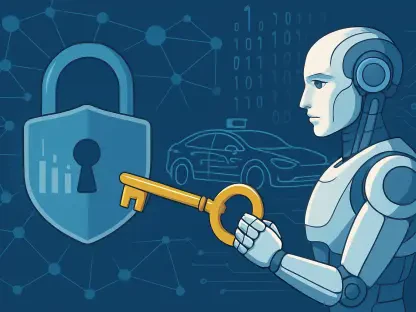

Imagine a world where artificial intelligence manages everything from global supply chains to personal health data, yet a single glitch or breach could unravel entire systems in seconds. This is the reality of today’s AI-driven landscape, where trust stands as the linchpin between innovation and catastrophe. As AI continues to reshape industries by fueling efficiency and growth, the fragility of these systems has thrust trust into the spotlight. This review dives deep into the core components of trust in AI, often referred to as the trust pillars, evaluating their effectiveness in mitigating risks and driving organizational success. By dissecting these foundational elements, the aim is to provide clarity on how trust shapes the adoption and impact of AI technologies across sectors.
Understanding the Stakes of Trust in AI
The rapid integration of AI into business operations has redefined how organizations function, automating complex tasks and unlocking new avenues for innovation. However, with this power comes an amplified risk—disruptions to AI systems can have cascading effects, threatening not just data but the very backbone of modern enterprises. Trust, therefore, emerges as a critical asset, acting as the glue that binds technological advancement with reliability. Without it, even the most sophisticated AI tools become liabilities rather than enablers.
Moreover, the stakes have never been higher as AI systems increasingly handle sensitive and critical functions. From financial transactions to predictive analytics in healthcare, the potential for systemic failure or malicious exploitation looms large. This review seeks to unpack how trust serves as a safeguard, focusing on the structured approaches that organizations employ to embed confidence in their AI deployments. The exploration ahead centers on three pivotal pillars that collectively fortify this trust, ensuring AI’s promise doesn’t crumble under its own complexity.
Diving into the Core Pillars of AI Trust
Engineering for Trust: Building Robust Foundations
At the heart of trust lies the technical groundwork of AI systems, where security must be woven into every stage of development. Engineering for trust means designing AI with security as a core principle, rather than an afterthought tacked on to appease compliance. By integrating protective measures from the outset, organizations can sidestep traditional bottlenecks that slow innovation, ensuring systems remain both cutting-edge and resilient. This approach not only bolsters system integrity but also reduces the burden of security debt—those lingering vulnerabilities from outdated or patchwork tools.
Furthermore, the shift toward unified platforms plays a crucial role in this pillar. These platforms streamline operations by automating security processes, cutting down on human error and enabling rapid deployment of AI solutions. The result is a competitive edge for businesses that can innovate without the constant fear of breaches or failures. As cloud environments grow more complex, this engineered trust becomes indispensable, guarding against the myriad risks that accompany interconnected systems.
Cultivating Cultures of Trust: The Human Element
Beyond code and algorithms, trust in AI hinges on the people who interact with these systems daily. Cultivating a culture of trust within an organization means empowering employees to act as the first line of defense against threats, from AI-powered phishing schemes to the sneaky use of unapproved third-party tools, often called shadow AI. This human dimension recognizes that even the best-engineered systems can falter if users lack awareness or ethical guidelines.
In addition, fostering such a culture demands more than occasional training sessions; it requires a deep, ongoing commitment to vigilance and responsibility. When employees understand their role in safeguarding data and systems, they help shield the organization’s reputation and customer confidence. This proactive stance turns potential weaknesses into strengths, aligning human behavior with the broader goal of securing AI’s transformative potential. It’s a reminder that technology alone isn’t enough—trust is a collective endeavor.
Governing for Trust: Oversight and Collaboration
The final pillar focuses on the structures that keep AI systems in check, ensuring they operate within safe boundaries. Governing for trust involves human-in-the-loop oversight, where autonomous processes are monitored to prevent unintended consequences or disruptions. Such governance models provide a critical layer of control, balancing AI’s efficiency with accountability in high-stakes environments like finance or healthcare.
Equally important is the call for industry-wide collaboration to tackle threats that transcend individual organizations. By sharing intelligence and best practices, companies can build a collective defense against ecosystem-wide risks, from sophisticated cyberattacks to regulatory missteps. This cooperative spirit, paired with robust internal oversight, forms a governance framework that not only protects but also enhances trust in AI. It’s a dynamic approach, adapting to the evolving nature of both technology and threats.
Assessing Performance and Real-World Impact
The effectiveness of these trust pillars shines through in their real-world applications, where industries have begun to see tangible benefits. For instance, companies in the tech sector are engineering secure AI systems that accelerate product launches without compromising safety, thanks to automated security protocols. Meanwhile, financial institutions foster vigilant cultures by training staff to spot AI-driven fraud, preserving client trust amid rising digital threats. These examples underscore how trust translates into operational success.
Additionally, governance models are proving their worth in highly regulated fields like healthcare, where human oversight ensures AI diagnostics remain accurate and ethical. Case studies reveal organizations leveraging shared industry insights to preemptively address vulnerabilities, demonstrating trust’s role as a strategic asset. The performance of these pillars isn’t just about risk mitigation; it’s about creating value, positioning trust as a driver of innovation rather than a mere shield.
Looking at Challenges and Limitations
Despite their strengths, building trust in AI systems faces significant hurdles that cannot be ignored. Technical challenges, such as inherent vulnerabilities in complex AI models, persist even with the best engineering. These flaws can be exploited if not continuously addressed, posing a constant threat to system reliability. Moreover, the sheer pace of AI advancement often outstrips the ability to secure it, leaving gaps that demand urgent attention.
On another front, regulatory complexities add layers of difficulty to governance efforts. Striking a balance between compliance and agility remains elusive for many organizations, especially in global markets with varying standards. Cultural barriers also play a role, as fostering a security-conscious mindset across diverse workforces requires time and tailored strategies. While progress continues, these obstacles highlight the need for adaptive frameworks that evolve alongside AI itself.
Reflecting on the Journey and Next Steps
Looking back, this exploration of AI trust pillars revealed a transformative shift in how security and confidence underpin technological progress. Each pillar—engineering, culture, and governance—played a vital role in addressing the fragility of AI systems, turning potential risks into opportunities for growth. Their real-world impact stood out, showing that trust was not just a defensive measure but a catalyst for success across industries.
Moving forward, the focus should pivot to scalability, ensuring these pillars can adapt to increasingly sophisticated AI applications. Collaborative efforts must intensify, with industries pooling resources to preempt emerging threats over the next few years, starting from now through to 2027. Organizations should also invest in continuous education, equipping teams to handle evolving challenges. Ultimately, embedding trust deeper into the fabric of AI will pave the way for a future where innovation and reliability go hand in hand, unlocking untapped potential.