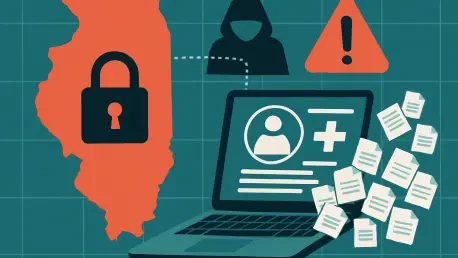

For over four years, the highly sensitive personal and health information of more than 600,000 Illinois residents was left unprotected and accessible on the open internet, not by a sophisticated cyberattack, but by a fundamental internal failure at the Illinois Department of Human Services (IDHS). The massive data exposure, affecting recipients of state-administered health and social services, has ignited a crisis of confidence and triggered intense scrutiny into the agency’s data security practices. This incident serves as a stark case study in the catastrophic consequences of human error, highlighting critical vulnerabilities in how public sector agencies manage the data of the very populations they are mandated to protect in an increasingly digital world. The prolonged nature of the exposure and the delayed public disclosure have raised serious questions about systemic failures in oversight, regulatory compliance, and the state’s fundamental duty to safeguard the privacy of its most vulnerable citizens.
The Anatomy of a Years-Long Exposure
The root cause of this monumental data breach was not a malicious intrusion but a critical and preventable misconfiguration error. Agency officials inadvertently uploaded data files containing sensitive personal information to a public-facing website without implementing the necessary security protocols or access restrictions. This oversight effectively published the private records of hundreds of thousands of individuals, leaving them accessible to anyone with an internet connection. What elevates this incident from a simple mistake to a systemic failure is its staggering duration. Investigations revealed that the exposure window for some of the compromised records spanned several years, with the earliest data being exposed from April 2021 until the vulnerability was finally identified in late 2025. The agency officially acknowledged the breach in early January 2026, long after the damage had been done, raising profound questions about the absence of routine security audits and data monitoring practices that should have detected such a glaring vulnerability far sooner. This prolonged timeline points to a deep-seated lapse in the agency’s data governance framework and its ability to manage the digital transformation of its services securely.
The exposed data pertained to two primary and distinct groups of individuals under the care of the IDHS, compounding the severity of the privacy violation. The first cohort consisted of approximately 32,000 customers of the Division of Rehabilitation Services (DRS). The information related to this group was particularly detailed and sensitive, including not only basic identifiers like names and addresses but also granular, case-specific data such as their case status, the original source of their referral, details about their assigned regional office, and official confirmation of service receipt. The second, and significantly larger, group comprised approximately 670,000 participants in Medicaid and Medicare Savings Programs. For this vast population, the exposed information included full names, residential addresses, and unique case numbers. While some reports have presented slightly varying totals for the number of affected individuals, the central finding remains undisputed: a systemic failure of data oversight occurred on a massive scale, jeopardizing the privacy and security of a population that heavily relies on the state for essential support and services.
Systemic Failures and a Delayed Response
Cybersecurity experts and industry insiders categorize the IDHS incident not as an attack but as a classic “human error” breach, a distinction that highlights a more insidious and perhaps more common vulnerability within large organizations. This classification underscores the immense risks associated with digital transformation initiatives, particularly when public sector agencies adopt modern cloud storage solutions and data management tools without a corresponding evolution in security protocols, access controls, and comprehensive employee training. The IDHS, an agency tasked with managing an enormous volume of sensitive health and social service data for millions of residents, demonstrated a significant and consequential lapse in its data governance framework. The failure was not one of technology alone, but of process and oversight, revealing that the systems designed to protect citizens’ data were fundamentally flawed, allowing a simple mistake to cascade into a multi-year crisis that went unnoticed by those responsible for its prevention.
Compounding the initial error was the timeline of the agency’s response, which has drawn significant criticism from lawmakers, privacy advocates, and the public. The fact that sensitive data remained exposed for over four years suggests a glaring absence of routine internal auditing and proactive data monitoring. Furthermore, the delay between the agency’s discovery of the breach in late 2025 and its public announcement in early 2026 has become a focal point of regulatory scrutiny. This timeline appears to be in direct conflict with federal regulations, most notably the Health Insurance Portability and Accountability Act (HIPAA), which mandates a strict 60-day notification window for breaches of this nature. This potential non-compliance could expose the IDHS to substantial financial penalties and a wave of legal challenges, placing further strain on a state budget already dedicated to funding essential social services. The delayed notification, as highlighted in a Capitol News Illinois audit critique, has also been leveraged by political opponents, who frame it as a clear example of administrative mismanagement and a lack of transparency.
A Troubling Trend in Public Health Data
The IDHS incident does not exist in a vacuum; rather, it reflects a deeply troubling and escalating trend of data security failures across the entire healthcare sector. When compared to other major breaches, a clear pattern of vulnerability emerges. For example, the 2025 UnitedHealth ransomware attack that impacted nearly 190 million people and a 2023 data theft affecting 61 million Americans illustrate the immense scale of threats facing healthcare data. While the cause of the Illinois breach—internal misconfiguration—differs from these malicious cyberattacks, the potential outcome for affected individuals is remarkably similar and includes severe risks of identity theft, targeted phishing schemes, insurance fraud, and a profound violation of personal privacy. Other relevant comparisons, such as a 2025 data compromise of home care records in Ontario affecting over 200,000 patients and a breach in Maine that impacted nearly 285,000 residents, collectively demonstrate a critical point: whether the catalyst is external malice or internal negligence, the public’s most sensitive health information remains perilously at risk.
Experts consistently note that public sector agencies often lag significantly behind their private sector counterparts in the adoption and implementation of modern security paradigms, such as zero-trust architectures, which assume no user or device is inherently trustworthy. This technological and strategic gap leaves government entities particularly susceptible to both sophisticated, targeted attacks and simple, yet devastating, human errors like the one that occurred at IDHS. The pressure to digitize services and improve efficiency can lead agencies to rush the adoption of new technologies without making the corresponding investments in cybersecurity infrastructure, personnel, and training. The Illinois data exposure is a powerful testament to this imbalance, serving as a cautionary tale that underscores the urgent need for public institutions to treat data security not as an IT cost center, but as a core, non-negotiable component of public service and effective governance in the digital age. Without this fundamental shift in priority, such incidents are likely to become even more frequent and damaging.
The Path Forward to Rebuild Trust and Defenses
Across the spectrum of privacy advocates, cybersecurity experts, lawmakers, and the general public, there is a clear and resounding consensus: immediate, transparent, and comprehensive action is required to rectify the damage from the IDHS breach and, more importantly, to prevent any future occurrences. The initial response from the IDHS—offering credit monitoring services to affected individuals, launching an internal review, and engaging external cybersecurity firms for a forensic analysis—is widely viewed as a necessary first step. However, many see these measures as belated and insufficient on their own. The core of the consensus is that rebuilding public trust is now the paramount objective, a goal that requires far more than technical fixes and public relations statements. It demands a fundamental overhaul of the agency’s culture around data security, a demonstrable commitment to transparency, and the implementation of robust, forward-thinking safeguards that can restore confidence among Illinois residents who depend on the agency’s services.
To fortify the state’s defenses against future incidents, experts and regulatory bodies are advocating for a multi-pronged prevention strategy that addresses both technology and human factors. On the technical side, this includes implementing robust safeguards such as end-to-end encryption for all sensitive data, both in transit and at rest, and enforcing stringent, role-based access controls to ensure that employees can only view information essential to their duties. Procedurally, recommendations call for the establishment of regular and automated vulnerability scans, the integration of privacy checks into data upload workflows, mandatory multi-factor authentication for all system access, and comprehensive, ongoing employee training on data handling protocols and threat recognition. Proactive measures, such as the enhanced encryption standards adopted by Maine following its own significant data breach, are being cited as a clear and effective model for Illinois to follow. Looking ahead, there is a growing push to explore advanced technologies, like AI-driven monitoring systems capable of flagging anomalous data access patterns in real-time, to create a more resilient and proactive security posture.
The Lasting Human and Financial Fallout
The primary finding from this incident was the profound and multi-faceted impact it had on both individuals and the state. For the more than 600,000 people affected, the breach translated into real-world anxiety and significant personal risk. The exposure of their personal and case-related information created a tangible and ongoing threat of identity theft and financial fraud. This burden fell disproportionately on already vulnerable populations—including low-income families, the elderly, individuals with disabilities, and immigrants—who rely on Medicaid and rehabilitation services for their well-being. These groups often lack the financial resources or digital literacy needed to effectively monitor their credit, navigate the complex process of identity theft recovery, or protect themselves from targeted scams, thus exacerbating their existing hardships. The public sentiment, captured in widespread discussions across social media, reflected a deep sense of outrage, frustration, and a pervasive fear of the long-term repercussions of having their sensitive information compromised by the very entity entrusted to protect it.
Economically, the breach carried a significant and lasting price tag for the state of Illinois. The direct cost of providing credit monitoring services for such a large number of people was projected to run into the millions. This initial expense was compounded by the looming potential for substantial regulatory fines for HIPAA violations and the high cost of civil litigation that was expected to arise from the exposure. These unforeseen expenditures diverted critical taxpayer funds away from the very social services the IDHS was meant to provide, creating a ripple effect that harmed the agency’s core mission. Ethically, the incident represented a fundamental breach of the government’s duty to protect the data of its most vulnerable citizens. By failing to secure this information, the agency not only committed a technical error but also eroded the foundational trust that underpins the relationship between the state and the people who depend on its services. The breach ultimately served as a stark and cautionary tale for public entities nationwide, reinforcing the imperative that in the digital age, robust data security is not an optional IT expenditure but a core component of public service and ethical governance.