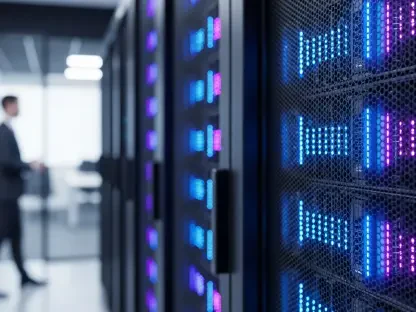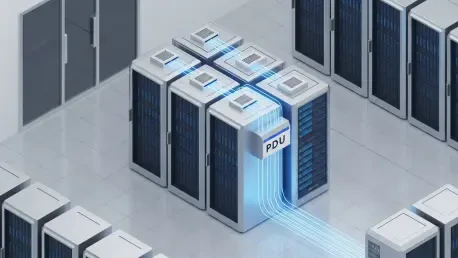

The sheer velocity of the global digital economy now depends on a silent, sophisticated layer of hardware that most people will never see, yet it dictates the success of every transaction made today. Behind the seamless streaming of high-definition video, the instantaneous execution of high-frequency trades, and the complex training of massive neural networks lies the data center. Within these facilities, a transformation has occurred. The once-ignored power strip has evolved into a Power Distribution Unit (PDU) that functions as a critical infrastructure hub, equipped with the intelligence to manage the lifeblood of modern technology: electricity. As the demand for computing power reaches unprecedented heights, the move from “dumb” power delivery to intelligent distribution has become the single most important factor in maintaining 24/7 uptime in an unforgiving digital landscape.
The high stakes of power management are no longer confined to the engineering department; they now sit squarely on the balance sheets of global corporations. A single minute of data center failure can result in millions of dollars in lost revenue and irreparable brand damage. In an era where power-hungry workloads are the norm, basic “power-in, power-out” functionality is fundamentally insufficient. The modern data center requires a device that can think, communicate, and react to changing conditions in real-time. This necessity has birthed the smart PDU, a device that offers the granular visibility and remote control required to prevent cascading failures before they even begin.
The Invisible Engine Powering the Global Digital Economy
The historical perception of a power distribution unit was that of a glorified extension cord, a passive component whose only job was to stay out of the way. However, as the global digital economy expanded, the complexity of the equipment it supports grew exponentially. The transition toward intelligent infrastructure was born out of a desperate need for data. In the past, administrators often operated in a “black box” environment, unaware of how much power a specific rack was consuming until a circuit breaker tripped and brought an entire row of servers down. This lack of visibility is a luxury that modern enterprises can no longer afford, especially when digital services are integrated into every facet of human life.
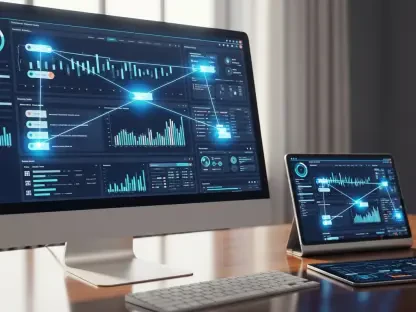
Modern smart PDUs have become the central nervous system of the server rack. They provide the telemetry required to understand energy patterns, allowing operators to optimize their environments for peak performance. This evolution was not merely about adding a network card to a power strip; it was a fundamental shift in how infrastructure is managed. By providing real-time insights into voltage, current, and power factor, these units enable a proactive approach to maintenance. Instead of reacting to a blackout, data center managers now use smart PDUs to identify “hot spots” and load imbalances that signal a looming crisis, ensuring that the invisible engine of the economy continues to hum without interruption.
The stakes of maintaining continuous operation have reached a fever pitch as society becomes more dependent on cloud-based services. Whether it is a hospital accessing patient records or a logistics firm routing thousands of delivery trucks, the underlying infrastructure must be infallible. Smart PDUs provide the safety net for these operations by offering redundant communication paths and environmental monitoring. If a cooling fan fails or a room becomes too humid, the PDU is often the first device to detect the change and alert the staff. This level of oversight ensures that the physical layer of the internet remains as resilient as the software running on top of it.
Beyond the Power Strip: Why Intelligent Distribution Matters Now
The current surge in power-hungry workloads, particularly those involving Artificial Intelligence and Machine Learning, has pushed traditional power distribution to its breaking point. Just a few years ago, a high-density rack might have drawn 10kW to 20kW of power. Today, the specialized hardware required for AI training can easily push rack densities toward 100kW or more. This massive concentration of heat and energy requires a level of precision that manual monitoring cannot provide. Smart PDUs allow for the precise measurement of power at the outlet level, ensuring that these high-density clusters do not exceed the capacity of the local electrical architecture.
Beyond the technical demands of AI, there is a clear link between granular power data and the corporate bottom line. In an environment where energy costs are volatile, knowing exactly where every watt is going is a competitive advantage. Intelligent distribution allows companies to implement “showback” or “chargeback” models, where different departments or clients are billed based on their actual power consumption rather than an estimated average. This transparency encourages more efficient behavior across the organization and provides the data necessary to justify infrastructure investments. By eliminating the guesswork associated with power allocation, businesses can reduce their operational expenditures and reinvest those savings into innovation.
The rise of edge computing has further cemented the necessity of intelligent power distribution. As data processing moves closer to the end-user—often in “lights-out” or unmanned facilities—the ability to manage power remotely is no longer optional. When a server in a remote edge location hangs, sending a technician to manually reboot the device is both slow and expensive. A smart PDU with switching capabilities allows a technician located hundreds of miles away to power-cycle the specific outlet, restoring service in seconds. This remote capability is the foundation of the distributed computing model, allowing for a vast network of smaller data centers to operate with the same reliability as a centralized hyper-scale facility.
Navigating the Hierarchy of Smart Power Distribution
Understanding the landscape of smart PDUs requires a look at the different levels of intelligence available to operators. At the entry level of the smart category are monitored PDUs, which provide high-resolution visibility into consumption trends and environmental health. These units act as a window into the rack, offering data on aggregate power usage and often allowing for the connection of external sensors. This visibility is crucial for capacity planning, as it helps operators understand how much “headroom” is left in a circuit before they can safely add more equipment. Without this data, expanding a data center is a dangerous game of trial and error.
Moving up the hierarchy, switched PDUs offer a level of “hands-on” control that was previously impossible from a remote location. These devices allow administrators to turn individual outlets on or off via a web interface or command-line tool. This functionality is essential for shedding non-essential loads during a power emergency, ensuring that the most critical servers stay online while less important hardware is powered down. Furthermore, the ability to lock out unused outlets prevents unauthorized personnel from plugging in unapproved devices that could overload a circuit. This combination of monitoring and control provides a comprehensive toolkit for managing complex, high-stakes environments.
Innovation in the physical design of smart PDUs has also kept pace with digital advancements. High-density and universal outlet designs have emerged to solve the footprint challenges inherent in modern racks. Instead of being stuck with a fixed number of specific outlet types, universal designs allow for various plug types to be used in the same unit, simplifying inventory management and future-proofing the rack for new equipment. Additionally, alternating phase outlets have revolutionized cable management. By staggering the phases across the length of the PDU, these units make it much easier to balance the load across a three-phase system, reducing the risk of a phase imbalance that could lead to equipment failure or decreased efficiency.
Insights From the Field: Market Trends and Expert Perspectives
The market shift toward intelligent infrastructure is undeniable, with smart PDUs now commanding over 60% of the total market share. This dominance is not just a result of better marketing; it is a response to a fundamental “fail-safe” philosophy that has permeated the industry. Experts emphasize that the monitoring logic in a smart PDU must be completely isolated from the physical power path. This ensures that even if the network card or the internal software of the PDU fails, the flow of electricity to the servers is never interrupted. This design principle has mitigated the fears of many old-school engineers who were once skeptical of adding “complexity” to the power chain.
Predictive analytics is the next frontier for smart power distribution. By integrating machine learning algorithms into the management software, these units can now identify the subtle electrical signatures of a failing power supply unit (PSU) before it actually dies. When a server’s PSU begins to draw current in an erratic pattern, the smart PDU can flag this anomaly and trigger an automated maintenance ticket. This move from reactive to predictive maintenance is a game-changer for uptime. Instead of waiting for a component to trip a breaker or cause a system crash, data center operators can replace failing hardware during a scheduled maintenance window, effectively eliminating unscheduled downtime.
Furthermore, the environmental, social, and governance (ESG) mandate has turned the smart PDU into an essential tool for corporate compliance. Governments and investors increasingly demand audit-ready data regarding a company’s carbon footprint and Power Usage Effectiveness (PUE). Smart PDUs provide the raw data required for these reports, offering a granular look at exactly how much energy is being consumed at every level of the facility. This data allows organizations to prove they are meeting their sustainability goals and helps identify “zombie servers” that are drawing power but performing no useful work. Eliminating these inefficiencies is often the fastest way to improve a data center’s sustainability profile.
A Framework for Implementation: Selecting and Deploying Smart PDUs
When selecting a smart PDU, thermal resilience should be at the top of the checklist. The exhaust air at the back of an AI-centric rack can reach temperatures that would cause standard consumer electronics to fail. Professional-grade smart PDUs are rated for continuous operation in high-heat environments, ensuring that the internal electronics do not degrade over time. It is also important to prioritize modularity; using units with hot-swappable network management cards allows an organization to upgrade their communication protocols or security features without ever having to power down the rack. This future-proofs the investment and ensures that the power distribution infrastructure can evolve alongside the network.
Hardening the power network is another critical component of a successful deployment. Because a smart PDU is a networked device, it must be treated with the same security rigor as a core switch or a database server. Implementing a Zero-Trust architecture, which requires strict verification for every device and person attempting to access the PDU, is essential. Strong encryption, multi-factor authentication, and regular firmware updates are the baseline requirements for securing these devices against cyber threats. Organizations should also consider placing their PDU management on a separate, out-of-band network to ensure that power control remains accessible even if the primary data network faces a DDoS attack or other disruption.
Finally, the most effective deployments use smart PDUs as part of a broader strategy for redundancy and efficiency. Integrating Automatic Transfer Switches (ATS) into the rack allows for fault-tolerant power delivery to single-corded devices, ensuring they can pull from two independent power sources. Once the hardware is in place, the “Zombie Server” audit should become a recurring part of the operational lifecycle. By using outlet-level monitoring to find servers with consistently low CPU utilization and high idle power draw, administrators can decommission or virtualize these machines. This step-by-step approach to energy management not only lowers costs but also frees up power capacity for more productive workloads, ensuring the data center remains a lean, high-performance asset.
As the industry moved toward a more automated future, the role of power distribution became a central pillar of digital strategy. The transition from passive power strips to intelligent, networked hubs proved to be more than a technical upgrade; it was a necessary response to the skyrocketing demands of a data-driven world. Organizations that prioritized the deployment of smart PDUs gained a distinct advantage in visibility, allowing them to manage high-density AI workloads with a level of precision that was previously unreachable. By integrating environmental sensors and remote switching, these facilities reduced their reliance on manual intervention, significantly cutting down on the time required to resolve infrastructure issues.
The data gathered by these intelligent units also played a pivotal role in the shift toward sustainable operations. As regulatory bodies moved to enforce stricter energy reporting, the granular metrics provided by smart PDUs allowed companies to generate the audit-ready reports needed for compliance. This data revealed hidden inefficiencies, enabling managers to identify and eliminate energy-wasting hardware that had previously gone unnoticed. Consequently, the adoption of intelligent power management became synonymous with both operational excellence and environmental responsibility. Moving forward, the lessons learned from these deployments provided the blueprint for building resilient, future-ready infrastructure that could withstand the complexities of the modern technological landscape.