
Developing an automated workflow for DNA barcoding allows researchers to process thousands of samples on a standard laptop in under twenty minutes. This technological leap addresses a persistent hurdle in biodiversity studies, where the reliance on manual data curation has historically slowed the pace of discovery across various fields of biology. While high-throughput next-generation sequencing techniques have captured much of the industry’s attention lately, Sanger sequencing remains the indispensable tool for barcoding individual specimens such as fungal fruiting bodies and complex plant root tips. The traditional process required experts to manually inspect hundreds of chromatogram trace files, a tedious task prone to human error and subjective interpretation between labs. By shifting toward a fully automated bioinformatic pipeline, the scientific community can now eliminate these bottlenecks, ensuring that the transition from raw laboratory data to meaningful ecological insight is both rapid and standardized across diverse research institutions globally.
Technical Foundation: Architecture and Accessibility
MycorrhizaTracer serves as a pivotal bridge between raw molecular output and finished datasets by utilizing a Python-based framework released under the permissive MIT license. This open-source approach is essential for democratization in the field of genomics, as it provides laboratories with varying levels of funding the ability to implement high-level bioinformatics without prohibitive software costs. Although the initial development focused on the fungal internal transcribed spacer regions and specific plant markers like rbcL, the software’s architecture is intentionally modular. This flexibility allows researchers to pivot easily between different biological kingdoms by simply updating the reference databases and primer sets within the configuration files. Consequently, the tool is not limited to a single niche but can be adapted for a wide variety of environmental barcoding projects, making it a versatile asset for ecologists working across diverse terrestrial and aquatic ecosystems in the modern era.
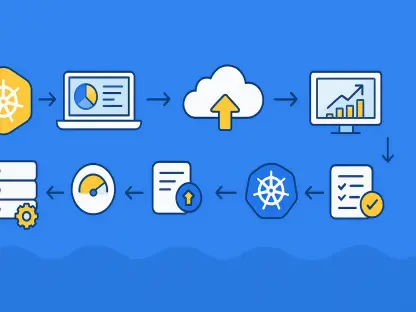
The organizational structure of the pipeline revolves around five core modules that consolidate what were once disparate and fragmented tasks. Traditionally, researchers had to export data between multiple software packages for quality trimming, alignment, and taxonomic assignment, which increased the risk of data loss or formatting errors. By integrating consensus calling, taxonomic classification, clustering, salvaging, and functional annotation into a single continuous workflow, the pipeline creates a seamless environment for sequence analysis. This all-in-one methodology distinguishes the platform from legacy tools, providing a streamlined path that guides a sample from the initial sequencing read to a final annotated species list with minimal external intervention. Such a unified approach significantly reduces the time spent on troubleshooting software compatibility issues, allowing scientists to dedicate more resources to the actual interpretation of biological patterns and the development of new conservation strategies.
Data Integrity: Quality Control and Taxonomy
Reliability in automated sequencing is maintained through a rigorous quality control phase that evaluates forward and reverse reads using a combination of PHRED scores and chromatogram peak heights. The process begins with a sliding window mechanism that scans each sequence to identify and trim away low-quality terminal regions that could introduce noise into the final alignment. Once these segments are removed, the software generates a consensus sequence by carefully aligning the surviving strands and resolving discrepancies based on localized quality metrics. To prevent the inclusion of artifacts or low-confidence data, a fail-safe protocol is implemented to automatically discard any sample that does not meet the strict predefined quality thresholds. This conservative filtering ensures that the resulting dataset is comprised only of high-fidelity sequences, thereby maintaining the scientific integrity of the downstream analysis and preventing erroneous conclusions in large-scale ecological studies.
Once a high-quality sequence is confirmed, the system performs a sophisticated taxonomic assignment that moves beyond simple database matching. Rather than blindly accepting the highest-scoring result from a database search, the software requires a consensus among the top potential candidates. If multiple hits fall within a narrow 0.5 percent identity range but suggest different taxa, the pipeline conservatively truncates the assignment to the last common taxonomic rank shared by all candidates. This prevents over-confident species-level assignments when the genetic data is ambiguous or the reference database is incomplete. Furthermore, specific identity cutoffs, such as a 97 percent threshold for species-level calls, are enforced to ensure consistency with current taxonomic standards. This level of rigor ensures that every classification is backed by statistical confidence, providing researchers with a robust and reproducible foundation for comparing biodiversity across different geographic regions.
Handling Uncertainty: Clustering and Salvaging
A persistent challenge in the study of fungal diversity is the prevalence of species that have not yet been formally described or cataloged in international reference databases. To address this gap, the pipeline incorporates a de-novo clustering module that allows for the identification of unknown biological entities. By utilizing the VSEARCH algorithm, the software groups sequences that lack an official name into operational taxonomic units based on a shared identity threshold. These sequences are assigned temporary labels, such as “denovo_X,” which enables researchers to track and analyze unique lineages that appear consistently across various study sites or experimental treatments. This feature is particularly valuable for exploring understudied habitats where the majority of the biodiversity might be new to science. By treating these undescribed sequences as distinct units, the tool ensures that the full scope of biological diversity is captured, rather than just the subset of species that already exist in known records.
Innovation within the software is further exemplified by its unique salvaging mechanism, which is designed to recover valuable information from sequences that might otherwise be rejected due to marginal quality. While traditional pipelines often discard any read that fails a strict initial filter, this module provides a second chance by comparing borderline sequences against the high-quality operational taxonomic units already established in the study. To maintain scientific rigor and prevent the inflation of diversity estimates, a salvaged sequence is only accepted if a high-quality sample from the same environmental group has already confirmed the presence of that specific taxon. This balanced approach maximizes the data yield from expensive field collections without introducing the risk of false positives or sequencing artifacts. By intelligently reclaiming these segments, the pipeline provides a more comprehensive view of the community structure, especially in cases where sample material was degraded or difficult to sequence.
Ecological Impact: Functional Annotation and Performance
The final stage of the sequence processing workflow involves functional annotation, which translates genetic identities into actionable ecological information. By integrating tools like FUNGuild, the software can assign specific biological roles to each identified taxon, allowing researchers to categorize fungi based on their lifestyle and interactions with the environment. This means that a list of species names can be instantly transformed into a map of ecological functions, distinguishing between beneficial mycorrhizal symbionts, wood-decaying saprotrophs, or harmful pathogens. Such insights are critical for understanding how ecosystems function and how they might respond to environmental stressors like climate change or land-use shifts. By automating this final step, the pipeline bridges the gap between molecular biology and field ecology, providing a holistic view of the biological community that would be incredibly difficult to assemble manually for thousands of individual samples.
The practical efficiency of this automated system was recently demonstrated through extensive testing on a massive dataset of over 14,000 chromatograms collected from various soil plots. The pipeline successfully processed the entire collection in less than twenty minutes while operating on a standard consumer-grade laptop, a feat that highlights its accessibility for researchers who may not have access to high-performance computing clusters. During this validation, the system achieved a high rate of species-level identification, proving that speed does not come at the expense of accuracy. This level of performance is a game-changer for field stations and smaller laboratories, as it allows for real-time data processing even in remote locations. By lowering the computational barriers to entry, the tool empowers a broader range of scientists to engage in complex genomic research, ultimately accelerating the rate at which we can document and protect the world’s rapidly changing biodiversity.
Strategic Value: Revitalizing Sanger for Modern Research
In the broader landscape of modern genomics, the rise of automated Sanger workflows like this one underscores the complementary nature of different sequencing technologies. While next-generation sequencing offers massive volumes of data, its reads are often too short to capture the full length of the internal transcribed spacer region, which is the primary marker for fungal identification. Conversely, while long-read platforms can sequence entire genomes, their outputs often exceed the length of the established sequences found in reference databases. Sanger sequencing occupies a strategic middle ground, producing reads that align perfectly with the architecture of existing global databases. By eliminating the manual processing bottleneck that once limited its utility, this new tool revitalizes Sanger sequencing as a high-throughput option. This allows conservationists to unlock vast amounts of biodiversity data that were previously trapped in unprocessed trace files, offering a clear and detailed picture of nature.
Implementation of automated pipelines in 2026 marked a significant shift in how researchers approached environmental genomics and species barcoding. Experts moved away from the tedious manual inspection of individual trace files and instead focused their efforts on interpreting the ecological implications of large-scale datasets. This transition required laboratories to adopt standardized bioinformatic protocols to ensure that data remained comparable across different international studies. Looking ahead, the integration of these automated tools with expanding global databases will likely lead to a more refined understanding of cryptic species and their functional roles in the environment. Scientists should prioritize the continued training of molecular ecologists in both computational biology and traditional taxonomy to maintain the high standards of expert oversight needed for these systems. By refining these workflows and expanding their application to new markers, the research community significantly improved the speed and accuracy of biodiversity monitoring worldwide.