
The traditional dividing line between backup recovery and active threat detection has historically served as a primary vulnerability for enterprises during sophisticated ransomware campaigns. This systemic gap often forces IT teams to operate in total isolation from security analysts, leading to fragmented responses and the accidental restoration of dormant malware. The Unified Cyber Resilience Integration, born from the strategic partnership between Commvault and CrowdStrike, addresses this deficiency by merging data protection with real-time cybersecurity telemetry. This evolution marks a shift from reactive data storage toward an active defense posture where backup systems are no longer passive targets but integrated sensors within the security ecosystem.
The Convergence: Data Protection and Cybersecurity
The core principle of unified resilience centers on the dissolution of the “silo” mentality that has long plagued corporate infrastructure. By integrating Commvault Cloud with CrowdStrike Falcon Next-Gen SIEM, organizations are moving toward a centralized management plane that treats data integrity as a security metric. This convergence is essential because modern attackers frequently target backup servers first to eliminate any chance of a free recovery.
The necessity of bridging the gap between IT operations and SecOps teams cannot be overstated in an environment where downtime costs are measured in millions. By creating a shared operational language, these two departments can finally coordinate on risk levels and incident severity. This partnership transforms recovery from a desperate “last resort” into a calculated, strategic component of the broader incident response lifecycle.
Architecture and Core Functionality
Bi-Directional Telemetry: Shared Intelligence
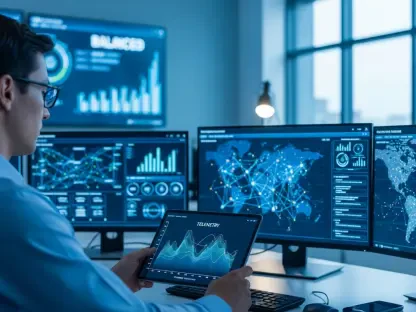
The technical cornerstone of this integration is the bi-directional flow of telemetry, which allows signals to move fluidly between the backup environment and the SIEM. When CrowdStrike identifies a suspicious process on a production server, that signal immediately informs the Commvault recovery platform to flag related snapshots as potentially compromised. This real-time exchange provides a comprehensive view of the threat landscape, ensuring that security analysts see the same data-health metrics as the storage administrators.
AI-Powered Anomaly Detection: Threat Scanning
Advanced AI-driven alerts serve as a defensive layer that operates beneath the surface of traditional signature-based detection. Deep threat scanning analyzes data patterns to find subtle signs of encryption or unauthorized file modifications that might bypass standard perimeter defenses. This implementation is unique because it applies security-grade inspection to the data at rest, effectively turning the backup vault into a final checkpoint for identifying stealthy persistence.
Synthetic Recovery: Backup Integrity Verification
Verification of backup integrity is often the most time-consuming phase of disaster recovery, yet this integration automates the process through synthetic recovery workflows. By simulating restoration in isolated environments, the system can verify that data sets are “clean” before they ever touch the production network. This minimizes the risk of re-infection, a common failure point where organizations inadvertently restore the very backdoor that allowed the initial breach to occur.
Emerging Trends: Vendor Interoperability
The industry is currently witnessing a massive movement away from isolated security tools in favor of a proactive fusion of detection and recovery functions. Enterprises are no longer satisfied with “best-of-breed” products that do not communicate; they demand interoperability that reduces the cognitive load on human operators. This shift reflects a maturing market where the speed of restoration is prioritized as highly as the strength of the firewall.
Real-World Applications: Sector Impact
In high-pressure security events, enterprise-scale organizations utilize unified resilience to define the “blast radius” with surgical precision. For instance, a financial institution can use shared telemetry to isolate exactly which database clusters were affected, allowing unaffected services to remain online while the recovery begins. This level of granularity is a significant upgrade over the “restore everything” approach, which often results in unnecessary downtime for healthy segments of the business.
Addressing Implementation: Technical Hurdles
Despite these advancements, integrating legacy data environments remains a significant technical hurdle for many global organizations. Old-school infrastructure often lacks the API maturity required for seamless telemetry exchange, creating “blind spots” in an otherwise unified strategy. Furthermore, the market still faces obstacles regarding multi-vendor adoption, as some firms hesitate to commit to a specific ecosystem despite the availability of no-cost activation models and streamlined marketplaces.
The Future: Autonomous Cyber Resilience
Looking ahead, the trajectory of this technology points toward deeper AI orchestration and truly autonomous recovery workflows. Future developments will likely involve systems that can independently initiate isolation protocols and start clean-room recoveries the moment a breach is detected, without requiring manual intervention. This evolution will fundamentally change global digital safety, shifting the burden of speed from human responders to automated, intelligent software layers.
Final Evaluation: Integrated Resilience
The strategic benefits of risk mitigation and operational efficiency provided by this integration were evident throughout the analysis. By removing the friction between security and data management, the partnership established a new benchmark for how resilient architectures should function. It became clear that the value resided not just in the software itself, but in the confidence it granted to organizations facing an increasingly hostile threat landscape.
The transition toward a unified defensive posture proved to be a necessary step for any enterprise prioritizing long-term business continuity. While technical hurdles regarding legacy systems persisted, the overall impact on incident response times suggested a significant leap forward. The collaboration between these two industry leaders successfully redefined the boundaries of cyber defense, turning data protection into a proactive weapon against digital extortion.