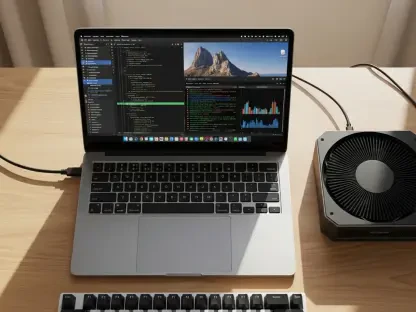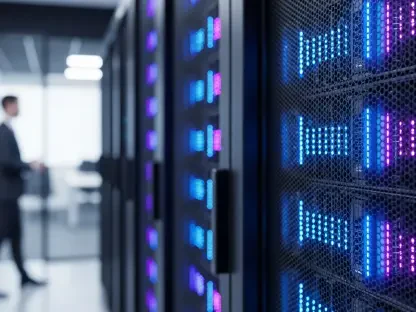

The long-held paradigm of centralized data processing is giving way to a more agile and responsive model, driven by an insatiable demand for instant, data-driven decisions right where events unfold. A paradigm shift from centralized clouds to intelligent edges is underway, fueled by the need to act on information in milliseconds, not minutes. This analysis explores the explosive trend of streaming data at the edge, examining its drivers, real-world applications, and future impact on global industries.
The Rise of Real-Time Processing at the Network’s Edge
The migration of data processing from core data centers to the network periphery is no longer a speculative future but a present-day reality. This strategic move is a direct response to the deluge of data generated by an ever-expanding ecosystem of connected devices. Processing this information closer to its source is becoming essential for applications where latency can mean the difference between success and failure, from industrial automation to interactive user experiences.
Market Momentum and Adoption Statistics
Market growth projections consistently point toward a significant expansion of the edge computing sector, with forecasts showing a compound annual growth rate that outpaces traditional cloud services through 2028. This momentum is largely fueled by the proliferation of Internet of Things (IoT) and other edge devices, which now number in the tens of billions globally. These devices generate continuous streams of data that require immediate analysis to be valuable.
In response, enterprise adoption of edge-native streaming platforms has accelerated dramatically. Recent industry reports indicate that a growing majority of organizations are either actively deploying or piloting edge data processing solutions. The primary motivation is the pursuit of lower latency, improved application reliability, and greater operational efficiency, confirming that the edge is a critical component of modern data architecture.
A Strategic Partnership in Action Redpanda and Akamai
A clear indicator of this trend’s maturation is the strategic collaboration between Redpanda, a high-performance real-time data platform, and Akamai, a global leader in cloud and edge infrastructure. By joining the Akamai Qualified Compute Partner Program, Redpanda is making its modern, Kafka-compatible streaming engine directly available on Akamai’s vast, distributed network. This partnership is engineered to provide a globally accessible, high-performance streaming solution.
This integration delivers several immediate benefits to customers. It significantly expands global reach, allowing enterprises to deploy Redpanda’s powerful streaming capabilities on Akamai’s infrastructure with ease. Furthermore, the collaboration simplifies adoption through unified billing and support, removing common friction points for developers. For businesses running low-latency workloads, the combination of Redpanda’s efficient architecture and Akamai’s edge compute environment promises superior performance and cost-effectiveness.
Industry Insights Why Leaders are Betting on the Edge
The industry’s pivot toward the edge is a strategic imperative, not just a technical preference. Executives at Redpanda emphasize that an edge-native architecture is foundational for empowering the next generation of AI-driven and agentic applications, which demand instantaneous data access to function effectively. These intelligent systems cannot afford the round-trip delays associated with centralized cloud processing.
From Akamai’s perspective, integrating a modern streaming engine like Redpanda enhances its cloud infrastructure, directly addressing emerging market demands for real-time processing capabilities. This collaboration exemplifies a broader industry movement toward building interoperable, developer-friendly platforms. Such partnerships are crucial for bridging the gap between sophisticated data tools and the distributed infrastructure required to run them at a global scale.
The Future Trajectory of Edge Data Streaming
As the technology matures, the potential applications and inherent challenges of edge data streaming come into sharper focus. The ability to process data in real time at the source unlocks transformative opportunities while demanding new approaches to system design and management.
Emerging Opportunities and Innovations
Edge streaming is set to unlock a new frontier of use cases previously constrained by latency. This includes fully autonomous systems, from self-driving vehicles to robotic manufacturing, that must react instantly to their environment. It also enables real-time supply chain optimization, where logistics networks can adapt dynamically to changing conditions. Additionally, immersive digital experiences, such as augmented reality and live interactive events, rely on the ultra-low latency that edge processing provides.
Beyond new applications, this model offers tangible operational benefits. It dramatically reduces latency, enhances application reliability by decentralizing processing, and improves data sovereignty by keeping sensitive information within specific geographic boundaries. For organizations handling massive, distributed workloads, processing data at the edge can also represent a more cost-efficient model compared to transmitting vast datasets to a central cloud.
Inherent Challenges and Strategic Considerations
Despite its advantages, the shift to the edge is not without its obstacles. Managing highly distributed systems introduces significant complexity, particularly in terms of deployment, monitoring, and maintenance. Ensuring robust security across thousands of edge nodes and maintaining data consistency in a decentralized environment are paramount challenges that require careful architectural planning.
These technical hurdles carry strategic implications for businesses. The transition demands new skill sets in distributed systems engineering and a fundamental redesign of existing data architectures. However, integrated solutions, like the one offered by the Redpanda and Akamai partnership, are specifically designed to mitigate this complexity. By providing a unified, managed platform, they lower the barrier to adoption and enable organizations to focus on innovation rather than infrastructure management.
Conclusion Embracing the Real-Time Revolution
In retrospect, the critical need for real-time processing at the edge solidified from a niche requirement into a mainstream business imperative. The tangible benefits demonstrated by strategic alliances, such as the one between Redpanda and Akamai, provided a clear and accessible blueprint for enterprises seeking to modernize their data infrastructure. This partnership was not merely a technical integration but a validation of the architectural shift toward decentralized intelligence.
It became evident that streaming data at the edge evolved into a foundational component for future innovation and a key differentiator for competitive advantage. The ability to analyze and act on information at its point of origin unlocked unprecedented levels of efficiency and responsiveness. Ultimately, the organizations that successfully evolved their data strategies to harness the power of real-time insights at the edge were the ones that defined the next era of digital transformation.