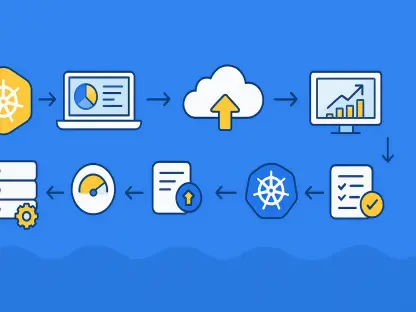

Marketing and sales reporting workflows are becoming highly automated through specialized AI layers that connect raw sources directly to polished presentation formats. This fundamental shift marks the end of the traditional self-service era, where analysts spent the majority of their time manually dragging and dropping nodes on a visual canvas to build data pipelines. In the current landscape, the starting point is no longer a blank screen but a sophisticated natural language interface that interprets business objectives and translates them into fully functional, optimized code. The role of the data professional has consequently moved away from the assembly line and toward a position of strategic oversight. As organizations prioritize speed and warehouse-native execution, the focus is now on how these automated layers can bridge the gap between raw data storage and actionable business intelligence without the friction of legacy manual configurations. This evolution ensures that the heavy lifting of data preparation is handled by intelligent agents, allowing human talent to focus on interpreting the narrative behind the numbers.
Leading Enterprise and Reporting Solutions
Prophecy: High-Performance Automation for Modern Teams
Prophecy has emerged as a dominant force for organizations that require a seamless transition between natural language instructions and enterprise-grade data engineering. Its core strength lies in its ability to balance high-level AI automation with the visual clarity that made legacy tools popular. The platform utilizes a specialized Transform Agent that takes plain English prompts and converts them into a series of visual components known as gems. These gems are not just black-box processes; they are modular, readable blocks that represent specific data actions like filtering, joining, or aggregating. Because the platform compiles these actions directly into native SQL or Python code that runs within the user’s cloud data warehouse, it satisfies the most stringent security and performance standards of 2026. This architecture eliminates the need to move data out of its original secure environment, a significant advantage over desktop-based tools that often struggle with massive datasets and fragmented governance.
The integration of an advanced migration engine further solidifies the position of the platform as a primary successor to older manual frameworks. For teams currently managing thousands of legacy workflows, the prospect of manual rebuilding is often a non-starter. This platform addresses that hurdle by offering a dedicated conversion tool that can automate the translation of existing Designer files into modern, code-based pipelines with a high degree of accuracy. This allows data teams to modernize their stack without losing years of institutional knowledge embedded in older workflows. By providing a bridge that caters to both visual-oriented analysts and code-heavy data engineers, the system creates a collaborative environment where technical and business users can work together on the same underlying logic. This collaborative transparency ensures that every step of the data journey is documented and verifiable, which is essential for maintaining trust in automated systems.
Anomaly AI: The Specialized Reporting Layer
For marketing departments and sales operations that prioritize speed and presentation over complex backend engineering, Anomaly AI offers a highly targeted solution. This platform functions as an intelligent interface that sits directly on top of common data sources such as Excel, Google Sheets, and various marketing APIs. Instead of requiring users to build intricate ETL pipelines, it allows them to query their data using a conversational interface. An analyst can simply ask for a breakdown of advertising performance across multiple regions and receive a fully formatted report in seconds. This capability is particularly useful for the “spreadsheet warrior” who needs to deliver insights to stakeholders without getting bogged down in the technical minutiae of data joining and cleaning. The platform excels at turning raw numbers into professional PowerPoint or PDF presentations, effectively automating the final and often most tedious stage of the reporting lifecycle.
While it is highly effective for specific reporting tasks, it is important to recognize that this tool occupies a specific niche. It is not intended to replace the heavy-duty data engineering capabilities required for enterprise-wide data lakes or complex conditional branching. However, in the context of 2026 business operations, many teams find that they do not actually need a massive, all-purpose data tool for every task. By focusing on the immediate needs of marketing and sales teams, the platform provides a low-friction entry point for AI-driven analysis. It reduces the time between a business question and a visual answer from hours or days to mere minutes. This agility is crucial in a market where data-driven decisions must be made in real time. For organizations that need to empower business units without increasing the burden on centralized IT teams, such a specialized layer provides a practical and highly efficient alternative.
Agentic Engineering and Collaborative Notebooks
Matillion MaiGoal-Based Agentic Oversight
Matillion has fundamentally redefined the concept of data movement with the introduction of Maia, an agentic framework designed to manage the entire data lifecycle. This approach moves beyond simple automation and into the realm of digital teams, where a fleet of AI agents is responsible for planning, building, and even self-healing data pipelines. For a manager in 2026, the workflow involves setting a high-level goal, such as integrating customer sentiment from social media with historical purchase data, and then overseeing the agents as they execute the task. This goal-based oversight significantly reduces the cognitive load on the human user, as the AI handles the discovery of schemas and the optimization of transformation logic. The platform is built specifically for cloud-native environments, ensuring that the agents operate with the scale and speed of modern data warehouses while maintaining strict adherence to enterprise governance policies.
One of the most compelling features of this agentic system is its dedicated migration agent, which is specifically tuned to handle the transition from legacy node-based platforms. Moving an entire department’s worth of data logic is a daunting task that typically takes months, but the migration agent can parse complex legacy files and rebuild them in a modern, cloud-first format in a fraction of that time. This capability is not just about speed; it is about ensuring that the logic remains consistent and that no critical business rules are lost during the move. For data teams that are struggling to keep up with the demands of a fast-moving organization, the ability to deploy a team of digital assistants to handle the repetitive aspects of pipeline management is a game-changer. It allows the human staff to transition into higher-value roles, such as data strategy and governance, while the AI manages the plumbing and maintenance of the data stack.
Hex: Collaborative Analytical Spaces and Logic Auditing
The analytical notebook has undergone a significant transformation, with Hex leading the way as a collaborative environment where diverse technical backgrounds can converge. In the past, notebooks were often isolated environments used primarily by data scientists writing Python or R code. Today, however, these spaces have become the primary interface for collaborative data exploration. The platform utilizes a Notebook Agent that can write complex code cells based on natural language prompts, allowing users who may not be proficient in Python to still perform advanced analysis. At the same time, technical users can audit the AI’s work directly by reviewing the generated code, ensuring that there are no hidden errors or inefficient queries. This dual-path approach ensures that the “black box” problem often associated with AI is mitigated through total transparency and the ability to manually intervene whenever necessary.
Beyond the technical interface, the platform emphasizes the social and collaborative nature of data work through features like Threads, which allow for a conversational experience similar to modern messaging apps. Business stakeholders can ask questions directly within the context of the data and the analysis, and the AI can provide immediate answers or visualizations based on the existing work. This creates a tight feedback loop between those who have the business questions and those who have the data expertise. From 2026 to 2028, the adoption of such collaborative spaces is expected to grow as organizations realize that data work is most effective when it is a shared conversation rather than a siloed process. By bridging the gap between raw code and business-friendly interfaces, the platform provides a modern alternative for teams that found traditional visual tools too limiting but were intimidated by the steep learning curve of pure programming environments.
Predictive Powerhouses and Open-Source Flexibility
Dataiku: Managing the Entire AI Lifecycle
Dataiku remains a cornerstone for organizations that view data preparation as just one part of a much larger AI and machine learning ecosystem. The platform is designed to handle the entire lifecycle of a project, from initial data ingestion and cleaning to the deployment and monitoring of predictive models. Its Cobuild feature is a prime example of how AI has been integrated into the core experience; users can describe a desired outcome, and the platform generates a comprehensive Visual Flow that connects various data sources and transformations. This is particularly valuable for large-scale enterprises where consistency and governance are paramount. By providing a unified environment for both data analysts and machine learning engineers, the platform ensures that the logic used to prepare data for a report is exactly the same as the logic used to train a predictive model, eliminating the risk of data drift and inconsistent results.
The governance capabilities of such an enterprise-grade platform are especially relevant in 2026, as regulatory scrutiny of AI models has reached new heights. Every action taken within the platform is logged, and the logic is presented in a way that can be audited by both internal compliance teams and external regulators. This level of oversight is often missing in smaller, more fragmented tools. For a company that needs to manage hundreds of different models across various business units, the ability to centralize everything in one governed environment is a massive operational advantage. While the cost and complexity might be significant for smaller startups, for a Fortune 500 company, the investment in a comprehensive AI lifecycle platform provides the peace of mind that comes with knowing their data processes are secure, scalable, and fully compliant with the latest industry standards.
KNIME: Accessible Open-Source Innovation
For departments that need a powerful data tool but are working with limited budgets, KNIME continues to provide a robust and highly accessible open-source alternative. Its familiar node-based interface makes it a natural home for those transitioning from older visual tools, but the platform has not remained stagnant. The integration of K-AI, an intelligent assistant, has transformed the way users interact with the software. Instead of searching through hundreds of nodes to find the right one for a specific task, users can simply describe what they want to achieve, and the assistant suggests the most appropriate nodes or even builds out entire segments of the workflow. This significantly lowers the barrier to entry for new users while speeding up the development process for experienced analysts. The open-source nature of the core platform also means that there is a vast community of users contributing new nodes and extensions, ensuring that the tool stays at the cutting edge of data science trends.
The accessibility of this platform extends beyond just the price point; it is also one of the few modern tools that offers a seamless experience on both the desktop and in the cloud. This flexibility is critical for organizations that are in the middle of a multi-year migration to the cloud and need a tool that can bridge the two environments. Analysts can build and test their workflows locally on their machines before deploying them to a centralized server for scheduled execution. This hybrid approach allows for experimentation without the immediate need for expensive cloud compute resources. As we look at the period from 2026 through the end of the decade, the continued relevance of open-source projects in the data stack remains clear. They provide a vital safety valve for organizations that want to avoid vendor lock-in and maintain complete control over their analytical processes while still benefiting from the latest advancements in AI-driven automation.
Big Data Integration and Strategic Implementation
Databricks Lakeflow: Native Intelligence at Scale
For organizations that have fully committed to the lakehouse architecture, Databricks Lakeflow Designer represents the pinnacle of native data preparation. This tool is built directly into the fabric of the platform, meaning it benefits from the same unified governance and security provided by the Unity Catalog. The use of Genie Code allows users to interact with their data using natural language, which the platform then converts into highly optimized Spark or SQL code. This is particularly important for handling the massive volumes of data that have become the norm in 2026. While desktop-based or lightweight cloud tools may struggle when datasets reach the petabyte scale, this native designer handles them with ease by pushing the logic directly to the compute layer where the data resides. This eliminates the latency and security risks associated with data movement, providing a truly unified experience for the modern enterprise.
The primary challenge with such a powerful system is that it typically requires a strong foundation of data engineering to set up and maintain. Unlike simpler reporting tools that can be managed entirely by a business unit, a lakehouse-native designer is part of a larger, more complex infrastructure that involves data lakes, delta tables, and advanced security configurations. However, for organizations that already have these foundations in place, the benefits of having an AI-first preparation tool that is perfectly aligned with their storage and compute layers are immense. It allows the organization to move from raw data to insights at a speed that was previously unimaginable. By providing a single source of truth for both data engineering and data science, the platform ensures that everyone is working with the same definitions and the same high-quality data, which is the ultimate goal of any modern data strategy.
Testing Frameworks: Ensuring a Successful Migration
Successfully transitioning to a new data platform in 2026 requires a more rigorous approach than simply watching a software demonstration. Organizations have found that a structured testing framework is essential for identifying the strengths and weaknesses of an AI-first tool before a full commitment is made. One critical component is the Messy Join Test, where the AI is tasked with combining datasets that have inconsistent formatting, misspelled column names, and varying degrees of data quality. This test reveals how “smart” the AI actually is and whether it can handle the reality of real-world data without constant human intervention. Similarly, a Reliability Test is necessary to evaluate how the system handles scheduled refreshes and what kind of alerting mechanisms are in place when a source file is missing or a connection fails. These tests provide a practical look at the operational reality of the tool beyond the polished sales pitch.
Another vital part of the evaluation process is the Audit Test, which focuses on the transparency and readability of the AI-generated logic. A team member who was not involved in the initial creation of the workflow should be able to sit down and understand the logic within a few minutes. If the AI produces a “black box” that no one can explain, the tool fails the transparency requirement. Finally, a Total Cost Test must be conducted to account for the shifting pricing models of 2026. Instead of simple per-seat licenses, many modern tools now charge based on AI credits or the compute resources used in the data warehouse. Understanding these hidden costs is essential for accurate budgeting and for comparing the true value of the new platform against existing legacy contracts. By following this pragmatic framework, data leaders can ensure that their move to an AI-first alternative is a strategic success rather than an expensive mistake.
Final Findings: The Evolution of the Data Professional
Shift to Agentic Data Engineering
The transition toward agentic data engineering has fundamentally altered the daily lives of analysts and engineers alike. In this new paradigm, the focus has shifted from the mechanics of building pipelines to the management of outcomes and the verification of results. The 2026 landscape is defined by a “Human-in-the-Loop” philosophy, which recognizes that while AI can handle the repetitive and technical aspects of data preparation, human intuition is still required for the most complex business scenarios. Every major platform now emphasizes that no automated process should run without clear human oversight and the ability for a person to intervene. This balance of power allows organizations to achieve unprecedented levels of efficiency without sacrificing the accountability and nuance that only a human professional can provide.
This shift has also resolved many of the historical tensions between business users who want speed and IT departments that want control. By utilizing warehouse-native architectures and inspectable AI, modern platforms allow business units to be self-sufficient while giving IT the tools they need to audit and govern the process. The era of the “shadow IT” data project is coming to an end, replaced by a collaborative model where everyone works within a secure, unified framework. As we looked back on the progress made from 2026 to the present, it became clear that the most successful organizations were those that embraced this change early. They invested in tools that prioritized transparency and integration, and they focused on upskilling their workforce to manage the new digital assistants that have become a standard part of the data stack.
Strategic Considerations: Navigating the New Landscape
For organizations looking to modernize their data operations, the path forward involves a series of deliberate, strategic steps rather than a sudden leap into the unknown. We found that the most effective migrations began with a clear assessment of the specific needs of different business units, rather than trying to find a one-size-fits-all solution. In many cases, a multi-tool strategy proved to be the most efficient, utilizing specialized reporting layers for marketing teams while deploying robust, warehouse-native designers for the core data engineering group. This allowed each team to work with the tools that were best suited for their specific tasks, while still maintaining a centralized layer of governance and security through shared data platforms like Snowflake or Databricks.
The implementation of these new AI-first systems was most successful when it was accompanied by a cultural shift within the organization. Teams had to learn to trust the AI while remaining vigilant and critical of its outputs. We observed that the most resilient data cultures were those that prioritized ongoing education and fostered an environment of experimentation. As the technology continues to evolve, the ability to quickly test and integrate new AI-driven features will remain a key competitive advantage. Ultimately, the move away from legacy manual tools was not just a technical upgrade; it was a fundamental reimagining of how data can be used to drive business value. By adopting these modern alternatives, organizations positioned themselves to thrive in an era where data is no longer a burden to be managed, but a dynamic asset that is continuously refined by the world’s most advanced intelligent systems.