
The evolution of the enterprise data stack has reached a critical juncture where the mere accumulation of information no longer provides a distinct competitive advantage for modern organizations. While the past decade focused heavily on the mechanics of cloud storage and batch processing, the current shift toward autonomous agency represents a fundamental transformation in how digital assets are utilized. Industry experts observe that the market is moving away from passive repositories toward dynamic environments where data serves as the central nervous system for proactive AI agents. This transition is not merely about adding a conversational interface to a database but involves a structural overhaul that allows AI to possess the contextual awareness necessary for executing complex, multi-step business tasks without constant human intervention.
Establishing the Foundation for Autonomous Enterprise Intelligence
The strategic shift from traditional generative AI toward an agentic model signifies a move from reactive text generation to proactive operational logic. Some industry analysts suggest that the initial excitement surrounding large language models has matured into a realization that raw intelligence is insufficient without deep, governed context. Organizations are increasingly looking for platforms that can bridge the gap between storing data and acting upon it. This requires a foundation where data acts as a constant catalyst, enabling agents to understand not only the “what” of the information provided but also the “how” and “why” behind business processes.
A preview of this structural overhaul reveals a focus on the “Agentic Enterprise,” a concept where AI entities are integrated into every facet of the workflow. By rebranding and realigning product suites, the goal is to provide a unified environment where intelligence is not an add-on but a native property of the data itself. Technical researchers argue that this maturity is necessary to move beyond simple automation toward true autonomous decision-making. The significance of this evolution lies in the ability to maintain high standards of reliability and compliance while scaling AI operations across disparate departments, ensuring that the transition from a data cloud to an AI hub is both seamless and secure.
Reimagining the Data Ecosystem as a Hub for Actionable Agency
Optimizing the Developer Experience through Real-Time Data Streams
Technical experts highlight that the shift toward agentic AI requires a reimagining of the developer workflow, moving away from high-friction engineering toward streamlined, low-latency infrastructure. Tools like Snowflake CoCo and Datastream are frequently cited as essential components in this transition, as they provide the real-time data ingestion required for responsive AI applications. By leveraging managed services that bring Apache Kafka streams directly into the AI environment, developers can ensure that their agents are operating on the most current information available. This shift is critical because agents relying on stale, batched data are prone to making inaccurate or irrelevant decisions in fast-moving business environments.
Moreover, the introduction of prebuilt “Skills” within the developer interface acts as a significant force multiplier for engineering teams. These prepackaged sets of logic reduce the manual labor involved in building complex connections between data sources and AI models. Industry observers point out that the move toward reducing engineering friction is a direct response to the challenges of traditional data management. By providing a more intuitive and responsive environment, the platform allows developers to focus on the strategic logic of the agent rather than the underlying plumbing. This maturation of the developer experience is seen as a prerequisite for any organization attempting to scale its AI initiatives beyond a few experimental use cases.
Bridging the Gap Between Raw Analytics and Human-Centric Insights
Democratizing AI within the enterprise requires a shift in focus from technical metrics to operational knowledge that resonates with non-technical users. The Snowflake CoWork interface is designed to facilitate this by allowing departmental leaders to leverage specialized “User Skills” tailored to their specific roles. Analysts suggest that this level of personalization is what distinguishes a generic AI tool from a truly integrated business asset. When users can customize how an agent interprets data based on their unique departmental needs, the AI moves from being a specialized technical tool to a ubiquitous partner in daily operations.
Detailing the importance of holistic views, experts often point to the integration of structured SQL data with unstructured documents through “Deep Research” capabilities. In many organizations, valuable insights are trapped in PDFs, contracts, and internal memos that traditional analytics tools ignore. Combining these with hard numbers provides a comprehensive business view that was previously impossible to achieve at scale. Furthermore, the use of “Cortex Sense” helps translate technical data points into actionable insights, ensuring that the results generated by AI are understandable and useful for human decision-makers. This human-centric approach is vital for ensuring that AI-driven insights actually lead to improved business outcomes.
Implementing Robust Governance to Mitigate Risk in Autonomous Operations
As agents gain more autonomy, the risk of hallucinations and unauthorized data access becomes a primary concern for IT leaders. The Horizon Catalog is viewed as a critical line of defense, providing the “Horizon Context” necessary to ensure that agents operate within established guardrails. By standardizing the metadata and business logic that agents use, organizations can maintain a single source of truth across all AI operations. This governance-first approach is intended to prevent the fragmentation of logic that often occurs when different departments deploy siloed AI solutions.
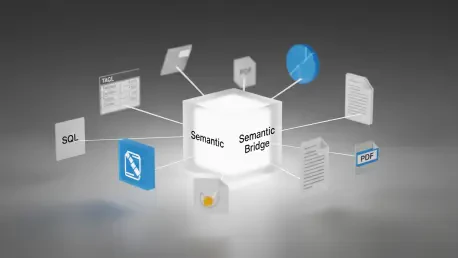
The innovation of “Agent Identity” is a particularly noteworthy development in the realm of secure operations. By treating each AI agent as a verified user with specific permissions, the platform ensures that an agent can only access the data or take the actions for which it has been explicitly authorized. This level of accountability is essential for building trust in autonomous workflows, as it provides a clear audit trail for every decision made by the AI. Additionally, the creation of a “Semantic Bridge” helps automate business definitions, ensuring that both human workers and AI agents share a common understanding of key performance indicators and operational constraints.
Embracing Open Interoperability to Eradicate Traditional Data Silos
The future of enterprise AI depends heavily on the ability to access and govern data regardless of where it is physically stored. Industry leaders argue that the era of proprietary “walled gardens” is ending, replaced by a preference for “zero-copy” integrations and open standards. The adoption of Apache Iceberg and the introduction of Polaris within the governance catalog demonstrate a commitment to data liquidity that was once rare in the cloud storage industry. These open standards allow organizations to manage their data across different platforms without the need for expensive and time-consuming migration projects.
Contrasting this approach with more restrictive models, some analysts suggest that a governance-first strategy is the most sustainable way to scale AI. Infrastructure partnerships, such as those with AWS, facilitate this scaling by providing the necessary compute power and global reach. Challenging the assumption that closed ecosystems provide better security, experts argue that transparency and flexibility are actually the keys to long-term reliability. By allowing for cross-platform interoperability, organizations can ensure that their AI agents have access to the widest possible range of data while still maintaining strict control over security and compliance.
Strategic Recommendations for Navigating the Agentic Transition
For organizations looking to successfully transition to an agentic model, the primary recommendation from industry observers is to prioritize “trusted context” over the raw power of the AI model. While it is tempting to chase the latest high-parameter large language model, the effectiveness of an agent is almost entirely dependent on the quality and relevance of the data it can access. Establishing a robust semantic layer and ensuring that business definitions are standardized across the enterprise are essential first steps. Without this foundation, even the most advanced AI will struggle to provide reliable or actionable insights.
Operationalizing agents also requires a significant focus on monitoring and maintenance. Experts advise that organizations must implement rigorous debugging and regression testing protocols specifically designed for autonomous workflows. Unlike traditional software, AI agents can exhibit drift or change their behavior as the underlying data evolves. Implementing continuous monitoring ensures that these shifts are detected early, preventing errors from cascading through the business. It is also recommended that organizations start with small, well-defined use cases where the risks are manageable before scaling agentic AI to core business functions.
Shaping the Future of Trustworthy and Productive AI Environments
The move toward a governed agentic AI platform signaled a broader realization that the most difficult challenge in the enterprise was not the complexity of the algorithm, but the governance of the underlying business logic. Organizations that recognized this shift early were able to build environments where AI agents were not just experimental novelties but core drivers of productivity. The emphasis on interoperability and open standards proved to be a winning strategy, as it allowed data to flow freely between applications while remaining under a unified security umbrella. Leaders in the market found that their success was tied directly to how well they could translate technical data into a shared, trustworthy context for both humans and machines.
The transition to an agentic platform ultimately changed the way leaders thought about their data architecture. By moving away from legacy storage models and embracing a strategy focused on actionable agency, businesses discovered new ways to streamline their operations and reduce waste. The hardest problems were solved not through sheer computational force, but through the careful application of governance and a deep understanding of business semantics. As the landscape continued to evolve, the ability to maintain a single source of truth across a distributed ecosystem became the hallmark of a resilient and forward-thinking organization. This journey into autonomous intelligence laid the groundwork for a future where AI and humans collaborated within a framework of absolute trust and transparency.