
The transition from a hardware-centric identity to a software-defined intelligence platform marks a definitive turning point for a company that once defined the flash storage market. Pure Storage has officially embraced the name Everpure to reflect its evolution into a provider of automated, living data systems that address the massive computational and architectural demands of modern artificial intelligence. This strategic pivot is not merely a cosmetic change but a fundamental shift in how the enterprise views the relationship between physical media and the intelligence derived from it. By moving beyond the “Storage” moniker, the organization is signaling its intent to lead the next era of data management where the focus lies on the seamless flow of information across global networks. This new identity leverages the established reputation of the Evergreen philosophy, ensuring that the promise of non-disruptive upgrades remains central to a much broader portfolio of cloud-integrated services and automated governance tools. Investment in research and development has been prioritized to support a unified architecture capable of managing the entire information lifecycle while reducing the reliance on legacy hardware paradigms.
Bridging the Gap Between Infrastructure and Intelligence
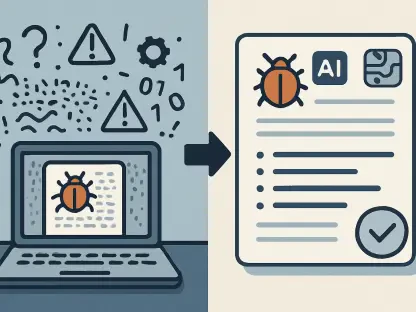
Traditional data environments have long suffered from a profound disconnect between operational systems of record and the sophisticated analytical engines required for modern business intelligence. Historically, this gap required extensive manual intervention, involving complex extraction, transformation, and loading processes that often consumed weeks of engineering time before data became actionable. Everpure addresses this inefficiency by introducing a unified architecture designed to eliminate these bottlenecks through software-driven automation and policy-based orchestration. Instead of treating data as a static resource stored in isolated silos, the new framework allows for a continuous lifecycle where information remains fluid and accessible across various workloads. This shift effectively removes the heavy lifting traditionally associated with data preparation, allowing enterprises to focus their resources on high-value AI initiatives rather than the maintenance of legacy infrastructure. By automating these foundational tasks, the platform ensures that data sets are treated as strategic assets that can be queried and analyzed in real time.
The movement toward a self-managing data environment represents a significant departure from the labor-intensive practices that have characterized the storage industry for decades. Human error and operational inconsistencies often arise when administrators must manually tweak configurations to accommodate shifting analytical requirements or fluctuating workloads. Everpure mitigates these risks by embedding intelligence directly into the management layer, providing a living system that adapts to the specific needs of each application without constant oversight. This level of autonomy is critical for organizations looking to scale their AI operations, as the sheer volume of information generated today exceeds the capacity of traditional manual monitoring. Furthermore, the integration of automated lifecycle management ensures that data remains compliant and optimized throughout its existence, reducing both hardware overhead and the potential for costly security lapses. This evolution underscores a broader trend where the value of a technology partner is measured by its ability to simplify complexity and provide a predictable, scalable path toward digital transformation.
Scaling the Enterprise Data Cloud with Advanced Readiness
Central to the company’s future-facing strategy is the launch of Everpure Fusion™, a sophisticated platform that enables organizations to construct their own Enterprise Data Cloud across hybrid environments. This technology facilitates a standardized approach to data governance, allowing IT leaders to implement consistent protection and scaling policies regardless of where the physical hardware resides. By consolidating fragmented storage pools into a single, cohesive ecosystem, the platform significantly reduces the complexity associated with managing diverse workloads and varying performance tiers. This architectural cohesion is particularly vital for enterprises striving to maintain data sovereignty while simultaneously leveraging the flexibility of public and private cloud resources. The ability to manage information through a unified control plane allows for greater agility, enabling businesses to deploy new services and scale existing ones with unprecedented speed. Consequently, the Enterprise Data Cloud becomes the foundational layer upon which modern digital services are built, providing the necessary resilience and performance to support the most demanding enterprise applications.
To ensure that these data clouds are fully prepared for the rigors of artificial intelligence, the organization has finalized a definitive agreement to acquire 1touch, a leader in automated discovery. This strategic acquisition is specifically designed to address the persistent challenge of dark data, which often remains unclassified and underutilized within large enterprise networks. By integrating advanced classification and characterization capabilities directly into the core architecture, Everpure provides the necessary plumbing to ensure that only high-quality, compliant information reaches AI training models. This proactive approach to data readiness enhances cyber resiliency and ensures that organizations can meet increasingly stringent regulatory requirements without sacrificing the speed of innovation. Characterizing information at the source allows for more precise governance and ensures that sensitive data is handled according to strict organizational mandates. As AI continues to permeate every facet of the modern business, having a clear understanding of the underlying data landscape is no longer optional; it is a fundamental requirement for maintaining a competitive advantage and ensuring operational integrity.
Future Considerations for Intelligent Data Management
The transformation into Everpure successfully repositioned the organization as a comprehensive partner in the journey toward intelligent, automated data ecosystems. By moving away from a hardware-only perspective, the firm established a new standard for how enterprises should handle the massive influx of information generated by modern workloads. Decision-makers were encouraged to view their storage investments not as depreciating physical assets, but as dynamic components of a larger intelligence framework that evolved alongside their business needs. The integration of discovery tools and unified cloud management provided a clear path for those looking to overcome the historical barriers of data silos and manual workflows. Forward-looking organizations recognized that the ability to classify and mobilize data at scale was the primary differentiator in achieving successful AI outcomes. Ultimately, the shift emphasized that the future of the industry lay in the convergence of software intelligence and high-performance infrastructure. Moving forward, stakeholders should focus on consolidating their data environments to ensure that every byte of information is ready for the next wave of analytical breakthroughs.
Adopting an automated data lifecycle required a fundamental change in how IT departments allocated their human and financial capital. The transition proved that reducing manual labor in data management was essential for maintaining the agility needed to compete in a rapidly evolving marketplace. By implementing the Enterprise Data Cloud model, businesses gained the ability to scale their operations without the traditional constraints of hardware procurement and manual configuration. This approach provided a resilient foundation for cyber security, as automated discovery and classification ensured that sensitive information was always protected by current policies. Organizations that prioritized these strategic pillars were better positioned to leverage generative AI and advanced analytics to drive business value. The conclusion of this rebranding era signaled that the most successful enterprises would be those that treated their data as a living, breathing entity rather than a static record. It is now incumbent upon technical leaders to evaluate their current architectures and transition toward unified systems that offer both high performance and intelligent governance to meet the challenges of the coming years.