
As New Jersey navigates the complexities of the digital age, state legislators have taken a decisive stand to ensure that the rapid expansion of high-capacity data centers does not place an undue financial burden on the average utility ratepayer. The New Jersey General Assembly recently moved to regulate the relationship between the state’s electrical grid and the technology sector, establishing a protective barrier for residential households and small businesses. This legislative effort, spearheaded by Assemblyman David Bailey Jr., addresses the proliferation of high-capacity data centers that require massive amounts of energy to function. By focusing on these hyperscale facilities, the state is making a proactive attempt to ensure that the infrastructure upgrades necessitated by tech giants are not subsidized by the monthly bills of regular citizens. This move signals a significant shift in energy policy, where the physical demands of the artificial intelligence boom are now being met with strict financial oversight to maintain economic equity across the state.
Ensuring Fair Allocation of Infrastructure Expenses
Establishing Responsibility: Physical Grid Upgrades
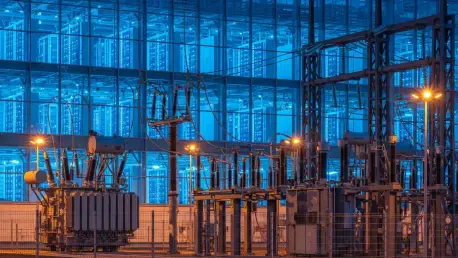
The core of the new legislation introduces a framework that Assemblyman Bailey has famously compared to a “prenuptial agreement” between the State of New Jersey and the technology industry. This metaphor emphasizes that while the state welcomes the economic potential of data centers, the terms of their arrival must be fiscally responsible. Under this plan, public electric utilities are required to implement specialized rate structures or “tariffs” specifically for high-load customers that utilize 100 megawatts or more. These agreements are designed to ensure that the costs associated with installing new hardware, such as substations, transformers, and high-voltage transmission lines, are borne by the entity creating the demand. This structural change prevents these multi-million dollar capital expenses from being integrated into the general rate base, which would otherwise lead to a subtle but significant increase in the costs paid by every other utility customer.
By shifting the financial responsibility for grid modernization directly onto hyperscale developers, the legislation reinforces the “cost-causer, cost-payer” principle within the utility sector. Historically, large-scale infrastructure projects were often socialized, meaning the expenses were shared by the entire customer base under the assumption that such growth benefited the public at large. However, the sheer scale of modern data processing facilities requires dedicated upgrades that may offer little to no direct benefit to the surrounding residential community. The bill mandates that utilities conduct thorough assessments to isolate these specific needs, ensuring that the heavy lifting of grid expansion is funded by the corporations driving the demand. This approach provides a necessary layer of transparency, allowing regulators to track how capital is deployed and ensuring that industrial growth does not come at the expense of the financial stability of New Jersey families.
Mitigating Risk: Managing Stranded Costs
To further safeguard the public interest, the legislation includes robust protections against the phenomenon known as “stranded costs.” These costs occur when a utility invests heavily in building out infrastructure for a projected energy load that eventually fails to materialize or is prematurely abandoned by the user. Under the new law, data centers are contractually required to pay for at least 85% of their requested power capacity for a minimum duration of ten years. This “take-or-pay” provision is a critical component of the bill, as it ensures that the utility remains financially whole even if a tech company decides to scale back its operations or relocate. By securing these long-term commitments, the state prevents a scenario where regular ratepayers are left to pay for an overbuilt and underutilized electrical system that was tailored specifically for a single corporate entity that has since departed.
The implementation of these ten-year commitment windows provides a much-needed level of predictability for utility planners and state energy regulators. In the past, the rapid pace of technological shifts has sometimes left infrastructure projects obsolete before they were even fully amortized. This bill addresses that volatility by requiring data center operators to provide a guaranteed revenue stream that covers the depreciation and maintenance of the equipment installed for their benefit. This contractual obligation forces companies to be more precise in their energy forecasting and discourages the speculative reservation of grid capacity that could be used more efficiently elsewhere. By balancing the risks of infrastructure expansion between the utility and the industrial consumer, New Jersey is creating a more resilient financial model for its energy future, shielding the general public from the fallout of corporate shifts.
Navigating Economic Pressures and Market Realities
Distinguishing Costs: Delivery vs. Supply
The legislative push for these protections comes in the wake of significant economic shocks to local residents, some of whom saw their electricity bills rise by nearly 20% during the previous summer season. It is essential to distinguish between the two primary components of a utility bill: delivery costs and supply costs. The current bill focuses almost exclusively on delivery costs, which involve the physical poles, wires, and hardware used to transport electricity to a specific location. By addressing these physical infrastructure expenses, the state can prevent the direct socialization of construction costs. However, experts from the Division of Rate Counsel have noted that while the bill is a victory for infrastructure fairness, it does not directly tackle the rising market price of the electricity itself, which is influenced by total regional demand.
As hyperscale data centers increase the overall demand for electricity within the region, the market price for every kilowatt-hour tends to rise for all consumers, regardless of who pays for the wires. This supply-side pressure remains a complex challenge that requires a multifaceted solution beyond simple infrastructure tariffs. While the bill ensures that a data center pays for its own substation, it does not prevent that facility from driving up the clearing price of energy in the wholesale market. Some advocates have suggested that the only way to truly neutralize this impact would be to require data centers to bring their own power generation sources online, such as dedicated solar farms or small modular reactors. This would allow the facilities to operate without putting additional strain on the existing supply, thereby keeping prices more stable for residential users who rely on the standard market.
Regional Dynamics: The Challenge of Grid Markets
Because New Jersey operates as part of the PJM Interconnection, a regional transmission organization spanning 13 states and the District of Columbia, its energy policy is inextricably linked to the actions of its neighbors. This creates a delicate balancing act for state legislators who wish to protect their constituents without making the state an outlier in the regional market. If New Jersey imposes significantly stricter requirements than neighboring states like Pennsylvania or Delaware, there is a legitimate concern that technological investment will simply flow across state lines. Since the electrical grid is interconnected, a data center built just over the border in a more lenient jurisdiction would still drive up regional supply costs for New Jersey residents, but without providing the local tax revenue or jobs that come with the facility.
This regional reality underscores the need for a coordinated approach to energy regulation that transcends state boundaries. While the current bill provides a localized shield against infrastructure subsidies, the broader issue of energy supply inflation may eventually require a collaborative framework within the PJM footprint. Legislators are aware that “jurisdictional shopping” by tech giants is a real threat to the state’s economic competitiveness. Therefore, the current bill is designed to be rigorous enough to protect ratepayers while remaining grounded in verifiable cost-based reasoning that can withstand legal and economic scrutiny. By leading the way with this legislation, New Jersey aims to set a precedent that other states in the PJM network might follow, eventually creating a standardized regional expectation that high-load industrial users must contribute fairly to the systems they depend upon.
Balancing Consumer Protection with Economic Growth
Protecting the Public: Ending Socialized Corporate Risk
Proponents of the bill argue that the legislation is a matter of fundamental fairness, insisting that middle-class families should not be required to subsidize the infrastructure of some of the most profitable corporations in history. They view this measure as a necessary consumer protection that promotes responsible growth within the state’s borders. By requiring companies to “put their money where their mouth is,” the state aims to facilitate industry expansion without forcing the public to carry the financial downside of private corporate investments. This perspective treats the electrical grid as a shared public resource that must be managed with a high degree of stewardship. Ensuring that the “AI boom” is not built on the backs of everyday citizens is seen as a vital step in maintaining public trust in both the government and the utility companies.
Furthermore, this legislative action seeks to prevent the socialization of risk, where the profits are private but the infrastructure liabilities are public. By mandating transmission security agreements and long-term usage contracts, the state is effectively insulating the general ratepayer from the volatile nature of the tech industry. This level of protection is particularly important as the energy transition accelerates and the grid faces unprecedented demands from various sectors. Proponents emphasize that they are not anti-growth; rather, they are pro-accountability. They believe that a healthy business environment is one where companies pay the true cost of their operations. This approach ensures that the economic benefits of hosting data centers, such as increased local tax revenue and support for the digital economy, are not negated by hidden costs passed on to the residents through their monthly utility bills.
Industry Concerns: Addressing State Competitiveness
In contrast, critics of the legislation and various business advocacy groups have expressed concern that the bill might signal a hostile environment for the technology sector. Opponents argue that the 10-year usage mandate and the high percentage of guaranteed power payments could be perceived as holding companies “hostage” to a rigid and potentially outdated energy plan. They contend that in a rapidly evolving technological landscape, such mandates create an atmosphere of uncertainty that could drive major investors toward states with more flexible regulations. These groups emphasize that data centers are not merely energy consumers but are essential pieces of digital infrastructure that provide high-paying jobs, significant property tax contributions, and the backbone for the modern digital economy that all businesses now rely on.
These advocacy groups further argue that any differential rate treatment must be strictly backed by verifiable, data-driven reasoning to avoid violating established ratemaking principles. They suggest that singling out the data center industry could set a dangerous precedent for other high-load sectors, potentially stifling innovation across the board. The concern is that if the regulations are too burdensome, New Jersey will miss out on the long-term benefits of the “AI revolution,” which includes the development of local tech ecosystems and the modernization of the workforce. Critics suggest that instead of rigid mandates, the state should focus on collaborative solutions that encourage data centers to invest in renewable energy and grid efficiency. They believe that a more balanced approach would involve incentives for green building and self-generation, rather than what they perceive as punitive financial barriers to entry.
Looking Ahead: Future Considerations for Energy Policy
The passage of this bill through the General Assembly represented a pivotal moment in the state’s ongoing effort to modernize its energy policy for the mid-2020s. By establishing clear rules for hyperscale data centers, the state provided a roadmap for how large-scale industrial projects should interact with public utilities. This move acknowledged that the physical infrastructure of the internet has tangible local consequences that require deliberate oversight. While the debate over economic competitiveness continued, the legislative focus remained on creating a sustainable model where growth and consumer protection could coexist. This balance was viewed as essential for maintaining the state’s overall economic health while ensuring that the benefits of technological progress were shared equitably among all residents, rather than being concentrated in the hands of corporate stakeholders.
The implementation of these measures necessitated a new era of cooperation between state regulators, utility providers, and industry leaders. Moving forward, the focus shifted toward monitoring the effectiveness of these tariffs and ensuring that they were adjusted as energy technologies evolved. The state also began exploring additional policies to encourage data centers to integrate more closely with the local energy ecosystem, such as utilizing waste heat for local heating projects or participating in demand-response programs. These forward-looking strategies aimed to transform data centers from passive energy consumers into active partners in the state’s broader energy goals. By treating these facilities as integral parts of the infrastructure rather than isolated entities, New Jersey worked to ensure that the digital backbone of the future was both robust and fair for every member of the community.