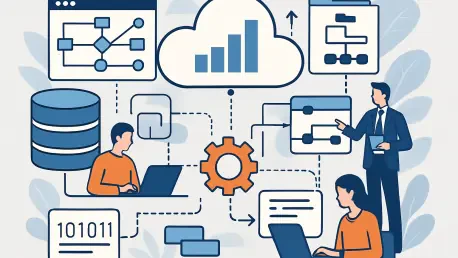

The persistent struggle to reconcile disparate digital systems has transitioned from a routine IT concern into a defining factor for corporate survival in the current economic landscape. Large-scale organizations now operate within complex, data-driven ecosystems where the ability to harmonize information from diverse sources dictates the speed of innovation and the quality of the customer experience. Integration is no longer perceived as a background technical task; it serves as the vital operating layer that supports customer identity, inventory synchronization, and financial accuracy across global markets. As enterprises navigate the complexities of 2026, the traditional boundaries between back-office functions and front-end engagement have blurred, necessitating a strategy that prioritizes data fluidity over static storage. This shift requires a fundamental reimagining of how data flows through an organization, moving away from rigid, legacy structures toward more flexible, interconnected frameworks that can adapt to rapid market changes.
When established brands experience a decline in market share or a noticeable slowdown in their digital transformation efforts, the underlying cause is rarely a lack of vision or creative talent. Instead, the failure frequently originates in integration gaps—those disconnected spaces between software systems where critical information becomes trapped, fragmented, or entirely obsolete. This systemic fragmentation imposes a heavy “inaction tax” on the business, where the cumulative costs of maintaining brittle, outdated systems eventually outweigh the investment required to modernize the entire digital architecture. To avoid this financial and operational drain, top-performing enterprises are actively adopting unified commerce platforms that bridge the divide between departments. By treating integration as a core product capability rather than a series of isolated technical fixes, these organizations ensure that their data remains a strategic asset rather than a liability. This proactive approach allows leadership to make decisions based on real-time insights, fostering an environment where innovation can flourish without the constraints of technical debt.
Overcoming the Proliferation of Data Silos
Data silos represent a significant barrier to organizational efficiency, emerging when vital information is locked within independent platforms that fail to communicate in real time across the enterprise. For many large brands, marketing data lives in one system, logistics in another, and financial records in a third, creating a fragmented view of the business that hinders strategic agility. When these departments operate in isolation, corporate leadership loses access to a single source of truth, resulting in inconsistent customer experiences and delayed decision-making processes. To combat this, modern enterprises are transitioning toward an API-first integration layer that standardizes events and identities across the entire organizational stack. This shift ensures that every department is working from the same set of reconciled data, eliminating the need for manual cross-referencing and reducing the risk of operational errors that can alienate customers.
The adoption of a central “hub” model is replacing the outdated practice of building fragile point-to-point connections that often break during system updates or scaling efforts. By utilizing stable API contracts, different software tools can interact seamlessly without the need for custom, brittle code that requires constant maintenance. This structural transformation allows companies to centralize the flow of information, ensuring that a customer’s interaction with a specific marketing campaign is immediately visible to sales and support teams in real time. Building this cohesive data environment eliminates the friction traditionally associated with manual data transfers and provides a truly holistic view of business operations. As a result, the enterprise can react more quickly to emerging trends and customer needs, turning what was once a series of disconnected data points into a powerful, unified engine for sustainable growth and operational excellence.
Beyond the technical benefits, dismantling data silos fosters a culture of collaboration and transparency that is essential for competing in 2026. When teams have access to shared data sets, they can better align their goals and metrics, leading to more effective cross-functional initiatives that drive revenue and customer loyalty. For example, a unified data view allows the supply chain team to adjust inventory levels based on real-time marketing performance, preventing stockouts during high-demand periods. This level of synchronization is only possible through a modern integration strategy that treats data as a fluid resource rather than a static commodity. By investing in the right architectural foundations, enterprises can transform their data silos into a strategic advantage, enabling them to deliver the personalized, high-speed experiences that modern consumers expect across every digital and physical touchpoint.
Managing Complex ERP Integration Requirements
Enterprise Resource Planning (ERP) systems, such as those provided by SAP or Oracle, remain the financial and operational backbone of the modern enterprise, yet they are often poorly suited for the high-speed demands of digital commerce. These systems were traditionally designed for rigorous financial governance and back-office control, leading to a natural rigidity that conflicts with the agile requirements of a modern storefront. Integrating a legacy ERP with a fast-moving commerce platform can frequently result in grueling 18-month project timelines and exorbitant maintenance fees that drain resources. This technical friction serves as a massive barrier to growth, making it increasingly difficult for established brands to enter new markets or launch experimental sales channels without incurring massive overhead. The challenge lies in maintaining the financial integrity of the ERP while allowing the commerce layer to remain responsive and innovative.
To bridge this gap, forward-thinking organizations are implementing Integration-Platform-as-a-Service (iPaaS) strategies to create a more flexible and resilient connection between the heavy back-office systems and the consumer-facing front end. By selecting unified platforms that offer native ERP connectors, companies can reduce their time-to-launch for new initiatives by approximately 20% while significantly lowering their total cost of ownership. This approach allows the ERP to remain the final financial authority—the system of record—while the commerce engine handles real-time engagement and customer interactions. By decoupling these two environments through a sophisticated integration layer, businesses can update their customer-facing features without risking the stability of their core financial systems. This balance of control and agility is critical for enterprises that need to scale their operations globally while maintaining strict compliance and financial oversight.
Furthermore, modern ERP integration strategies are increasingly moving away from bulk data transfers in favor of more granular, purposeful interactions. Instead of trying to mirror every piece of data between systems, enterprises are focusing on the critical touchpoints where financial accuracy and customer experience intersect, such as pricing and inventory levels. This refined approach minimizes the data load on the ERP and reduces the complexity of the integration, leading to more stable and performant systems. By utilizing modern middleware and pre-built connectors, IT teams can spend less time on manual troubleshooting and more time on strategic projects that add value to the business. The result is a more efficient organization where the ERP supports growth rather than hindering it, providing the solid foundation necessary for complex global commerce operations to thrive in a competitive environment.
Achieving Real-Time Synchronization at Scale
The traditional reliance on batch processing, where data is synchronized only once a night or every several hours, has become a major liability in the high-velocity commerce environment of 2026. Today’s consumers expect immediate feedback on product availability, order status, and personalized promotions, leaving virtually no margin for data latency or inaccuracies. When synchronization lags behind real-world events, businesses face the very real risk of “overselling,” where items are sold online that have already been purchased in a physical store. This failure of inventory integrity not only leads to canceled orders and customer frustration but also damages the long-term reputation of the brand. Achieving real-time synchronization is therefore no longer a luxury but a fundamental requirement for maintaining operational excellence and customer trust in a saturated market.
The architectural trend has shifted decisively from “polling” systems, which periodically check for updates, to event-driven architectures that utilize webhooks to trigger immediate actions across the entire tech stack. In this model, as soon as a significant event occurs—such as a price change, a new order, or a shipment update—the information propagates to all integrated systems in a matter of milliseconds. This level of precision ensures that the marketing team isn’t promoting an out-of-stock item and that the finance team has an up-to-the-minute view of revenue. High-velocity commerce demands this level of responsiveness to manage the complexities of global supply chains and multi-channel sales effectively. By adopting an event-driven approach, enterprises can eliminate the “blind spots” that occur between batch cycles, allowing them to operate with a level of agility that was previously impossible for large-scale organizations.
Implementing real-time synchronization at scale also requires a robust infrastructure capable of handling massive surges in data traffic, particularly during peak shopping seasons or flash sales. Modern integration platforms are designed to be “elastically scalable,” meaning they can automatically increase their processing power to handle high volumes of webhooks and API calls without a drop in performance. This reliability is essential for enterprises that manage thousands of transactions per minute across multiple regions. By moving to a cloud-native, event-driven model, brands can ensure their systems remain synchronized and responsive even under extreme pressure. This technical resilience provides the confidence needed to launch ambitious marketing campaigns and expand into new territories, knowing that the underlying data architecture can support the increased demand without failing or slowing down the customer journey.
Ensuring Data Quality and Consistency
Connecting disparate software systems is only half the battle; ensuring that the data being exchanged is high-quality and consistent is where the true challenge often lies. Even when a physical connection exists between two platforms, the data they share may be incompatible, incorrectly formatted, or missing key attributes, which inevitably leads to broken automations and manual errors. For example, a product might have one unique identifier in a warehouse management system and a completely different one in the accounting software, creating a nightmare for reconciliation. These persistent inconsistencies directly undermine the effectiveness of Artificial Intelligence and machine learning initiatives, as models trained on fragmented or poor-quality data will produce unreliable and ultimately useless outputs. Data integrity is the silent engine of the modern enterprise, and without it, even the most expensive digital tools will fail to deliver their promised value.
To combat these issues, organizations are increasingly implementing Master Data Management (MDM) strategies to create a “golden record” for every critical business entity, from products to individual customers. By standardizing on a single platform that serves as the authoritative source for commerce data, companies can effectively eliminate the need for redundant and parallel data maintenance across multiple departments. This reconciled, “clean” data becomes the stable foundation for advanced analytics, personalized marketing, and automated workflows that drive significant operational efficiency. When every system in the enterprise refers back to the same golden record, the risk of data drift and conflicting information is virtually eliminated. This consistency allows the brand to present a unified face to the customer, ensuring that pricing, descriptions, and availability are identical regardless of the channel being used.
Maintaining data quality also requires ongoing governance and the implementation of automated validation rules that prevent “dirty” data from entering the system in the first place. Modern integration tools now include features that automatically check for missing fields, duplicate entries, and formatting errors before the data is allowed to propagate through the network. This proactive approach to data hygiene saves IT teams thousands of hours in manual cleanup and ensures that the business can rely on its reports for strategic planning. As enterprises in 2026 continue to lean more heavily on data-driven decision-making, the value of high-quality, consistent information will only continue to rise. Investing in robust data management practices is a strategic necessity that protects the organization’s digital investments and provides the clarity needed to navigate an increasingly complex global marketplace with confidence and precision.
Resolving Legacy Constraints and Technical Debt
Many established enterprises remain tethered to aging legacy systems that lack modern APIs, forcing their IT departments to build layers of “integration spaghetti” just to keep basic operations running. This situation creates a destructive cycle where the vast majority of the technology budget is consumed by maintaining brittle, poorly documented structures rather than building new, revenue-generating features. Over time, this technical debt accumulates, making the entire organization slow to react to competitive pressures and increasing the risk of system failures during critical periods. Furthermore, the growing scarcity of developers who are both willing and able to work with obsolete programming languages makes these legacy systems a significant long-term liability. Brands that fail to address these constraints find themselves increasingly paralyzed by their own infrastructure, unable to adopt the very tools that could save them.
Leading brands are breaking free from this cycle by adopting composable or headless architectures that effectively decouple the front-end user experience from the back-end legacy systems. This approach allows for a strategy of incremental modernization, where specific components of the tech stack can be replaced or upgraded over time without the immense risk of a “big-bang” system replatforming. For instance, a company might replace its outdated search functionality or checkout process with a modern, API-based solution while still keeping its core legacy ERP for financial record-keeping. By moving toward this modular setup, enterprises can remain agile, testing new technologies and business models with minimal disruption to their core operations. This flexibility is essential for staying competitive in 2026, as it allows brands to pivot their digital strategy in response to changing consumer behaviors without being held back by their past technology choices.
The move toward a composable architecture also has a profound impact on an organization’s ability to attract and retain top-tier technical talent. Modern developers and data scientists prefer working with scalable, cloud-native tools and well-documented APIs rather than struggling with decades-old code and proprietary legacy frameworks. By modernizing their stack, enterprises can create a more attractive environment for the innovators who will drive the next phase of the company’s growth. This transition is not just about technology; it is about building a future-proof culture that values agility, speed, and continuous improvement. As legacy systems are slowly phased out or abstracted behind modern integration layers, the “inaction tax” begins to disappear, freeing up resources that can be reinvested into product development and customer acquisition. Ultimately, resolving technical debt is about reclaiming the freedom to innovate and ensuring the brand’s longevity in a digital-first world.
Unifying Multichannel Data Fragmentation
As enterprises expand their presence across direct-to-consumer websites, wholesale channels, and social marketplaces, they often find that their data has become splintered by sales channel. This fragmentation creates a major obstacle to providing a unified customer journey, where a loyal retail shopper might be treated as a total stranger when they interact with the company’s mobile app or social media storefront. When data is siloed by channel, it becomes impossible to gain a 360-degree view of the customer, leading to missed opportunities for personalization and cross-selling. Furthermore, splintered inventory data results in massive inefficiencies in stock allocation, often leading to situations where one channel is sold out while another has excess inventory sitting in a warehouse. This lack of visibility prevents the implementation of modern, expected services like “buy online, pick up in-store” (BOPIS) and seamless cross-channel returns.
The implementation of a unified commerce data model is the essential remedy for this fragmentation, centralizing all sales channels onto a single, cohesive platform. This centralized approach allows for a “unified cart” experience, where a customer’s shopping preferences, loyalty points, and history follow them regardless of the touchpoint they choose to use. When the data is unified, a customer can add an item to their cart on a social media platform and find it waiting for them when they log into the brand’s main website later. This level of fluidity is what modern consumers have come to expect, and it can only be achieved through a sophisticated integration strategy that treats all channels as part of a single ecosystem. Centralized data also empowers the logistics and supply chain teams to fulfill orders from the most efficient location, whether that is a regional distribution center or a local retail store, optimizing both shipping costs and delivery speed.
Beyond improving the customer experience, unifying multichannel data provides the business with unparalleled insights into channel performance and customer behavior. Instead of looking at isolated reports from each platform, leadership can see how different channels interact with each other and which touchpoints are most effective at driving long-term loyalty. This holistic view allows for more informed marketing spend and a more accurate inventory forecasting process, directly impacting the bottom line. In 2026, the brands that win will be those that can successfully navigate the complexity of a multi-channel world without sacrificing the simplicity and consistency of the brand experience. By investing in a unified data architecture, enterprises can turn the challenge of channel fragmentation into a competitive advantage, creating a seamless and efficient operation that is ready for whatever new sales platforms emerge in the years ahead.
Strengthening Security and Regulatory Compliance
In the current digital landscape, every new integration point within an enterprise network expands the potential attack surface, making security a primary concern for architects and executives alike. With the continued evolution of global regulations such as GDPR and CCPA, tracking and managing personal data across dozens of fragmented systems is no longer just a technical difficulty; it is a significant legal and financial liability. If a customer exercises their “right to be forgotten,” an organization must have the capability to locate and permanently purge that individual’s data across every integrated platform in its ecosystem. Failure to do so can result in massive regulatory fines and a devastating loss of consumer trust. Security and compliance must therefore be treated as foundational elements of the integration strategy, rather than secondary concerns to be addressed after a system is built.
Standardizing on modern authentication and authorization protocols, such as OAuth-based access controls, ensures that security is baked into the integration architecture from the very beginning. Centralized audit logging allows the IT department to monitor all data flows in real time, identifying and responding to potential threats before they can escalate into major breaches. Furthermore, by utilizing platforms that come with built-in compliance certifications—such as SOC 2 or PCI DSS Level 1—enterprises can offload much of the heavy lifting associated with regulatory maintenance to their service providers. This strategic partnership allows the organization to focus on its core business while maintaining the highest standards of data protection. A well-integrated system makes data lineage transparent and traceable, providing the documentation necessary for successful security audits and ensuring that data is handled responsibly at every stage of its lifecycle.
The move toward a more integrated and secure architecture also enhances the organization’s resilience against increasingly sophisticated cyberattacks. When data flows are centralized and monitored, it is much easier to implement robust encryption and identity management policies that protect sensitive information. In contrast, a fragmented environment with dozens of unmonitored point-to-point connections is a prime target for attackers looking for weak links in the chain. By prioritizing security in their integration strategy, enterprises not only protect themselves from financial and legal ruin but also build a foundation of trust with their customers. In an age where data privacy is a top concern for consumers, the ability to demonstrate a secure and compliant digital infrastructure is a powerful brand differentiator. Investing in secure integration is ultimately an investment in the long-term viability and reputation of the enterprise in a world where data is both the most valuable and the most vulnerable asset.
Implementing a Staged Strategy for Modernization
Modernizing a global enterprise integration strategy is a monumental task that does not necessarily require an immediate or total “replatforming” of every existing system. Industry experts and successful digital leaders instead recommend a staged approach that begins with a comprehensive mapping of the current technological reality to identify the integration failures posing the highest risks. By prioritizing changes that address immediate revenue leakage or compliance vulnerabilities, organizations can see significant improvements in performance while simultaneously planning for more extensive structural shifts. This phased methodology reduces the risk of operational disruption and allows the business to prove the value of modernization through quick wins. It also provides the internal IT team with the opportunity to build the necessary skills and processes required to manage a more sophisticated, API-driven architecture over the long term.
Utilizing prebuilt connectors for standard workflows—such as tax calculations, shipping logistics, or basic ERP synchronization—allows the enterprise to move faster by leveraging existing, battle-tested solutions. This strategy frees up internal developers to focus their efforts on creating proprietary logic and unique features that offer a true competitive advantage in the marketplace. As new projects are launched, enforcing a strict API-first communication policy ensures that the organization does not accidentally fall back into the trap of creating new, isolated data silos. This disciplined transition allows the enterprise to slowly shed its technical debt and replace legacy systems one piece at a time, maintaining the velocity required to compete in the fast-paced 2026 marketplace. Each stage of the modernization process should be guided by clear metrics and business goals, ensuring that every technical decision is aligned with the overall strategic direction of the company.
The transformation of data integration from a tactical necessity to a strategic architecture was completed through a focus on real-time fluidity and architectural resilience. Successful enterprises recognized that fragmented data served as an “inaction tax” that stifled innovation and eroded customer trust, and they acted decisively to eliminate those gaps. By adopting API-first, event-driven, and unified platforms, these brands significantly lowered their total cost of ownership while increasing their ability to respond to market shifts with precision. The journey toward a single source of truth allowed teams across marketing, finance, and logistics to work from the same insights, turning data into a powerful engine for growth. Ultimately, those who prioritized a secure, scalable, and integrated infrastructure moved beyond the burden of technical debt and gained the freedom to lead in a competitive digital landscape. Progress was achieved not through a single leap, but through a methodical commitment to building a more connected and responsive enterprise.