
Recent breakthroughs in the field of medical informatics have sparked a heated debate regarding whether modern machine learning tools can truly outperform the long-established standards of clinical coding. As healthcare systems globally grapple with an overwhelming influx of digital information, a landmark 2026 study published in Pediatric Research has provided compelling evidence that Natural Language Processing (NLP) is significantly more effective at capturing clinical detail than the ICD-10 system. This transition from manual, categorical coding to automated, contextual analysis marks a pivotal moment in the history of medical documentation. By focusing on the intrinsic value of the physician’s narrative, NLP offers a way to preserve the high-fidelity data that is often lost when complex health histories are squeezed into narrow alphanumeric codes. This shift represents a fundamental reimagining of how patient information is translated into actionable medical insights to improve diagnostic precision.
The Shift from Coding to Contextual Analysis
Categorical Coding: The Limits of Administrative Documentation
The ICD-10 system has long served as the universal language of medical administration, providing a standardized framework for billing, insurance reimbursement, and broad public health tracking. However, its primary design as a statistical tool means it was never intended to capture the subtle nuances of an individual patient’s clinical journey or the multifaceted nature of chronic illnesses. When a clinician evaluates a complex case, they document a wealth of information that includes specific symptom onset, environmental factors, and the rationale behind choosing one treatment path over another. In a traditional coding environment, this rich narrative is often reduced to a handful of discrete codes that strip away the crucial reasoning behind a diagnosis. This reductionist approach often leads to a significant loss of clinical context during the documentation process, creating a data gap that hinders the ability of subsequent providers to fully understand a patient’s history.
Information Loss: The Vanishing Depth of Clinical Narratives
Beyond the loss of narrative depth, the categorical nature of ICD-10 documentation creates a rigid environment that struggles to keep pace with the rapid evolution of medical knowledge and diagnostic criteria. Because the system relies on a finite set of pre-defined codes, it frequently fails to account for emerging conditions or the specific combinations of symptoms that characterize a rare disease. Research indicates that these omissions are not merely the result of human error but are inherent structural flaws within the coding system itself. When a coder cannot find an exact match for a patient’s presentation, they are forced to select the most approximate category, which can lead to inaccuracies in the permanent health record. This translation loss effectively hides the specialized insights of the treating physician, making it difficult for researchers to mine data for rare patterns. Consequently, manual coding has become a barrier to growth in an increasingly complex medical world.
Precision Analysis: Leveraging Advanced Machine Learning Tools
In stark contrast to the limitations of manual coding, Natural Language Processing utilizes advanced machine learning algorithms to analyze the unstructured text found within clinician notes, ensuring that no detail is left behind. These sophisticated tools are capable of interpreting the human narrative in its original form, recognizing that a patient’s story is far more than a collection of distinct symptoms. By scanning the entirety of a medical record, NLP can identify specific descriptors of pain, the intensity of symptoms, and even the emotional state of the patient, all of which contribute to a more comprehensive understanding of the health status. This ability to handle nuance allows healthcare organizations to maintain a high level of data granularity without requiring physicians to change their natural documentation style. As a result, the technology acts as a bridge between fluid, descriptive human language and the structured data requirements of modern digital health systems.
Contextual Awareness: Bridging the Healthcare Data Gap
The technical superiority of linguistic analysis is particularly evident in its capacity to recognize the relationships between different data points throughout a medical chart. While an ICD-10 code exists as an isolated entry, NLP algorithms can connect various mentions of a symptom across multiple visits, providing a more cohesive picture of disease progression. This contextual awareness ensures that important information, such as the failure of a specific medication or the appearance of a subtle side effect, remains a central part of the patient’s data profile. Furthermore, the technology is designed to understand the importance of negative findings—notes stating that a patient does not have a certain symptom—which are often excluded from traditional coding but are vital for ruling out specific diagnoses. By preserving these subtleties, NLP ensures that the data record reflects the full intellectual rigor of the clinical encounter, providing a foundation for more accurate longitudinal tracking.
Technical Advantages and Longitudinal Healthcare Tracking
Semantic Precision: Mastering Complex Medical Terminology
One of the most significant technical hurdles in medical documentation is the inherent ambiguity of human language, which includes synonyms, acronyms, and varying grammatical structures used by different specialists. Natural Language Processing addresses this challenge through advanced semantic understanding, which allows the system to differentiate between multiple meanings of the same word based on the surrounding context. For instance, an algorithm can distinguish between cold referring to a temperature and cold referring to a viral infection, a distinction that is crucial for maintaining data accuracy. This level of linguistic precision far exceeds what can be achieved through simple keyword searches or static coding systems. By accurately parsing the syntax of a clinician’s note, the technology can determine whether a condition is current, historical, or merely a family history concern, ensuring that the active problem list remains precise and relevant to current needs.
Temporal Relations: Decoding the Chronology of Patient Care
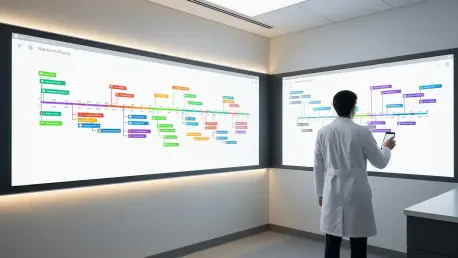
Moreover, the ability of NLP to handle temporal relations—the timing and sequence of medical events—is a major advantage over traditional snapshots provided by billing codes. Clinical narratives often describe a sequence of events, such as a patient developing a rash three days after starting a new antibiotic, which is essential information for diagnosing drug allergies. Traditional coding systems lack the structural capacity to represent these cause-and-effect relationships efficiently, whereas NLP can extract these timelines directly from the text. This allows for the creation of a more dynamic and interactive health record that reflects the reality of medical practice, where timing and sequence are often as important as the diagnosis itself. By transforming unstructured descriptions into a structured timeline of events, linguistic analysis provides clinicians with a powerful tool for retrospective review, ultimately leading to higher standards of safety and better personalized care.
Machine Learning: Adaptability Across Clinical Specialties
The flexibility of Natural Language Processing is further enhanced by its ability to learn and adapt to the diverse writing styles and vocabularies of different healthcare providers across various specialties. Unlike rigid coding systems that require a high degree of standardization, machine learning models can be trained on specific datasets to recognize the jargon and shorthand used in fields like neurology, cardiology, or oncology. This adaptability ensures that the technology remains effective even as medical terminology evolves and new treatment modalities are introduced. By learning from the actual language used in the field, these systems become more accurate over time, reducing the need for manual intervention and oversight. This creates a more resilient data infrastructure that can support the specialized needs of different clinical departments while still providing a unified and high-quality data stream for institutional analysis and population health management initiatives.
Strategic Integration: The Path Toward Clinical Evolution
The successful integration of NLP in 2026 demonstrated that a transition away from traditional coding was not merely a technological shift but a necessary evolution in medical philosophy. Organizations that prioritized these advanced linguistic tools observed a significant improvement in the accuracy of their patient registries and a notable reduction in the administrative burden placed on their clinical staff. It was found that by automating the extraction of key health indicators from narrative notes, hospitals could better support longitudinal care and identify early warning signs of disease progression that were previously obscured by coding limitations. These institutions moved toward a hybrid model that maintained administrative standards while unlocking the deep insights hidden in the human narrative. This proactive approach allowed for more informed resource allocation and a more profound understanding of the patient experience. The industry realized that the power of data resided in its ability to tell a complete story.