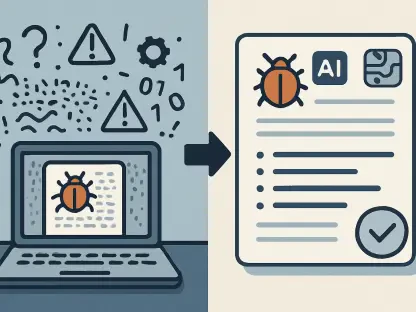

The migration of enterprise applications to the cloud was meant to usher in an era of unprecedented agility, yet for many organizations, it has simply relocated legacy complexity to a more expensive data center. The initial promise of flexibility and cost savings often evaporates under the weight of monolithic applications and tangled dependencies that were never designed for a distributed environment. This gap between expectation and reality has created a strategic urgency for a new paradigm, one that moves beyond static, project-based migrations and embraces a state of continuous optimization. This is where agentic AI enters the conversation, not as a futuristic concept, but as a practical solution poised to redefine how enterprises manage and evolve their digital estates.
The Dawn of Continuous Modernization Moving Beyond Lift-and-Shift
For years, the prevailing wisdom in cloud migration revolved around discrete, large-scale projects. The “lift-and-shift” approach, while seemingly straightforward, often proves to be a strategic misstep. It treats the cloud as a mere destination rather than a fundamentally different operating model, resulting in the transfer of technical debt and architectural flaws. Legacy systems, with their hidden dependencies and inefficient code, continue to demand intensive manual oversight, just in a new location. This model fails to unlock the cloud’s true potential for elasticity, resilience, and cost efficiency.
The transition to continuous modernization represents a profound strategic pivot. Instead of viewing modernization as a one-time event, this model reframes it as an ongoing, automated process of refinement and improvement. It acknowledges that an application portfolio is a living entity that requires constant grooming to remain aligned with business objectives. Agentic AI is the enabling technology for this shift, functioning as an always-on engine that perpetually analyzes, refactors, and secures the application landscape.
This transformative approach turns modernization from a high-stakes, disruptive overhaul into a sustainable, predictable function. By automating the laborious tasks of discovery, refactoring, and patching, agentic AI allows organizations to methodically chip away at technical debt without freezing feature development or incurring massive upfront costs. The result is a cloud environment that not only supports current operations but is also intrinsically designed to evolve, adapt, and improve over time.
The Strategic Imperative Why Agentic AI is Essential for Modern Enterprises
Adopting an agent-driven model fundamentally alters the economic and operational calculus of IT management. Traditional modernization efforts are often defined as massive, high-risk capital expenditures that deliver value in infrequent, disruptive bursts. This project-based mindset creates a cycle of large investments followed by periods of accumulating technical debt. Agentic AI breaks this cycle by converting modernization into a predictable, value-driven operational process, shifting the financial model from CapEx to a more manageable OpEx structure where costs are tied directly to efficiency gains.
The benefits of this operational shift extend across the enterprise. Significant cost savings are realized as autonomous agents continuously optimize resource consumption, rightsize instances, and eliminate waste from over-provisioning. Speed-to-market accelerates dramatically because development teams are no longer bogged down by the toil of managing legacy complexity. Moreover, a hardened security posture becomes the default state, as agents work around the clock to identify and remediate vulnerabilities far faster than any human team could. Finally, application performance improves as the system is perpetually tuned to meet real-time workload demands, ensuring a superior end-user experience.
Core Capabilities How Autonomous Agents Deconstruct Modernization Challenges
Autonomous agents approach modernization not as a monolithic task but as a series of interconnected challenges to be solved systematically. Unlike static scripts that simply execute predefined commands, these AI systems are goal-driven. They can independently plan, act, and learn from their interactions within a complex software environment. This autonomy allows them to deconstruct the modernization process into manageable, automated workstreams that address the core issues of code quality, architectural transparency, and operational resilience.
Intelligent Code Refactoring at Scale
One of the most formidable obstacles in any modernization initiative is refactoring legacy code to make it maintainable, efficient, and cloud-ready. Agentic AI directly confronts this challenge by leveraging large language models (LLMs) to perform sophisticated code analysis at a scale and depth that is unattainable for human developers. These agents ingest entire code repositories, build a comprehensive understanding of intricate cross-file dependencies, and execute complex refactoring maneuvers automatically.
This capability moves beyond simple syntax correction or flagging “code smells.” The agent can autonomously execute strategic initiatives like modernizing outdated APIs to align with cloud-native patterns, such as serverless functions or containerized endpoints. It can also draft and apply migration code that transitions core application functions to more efficient managed cloud services, a task that would otherwise require immense manual effort and specialized expertise. This intelligent, large-scale refactoring reduces technical debt and prepares the codebase for a truly agile, cloud-native future.
Case in Point Decomposing Monolithic Applications
Consider a sprawling monolithic application written in Java or C#. For years, this system has powered critical business functions, but its tightly coupled architecture has become a significant barrier to innovation and scalability. A manual effort to decompose this monolith into microservices would be a multi-year, high-risk endeavor. An autonomous agent, however, approaches this systematically. It begins by analyzing the entire codebase to identify logical service boundaries based on data flows and functional domains. It then proposes a refactoring plan, breaking down the monolith piece by piece. The agent can automatically generate new, independent services, create the necessary API contracts for communication, and update the remaining monolith to call these new microservices, all while ensuring functional integrity through automated testing. This methodical decomposition enhances agility, allowing teams to develop, deploy, and scale services independently.
Automated and Continuous Dependency Mapping
A successful modernization hinges on a complete and accurate understanding of all application dependencies, a task that is nearly impossible to maintain manually in a complex enterprise environment. Outdated diagrams and incomplete documentation often lead to disastrous production outages during migration cutovers. Agentic AI addresses this critical gap through a process of “autonomous discovery.” The agents continuously analyze a combination of runtime telemetry, live network traffic, and static code to build and maintain a real-time, high-fidelity map of the entire application portfolio.
This is not a one-time snapshot but an ever-current blueprint of the system’s architecture. With this dynamic map, the agent can intelligently identify hidden connections, trace data lineage, and understand the intricate web of relationships between services, databases, and third-party APIs. This clarity provides the foundational knowledge required for any successful refactoring or migration effort, transforming a process once defined by guesswork and risk into one guided by data and precision.
Real-World Impact Preventing Outages with High-Fidelity Blueprints
Imagine a financial services company planning to migrate a core trading platform to the cloud. The internal documentation suggests a particular database is only used by a single legacy reporting service. Based on this information, the migration team decommissions the database post-migration. However, an undocumented, mission-critical settlement process had a hidden dependency on that same database, leading to a catastrophic production outage. An autonomous agent would have prevented this scenario. By analyzing live network traffic and static code, it would have discovered the hidden dependency and included it in its real-time architectural map. This high-fidelity blueprint would have ensured the migration plan accounted for all actual connections, preventing the outage and saving the company from significant financial and reputational damage.
Proactive Security and Performance Tuning
In a dynamic cloud environment, security and performance are not static goals but ongoing disciplines. Agentic AI serves a dual role as both a vigilant, 24/7 security sentinel and a real-time performance optimizer. It moves organizations from a reactive posture, where problems are fixed after they occur, to a proactive one, where issues are anticipated and prevented before they can impact the business.
As a security guardian, the agent continuously scans for new common vulnerabilities and exposures (CVEs), identifies every affected code component across the entire portfolio, and can autonomously apply the necessary patches or configuration changes. As a performance engineer, it monitors live workload patterns, analyzing metrics like CPU utilization, memory consumption, and application latency. Based on this real-time data, it automatically adjusts cloud resources—rightsizing virtual machines, tuning database indices, or modifying serverless concurrency limits—to ensure an optimal balance of speed and cost efficiency.
From Weeks to Minutes Revolutionizing Security Patching
When a critical zero-day vulnerability like Log4Shell is announced, the typical enterprise response is a frantic, all-hands-on-deck scramble. Security and development teams spend weeks or even months manually identifying every instance of the vulnerable library across thousands of applications and then painstakingly deploying patches. This lengthy remediation window leaves the organization exposed. An autonomous agent transforms this process. Within minutes of the vulnerability being disclosed, the agent can scan its comprehensive dependency map to locate every affected service. It can then automatically generate, test, and propose the required patches for developer approval, reducing the time-to-remediation from weeks to minutes and proactively closing a critical security gap before it can be exploited.
Adopting the Future A Practical Roadmap for CIOs
The evidence strongly suggests that agentic AI is not just a novel tool but the definitive path toward building a resilient, self-optimizing cloud environment. For Chief Information Officers and technology leaders, the strategic mandate is clear: embrace autonomous systems to convert cloud management from a source of perpetual technical liability into a strategic, agile asset. The organizations that will benefit most are those with significant investments in complex, mature application portfolios, where the cumulative weight of technical debt has begun to stifle innovation.
A successful adoption strategy, however, requires more than just technology; it demands a shift in mindset and a clear implementation plan. The goal is to integrate these autonomous capabilities in a way that empowers engineering teams, enhances governance, and delivers measurable business value from day one. This involves rethinking traditional roles, establishing robust oversight, and following a pragmatic, pilot-first approach to de-risk the transformation and build organizational momentum.
Redefining Roles The Shift from Coder to AI Orchestrator
The rise of autonomous systems does not signal the end of the software developer but rather a significant evolution of the role. Agentic AI is designed to eliminate toil—the repetitive, manual, and often unfulfilling tasks that consume a vast portion of an engineer’s time. By offloading the burden of tracking dependencies, hunting for security vulnerabilities, and executing routine code refactoring, the agent frees human talent to focus on higher-value activities.
Engineers transition from being manual coders to becoming strategic “AI orchestrators” or “system architects.” In this new paradigm, their primary responsibilities shift to defining high-level business goals for the autonomous system, reviewing the agent’s proposed plans for architectural soundness, and applying their creative problem-solving skills to complex innovation challenges. This elevation of the human role is critical for driving genuine business breakthroughs.
A New Paradigm for Engineering Talent
This strategic shift has profound implications for attracting and retaining top engineering talent. Highly skilled developers are motivated by impact and innovation, not by the drudgery of maintaining legacy systems or applying security patches. An environment where autonomous agents handle the necessary but repetitive work becomes a powerful recruitment and retention tool. It fosters a culture of continuous improvement and learning, reduces developer burnout, and positions the organization as a forward-thinking leader in the technology landscape. By investing in systems that empower engineers to do their best work, companies create a virtuous cycle of innovation and talent acquisition.
The Implementation Playbook Governance and a Pilot-First Approach
Integrating agentic AI into an enterprise strategy requires a thoughtful and deliberate approach designed to maximize value while minimizing risk. The most effective path forward is a targeted, low-risk pilot on a high-value but non-critical application. The ideal candidate is often an internal-facing microservice with well-understood technical debt. The pilot’s objective is to validate the agent’s ability to execute the complete modernization loop: discovering dependencies, proposing and executing refactoring, running automated tests, and presenting the changes for human approval before deployment.
By starting small and demonstrating success with clear, quantifiable metrics—such as a 40% reduction in time-to-patch or a 20% improvement in application performance—the organization builds confidence and develops a proven blueprint. This initial success provides the momentum needed to scale the framework across the broader application portfolio, ensuring a smooth and controlled enterprise-wide adoption.
The Human-in-the-Loop Governance Framework
A critical component of any successful implementation is a robust human-in-the-loop (HITL) governance framework. This model ensures that while the agent operates with a high degree of autonomy, ultimate control remains firmly in human hands. Developers and architects define the rules of engagement and the strategic goals for the agent, such as cost reduction or performance enhancement. The agent then autonomously identifies an optimization opportunity, formulates a complete plan of action, and generates the necessary code. However, no change is deployed to production without explicit human validation and approval. This framework strikes the perfect balance, harnessing the speed and scale of AI while leveraging human expertise for strategic oversight and final decision-making, ensuring the self-optimizing environment remains resilient and aligned with business objectives.