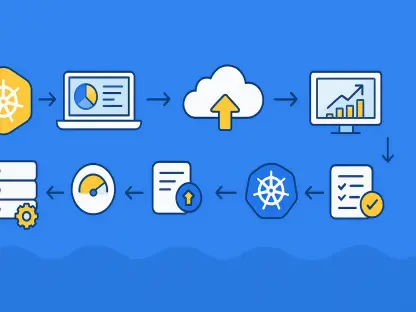

A human-in-the-loop philosophy maintains trust by requiring agents to present proposed plans for transparency before any technical execution occurs. This fundamental approach serves as the cornerstone for modern enterprises attempting to navigate the complexities of data orchestration in an era defined by ubiquitous artificial intelligence. In the current landscape of 2026, the discrepancy between the sophisticated reasoning capabilities of generative models and the archaic structures of underlying data repositories has reached a breaking point. Organizations frequently find that their ambitious AI initiatives are paralyzed not by a lack of processing power or algorithmic innovation, but by a rigid, manual data infrastructure that was never intended to support the dynamic requirements of real-time machine learning. The emergence of agentic data integration within platforms like IBM’s watsonx.data provides a sophisticated remedy to this bottleneck by delegating the technical complexities of connectivity and cleansing to specialized AI agents. This transformation converts data from a static, difficult-to-reach corporate asset into a dynamic and fluid resource that can be deployed at the speed of thought, effectively aligning technical capacity with the aggressive timelines of modern business requirements.
Revolutionizing the Integration Workflow
Accelerating Pipeline Creation: The Shift to Natural Language Interfaces
The implementation of agentic layers effectively replaces the traditional, code-heavy requirements of Extract, Transform, and Load (ETL) processes with an intuitive natural language interface accessible to a broader range of users. In this operational model, the user no longer needs to be proficient in complex scripting or the technical minutiae of database architecture; instead, the human role evolves into that of an overseer who provides high-level intent. When a user describes a specific requirement—such as synthesizing quarterly expenditure across multiple regional departments—the autonomous agent acts as an intermediary that interprets the request, identifies the relevant disparate sources, and constructs a logical map for execution. This shift is critical because it removes the linguistic barrier between the business objective and the technical implementation, allowing the system to perform the preliminary heavy lifting that previously required extensive manual intervention. By focusing on intent rather than syntax, the platform empowers stakeholders to initiate complex data workflows without waiting for specialized engineering cycles, thereby drastically reducing the friction inherent in typical organizational data requests.
Beyond simple interpretation, these agents utilize advanced reasoning to map out the entire lifecycle of a data pipeline, ensuring that every step is logically sound before any data is actually moved. This planning phase involves identifying the most efficient pathways between source and target systems, applying necessary transformations, and ensuring that the resulting dataset meets the specific quality standards required for AI training or retrieval-augmented generation. Because the agent understands the semantic meaning of the data it is handling, it can suggest optimizations that a human engineer might overlook in a rushed environment. This automated mapping process ensures that the data delivered to the end-user is not just a raw dump of information but a curated, fit-for-purpose product. The ability to visualize these plans before execution provides a layer of security and validation, allowing users to catch potential errors in the logic or the source selection early. Consequently, the transition to natural language interfaces democratizes the power of data engineering, turning every business analyst into a capable architect of their own information needs.
Rapid Execution: Converting Engineering Cycles into Automated Minutes
The speed at which these agentic systems operate is perhaps the most visible indicator of their impact, as they can frequently collapse data delivery timelines from several weeks down to just a few minutes. This radical acceleration is made possible through a modular architecture composed of specialized skills and tools that allow the agent to understand both the enterprise context and the functional requirements of data movement. Once an agent generates a proposed pipeline and receives the necessary human validation, it autonomously handles the technical construction, validation, and governance mapping required to make the dataset AI-ready. This efficiency gain is not merely about saving time; it is about enabling an iterative approach to data science where experiments can be conducted and refined in near real-time. For instance, if an initial dataset proves insufficient for a specific application, a new, modified pipeline can be provisioned almost instantly, whereas a similar request would have previously languished in an engineering queue for a month or more. This rapid turnaround ensures that AI initiatives remain agile and responsive to the shifting needs of the organization.
The technical foundation of this speed lies in the way the agent interacts with the underlying integration engine, effectively bypassing the ticket-based delays that characterize traditional IT service management. By automating the construction and validation phases, the system ensures that datasets are ready for AI consumption with unprecedented consistency. The agent applies standardized governance policies and security protocols as the pipeline is built, ensuring that speed does not come at the cost of compliance. This represents a significant departure from manual engineering, where the pressure to deliver often leads to shortcuts in documentation or governance. In the agentic model, these steps are baked into the automated workflow, providing a high-velocity solution that remains within the guardrails of corporate policy. As organizations strive to scale their AI deployment across multiple departments, the ability to generate trusted data on demand becomes a competitive necessity. The transformation of the data integration lifecycle from a manual bottleneck into an automated utility allows the enterprise to realize the full value of its information assets without the traditional constraints of engineering bandwidth.
Enhancing Connectivity and Economic Value
Open Standards: Driving Scalability with the Model Context Protocol
To prevent the emergence of new proprietary silos, agentic data integration utilizes open standards such as the Model Context Protocol (MCP) to ensure high levels of interoperability across diverse technology stacks. This commitment to open protocols allows third-party AI agents, even those developed on competing frameworks or platforms, to connect directly to the integration engine and request governed data pipelines. In the complex multi-vendor environments of today, this flexibility is vital for maintaining a cohesive data strategy that can withstand shifts in the technological landscape. By serving as an open hub for data requests, the system ensures that governed, high-quality information remains accessible to any authorized agent, regardless of its origin. This interoperability effectively future-proofs the enterprise data infrastructure, allowing it to act as a universal service layer that supports a wide array of AI applications and automated workflows. The use of MCP servers facilitates a seamless exchange of context and metadata, ensuring that external agents can operate with a full understanding of the data they are consuming.
Furthermore, the integration of open standards like MCP addresses the critical need for consistency in data governance across hybrid and multi-cloud environments. When external agents interact with the data integration engine, they are subject to the same rigorous security and compliance checks as internal systems, ensuring a unified security posture. This approach allows organizations to leverage the best-of-breed AI tools available in the market without sacrificing control over their most sensitive information assets. The ability to orchestrate data across different clouds and on-premises systems through a standardized protocol reduces the complexity of managing a modern data estate. As the ecosystem of AI agents continues to expand, the reliance on open standards will be the primary factor determining whether an organization can scale its operations effectively. By championing interoperability, agentic integration moves beyond the limitations of closed platforms, creating an environment where data can flow securely and efficiently to wherever it is needed most. This strategic alignment with open source and industry-standard protocols ensures that the data infrastructure remains a driver of innovation rather than a source of vendor lock-in.
Economic Impact: Reclaiming Engineering Capacity and Reducing Costs
The economic value of shifting toward an agentic model is most clearly reflected in the radical reallocation of high-value human resources from maintenance tasks to strategic initiatives. Historically, data engineering teams have been trapped in a cycle of repetitive pipeline construction and manual troubleshooting, often spending nearly half of their capacity simply keeping existing systems operational. By automating routine and predictable data requests through self-service agents, organizations can free these highly skilled professionals from the burden of the maintenance trap. This allows engineering talent to focus on more complex architectural designs, the establishment of advanced data quality frameworks, and the development of new data products that drive direct business value. The resulting shift in engineering focus leads to a significant increase in the overall productivity of the data organization, as the human element is leveraged for creativity and complex problem-solving rather than rote technical execution. This transition not only improves employee satisfaction but also optimizes the return on investment for expensive technical headcount.
In addition to labor efficiency, agentic data integration contributes to a substantial reduction in the overall operational costs associated with running large-scale AI models. When AI systems are fed noisy, unstructured, or poor-quality data, they require larger context windows and more frequent retries to produce accurate results, all of which consume expensive compute resources and increase latency. By ensuring that the data delivered to an AI system is pre-validated, structured, and fit-for-purpose, agentic integration improves the computational efficiency of the entire AI stack. The delivery of clean, relevant data products minimizes the energy and financial costs associated with model inference, leading to a lower total cost of ownership for AI initiatives. Furthermore, the reduction in manual errors during the integration process decreases the risk of expensive data breaches or compliance failures. By automating the application of governance and security policies at the point of integration, the enterprise can avoid the significant financial and reputational penalties associated with data mismanagement. This combination of labor optimization and computational efficiency creates a compelling economic case for the adoption of agentic technologies across the data lifecycle.
Governance and Strategic Path to Adoption
Democratic Access: Empowering Users through Oversight and Integrity
The integration of autonomous agents fosters a more democratic environment where non-technical stakeholders, such as financial analysts, marketing leads, or regional managers, can generate their own datasets with confidence. This democratization is not a free-for-all; rather, it is a structured self-service model that relies on the agent’s ability to adhere to the organization’s existing governance and cataloging tools. Because the agent is tethered to a central intelligence portfolio, it ensures that any dataset created by a business user remains compliant with internal security standards and data lineage requirements. This allows individuals without deep SQL knowledge or data engineering experience to access the information they need to drive decisions, effectively breaking the reliance on centralized IT teams for every minor data request. The transformation of raw data into trusted products becomes a distributed capability, enabling a faster velocity of thought across the entire firm. This shift empowers the business units to be more autonomous while ensuring that the central data team maintains the necessary oversight to protect the organization’s integrity.
Maintaining this integrity requires a system that provides comprehensive audit trails and clear visibility into the lineage of every dataset produced. Agentic integration achieves this by documenting every transformation, source connection, and governance check performed during the automated construction of a pipeline. This transparency is particularly crucial for organizations operating in highly regulated sectors like finance or healthcare, where the ability to explain the origin and handling of data is a legal requirement. By keeping the human in the loop for the approval of execution plans, the system ensures that the automation remains a tool for human empowerment rather than a black-box process. This collaborative model between human insight and agentic speed creates a resilient framework where data can be accessed democratically without sacrificing the rigorous standards of enterprise governance. As the volume of data continue to grow, the ability to provide widespread access through a secure and transparent interface will be the defining characteristic of a data-mature organization. The resulting culture of data literacy and accessibility drives innovation at every level of the corporate hierarchy.
Strategic Implementation: Navigating Constraints and Future Foundations
The transition toward agentic data integration demonstrated that the most effective way to solve the AI bottleneck was to modernize the underlying plumbing of the enterprise stack. It was observed that organizations achieving the highest success rates were those that prioritized the creation of robust data contracts and comprehensive metadata catalogs prior to deploying autonomous agents. These early adopters recognized that the effectiveness of an agent was directly proportional to the quality of the governance framework it inhabited. By moving away from centralized, manual ticket systems and toward decentralized, agent-led operations, firms successfully reclaimed thousands of hours of engineering capacity while simultaneously lowering the operational costs of their AI models. The focus shifted from the mere acquisition of data to the delivery of curated, trusted data products that were available on demand for both humans and machines. This strategic realignment ensured that data delivery finally matched the speed of algorithmic innovation, providing a sustainable path for the future of enterprise intelligence.
Moving forward, the blueprint for success remained clear: technical teams needed to transition from being builders of individual pipelines to being the architects of the governed environments where autonomous agents can flourish. While the technology was in its preview phases, the limitations concerning structured data types and regional cloud availability required careful management. Organizations that successfully navigated these boundaries did so by involving their data engineering teams early to define the standards the agents would follow. It became evident that the future of the enterprise did not lie in more manual labor, but in the intelligent application of agentic systems to handle the scale of modern information. By establishing a solid foundation of governance and interoperability today, companies ensured they were prepared for the next wave of autonomous operations. This evolution transformed the data bottleneck from a persistent obstacle into a streamlined gateway for innovation. The lessons learned during this period of adoption now serve as the standard for any firm looking to achieve true data-driven agility in a competitive global market.