
A fortune built on the distribution of Singer sewing machines in the early 20th century became the unlikely seed for an agricultural revolution, as philanthropist Ramón Álvarez de Arriba dedicated his wealth to founding a school to advance farming education. More than a century later, the same grounds are home not to simple plows, but to a quantum simulator and a sophisticated data hub. This striking fusion of philanthropic legacy and cutting-edge technology raises a fundamental question: how are digital tools, once the exclusive domain of urban tech centers, being transplanted into the countryside to cultivate the farm of the future? The answer lies in a new model of innovation, one that grows directly from the soil it seeks to sustain.
From Sewing Machines to Quantum Simulators The New Agricultural Revolution
The journey from a school funded by sewing machine profits to a high-tech innovation center encapsulates a profound shift in agricultural thinking. The original institution was founded on the principle of improving rural life through education and better farming practices. Today, that mission endures but is executed with vastly different tools. The physical campus now bridges its century-old agricultural heritage with state-of-the-art facilities, symbolizing a deliberate effort to solve age-old farming problems with 21st-century solutions.
This evolution was formalized seven years ago when the CTIC Foundation, a technology center with nearly three decades of experience, launched CTIC RuralTech. The initiative was born from a clear vision: to create a dedicated hub where data science, artificial intelligence, and deep agricultural knowledge could converge. By embedding advanced technology within a traditional rural setting, the center aims to address the most pressing challenges facing modern agriculture, from the unpredictable impacts of climate change to the need for greater economic efficiency and sustainability.
Why the Countryside is Becoming the New Frontier for Tech
Global pressures are forcing a fundamental reevaluation of traditional agriculture. The escalating challenges of climate change, increasing resource scarcity, and the demand for economic sustainability have created an urgent need for smarter, more resilient farming methods. In response, a significant trend has emerged: the decentralization of technological innovation. Instead of developing solutions in distant urban centers, tech pioneers are moving directly to the countryside to tackle these problems at their source.
CTIC RuralTech exemplifies this new paradigm. The center serves as a blueprint for the future, demonstrating how to bridge the gap between a century of accumulated agricultural wisdom and the predictive power of modern data science. Its mission, as articulated by R&D Director Fidel Díaz, is to apply powerful analytical tools to solve fundamental rural problems. The primary focus is on adapting to a new agricultural reality shaped by environmental shifts, using technology to analyze soil, identify resilient crop varieties, and gather the critical data needed for farmers to thrive.
AI in Action Two Blueprints for Agricultural Transformation
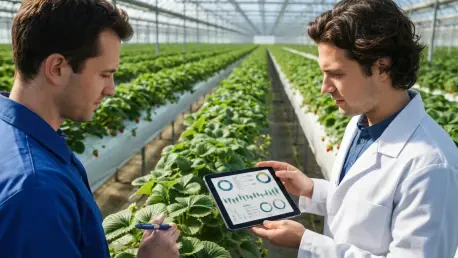
The tangible impact of this approach is best illustrated through its real-world applications. At Asturiana de Fresas, a strawberry production company, AI-powered simulation technology has become what its co-owner, Fernando Ruenes, calls a “time machine for the countryside.” By creating a digital twin of their plantations, the company can model a vast array of future scenarios. They can test the potential impact of a disease outbreak, simulate the effects of severe water stress, or project how long-term climate shifts might affect different crop sections, all without risking a single real plant. This predictive capability allows for proactive, data-driven decision-making.
The results of this virtual experimentation are transformative. The simulation helps determine optimal planting schedules, identifies entirely new crops like olives and pistachios that could flourish in the region’s changing climate, and enables a significant reduction in pesticide usage by providing a deeper understanding of environmental impacts. Perhaps most importantly, this technology dramatically accelerates the research and development cycle. What would have traditionally required years of painstaking field trials can now be accomplished through simulation in a single season, giving the company an unprecedented competitive advantage.
A second case study at Industrias Lácteas Monteverde, a cheese producer, showcases AI’s power in process optimization and quality control. CEO Enrique López faced a persistent challenge: the inherent variability of his main raw material, milk. Factors ranging from the diets of cows on different farms to the logistics of transport routes create subtle but critical differences in milk composition. In collaboration with CTIC, the company developed an AI system that analyzes the complex data from incoming milk batches. The system then provides precise recommendations, matching the perfect batch of milk to each type of cheese to ensure optimal maturation and final product quality. This intelligent allocation has driven product return rates to near zero and reduced analytical costs. López views it as a “continuous learning process,” with plans to integrate more variables—such as customer orders, inventory levels, and milk price fluctuations—to further refine production and enhance operational efficiency.
Voices from the Field The Human Element of High Tech Farming
The success of this technological integration is deeply rooted in a human-centric philosophy. According to Fidel Díaz, the mission is to apply powerful tools to solve fundamental rural problems, guided by the core belief that “There’s no better way to innovate rural areas than from within rural areas.” This principle underscores the importance of developing solutions in close collaboration with the communities they are meant to serve, ensuring the technology is relevant, practical, and directly addresses the real-world needs of farmers and producers.
This perspective is echoed by the users themselves. For Fernando Ruenes, the AI simulation is more than just a tool; it is a “time machine” that provides the invaluable foresight needed to navigate an uncertain future. This predictive capability transforms risk management from a reactive exercise into a proactive strategy. Similarly, Enrique López sees AI not as a one-time fix but as a “continuous learning process” for his business. It offers a distinct strategic advantage by turning operational challenges, like raw material variability, into data-driven opportunities for improvement and growth.
A Practical Framework for Cultivating Innovation
The experiences of these companies reveal a practical framework for cultivating successful innovation in agriculture. The first and most critical principle is to start with the problem, not the technology. Successful implementation hinges on technology delivering tangible business value and solving a genuine, real-world challenge. The goal is not simply to adopt AI, but to use AI to increase profitability, reduce waste, or build resilience against climate change.
A second essential component is the creation of an expert alliance. Lasting innovation requires a deep synergy between two distinct groups: the agricultural experts, who possess invaluable, place-based knowledge of the land, crops, and cycles, and the technology specialists, who build the digital tools. Neither group can succeed alone. It is the fusion of their expertise that allows for the development of solutions that are both technologically sound and agriculturally effective.
Finally, the most transformative strategy is to embed innovation directly within the environment it aims to serve. Developing solutions from within rural communities ensures they are grounded in reality. Being physically present allows innovators to gain a profound, real-time understanding of the context, the specific problems, and the unique needs of the people. This approach prevents the creation of superfluous or impractical tools, ensuring that the final solutions are effective, widely adopted, and truly capable of driving a sustainable and prosperous future for the rural world.
The convergence of agricultural tradition and advanced technology demonstrated a powerful new model for rural revitalization. It was a testament to the idea that innovation, when purposefully applied and deeply integrated into the local context, could yield profound results. The collaboration between domain experts and technologists, guided by a commitment to solving real-world problems, proved to be the fertile ground from which a more resilient and efficient agricultural future could grow. This approach offered not just a set of tools, but a replicable framework for empowering rural communities everywhere to cultivate their own sustainable prosperity.