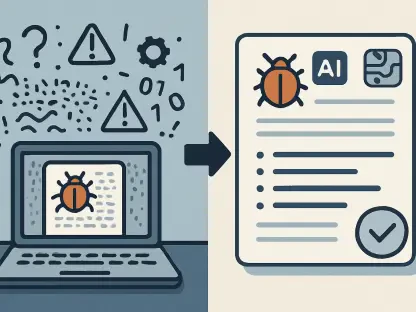

The current technological landscape for decision-makers and innovators has shifted from a binary choice between traditional software and experimental Artificial Intelligence toward a complex integration of both. We are moving past the era of isolated AI pilots and off-the-shelf prototypes toward a phase defined by hybrid applications. These systems are built from the ground up to integrate probabilistic code, driven by machine learning, and deterministic code, rooted in traditional rule-based programming. This transition represents a significant architectural rethink where the fluidity of AI reasoning meets the rigid reliability of traditional programming.
It is no longer sufficient to simply bolt an AI feature onto an existing software suite. Modern development requires a fundamental shift where the boundaries between these two paradigms are clearly drawn. The industry is currently navigating the “messy middle,” a period where the integration of these disparate coding philosophies determines the success of enterprise digital transformation. This article explores how to restructure teams for a hybrid reality and manage the long-term governance of systems that simultaneously know and guess.
Foundations of Binary and Statistical Computing
To understand the current shift, one must look at the historical divide between these two coding philosophies. For decades, software engineering was defined by determinism; if a developer wrote a specific line of code, the machine executed it with absolute predictability. This logic formed the bedrock of financial systems, medical devices, and aviation software, where failure or ambiguity was unacceptable. These systems were designed to handle structured data within rigid parameters, providing a stable foundation for the digital age.
The rise of probabilistic computing, sparked by breakthroughs in large language models, introduced a different mathematical foundation based on weights and probabilities rather than absolute truths. Unlike traditional code, these systems do not follow a fixed path; they predict the most likely next step based on massive datasets. This shift matters because while deterministic code is excellent at transaction processing, it struggles with the nuances of human language and unstructured judgment. Modern architects must now blend these two previously isolated worlds into a single, cohesive engine.
Architectural Boundaries and Strategic Guardrails
Defining the Dual-Representation Framework
The fundamental distinction between the two types of code lies in their purpose: deterministic code knows, while probabilistic code guesses. Establishing clear boundaries is essential for system integrity. Experts suggest a dual-representation framework where deterministic code handles the authoritative rules of a business—the non-negotiable logic that governs systems of record. Conversely, probabilistic agents are reserved for the messy ambiguity of human intent and complex reasoning.
By co-locating these within a single platform, organizations can avoid the integration tax associated with connecting disparate systems. In this model, agents suggest actions or interpret data, but traditional logic acts as the final gatekeeper for data validation and transaction processing. This ensures that while the system can be creative and flexible in its reasoning, it remains grounded in the factual accuracy required for enterprise operations.
Balancing Predictability with Experimental Innovation
The decision to use one paradigm over the other often depends on the tolerance for failure versus the potential for innovation. In environments where outcomes must be auditable, repeatable, and strictly compliant—such as financial transactions or regulatory reporting—deterministic code must remain the lead. However, when the goal is to discover novel solutions or handle unstructured judgment at scale, agents should take center stage.
Optimizing the probabilistic layer is a prerequisite for this balance. Poor prompting or the use of sub-optimal models can lead to inaccuracies that force a premature retreat to traditional code, thereby stifling the potential benefits of AI-driven reasoning. Organizations must find the sweet spot where the flexibility of the probabilistic model does not compromise the core stability of the application.
Navigating Complexity and Data Sovereignty
Building hybrid applications introduces additional complexities, particularly regarding where data resides and how it is processed. There is a growing trend toward data sovereignty, where enterprises maintain absolute control over their data and logic rather than relying entirely on external black-box models. Prioritizing sovereignty allows for better auditability and standardized safety patterns, which are often overlooked in the rush to adopt AI.
Furthermore, the most successful organizations are those that treat AI agents as highly capable employees with a significant blast radius. Because agents possess high autonomy, their integration into the workflow must be managed with the same rigor and oversight as human personnel. This prevents common misunderstandings regarding their reliability and ensures that their actions are always aligned with organizational goals.
Emerging Trends in Agentic Workflows
The relationship between AI and traditional code is not static; the center of gravity is increasingly shifting toward agents. Initially, agents were used to perform tasks on top of legacy code, acting as a conversational interface. Now, systems are being designed with agentic capabilities at the core, using traditional code primarily for performance checks and risk management. This trend is expected to accelerate, with hybrid architectures becoming the industry standard within the next two years.
A key architectural requirement for the future is graceful degradation. This means ensuring that every agentic or probabilistic step has a deterministic fallback. If an AI model fails to provide a coherent response or hits a processing error, the system must be able to revert to a hard-coded safety rule to remain resilient. Organizations currently prioritizing these integrated, sovereign platforms are reportedly running significantly more use cases in production compared to their peers who treat AI as a separate, disconnected component.
Best Practices for Orchestrating Hybrid Systems
To navigate this transition successfully, organizations must focus on several actionable strategies. First, it is essential to define clear roles: use deterministic code for rules and probabilistic agents for reasoning. Second, leaders should prioritize bridge roles—hiring and training engineers who possess a deep understanding of both traditional software architecture and modern agentic design patterns. These professionals are critical for managing the integration debt that accumulates when two different development philosophies clash.
Furthermore, businesses must modernize their governance to reflect new cost models. Unlike traditional software, where capacity planning is straightforward, probabilistic systems involve token-based costs and variable execution paths. Establishing new business rules to set usage boundaries ensures that inference costs do not spiral out of control. Finally, implementing proactive quality assurance is vital. Traditional reactive testing is insufficient for non-deterministic systems; instead, teams must monitor the handoffs between the guessing and knowing layers of the application in real-time to ensure consistent performance.
The Future of Unified Code Architecture
The transition to hybrid application development was recognized as the defining challenge for the current generation of innovators. By treating the integration of probabilistic and deterministic code as a unified architectural discipline rather than a series of disconnected pilots, organizations moved past the messy middle. This approach allowed for the marriage of human-like reasoning and machine-like precision, creating a new standard for software resilience and intelligence.
Maintaining a sovereign, governed platform that operates with standardized Service Level Agreements became the hallmark of a successful enterprise. This hybrid-by-default approach empowered organizations to build resilient systems that were both intelligent enough to adapt and stable enough to trust. Moving forward, the focus must remain on refining these integration points. Developers should prioritize creating modular interfaces that allow probabilistic components to be swapped or upgraded without disrupting the underlying deterministic logic. This modularity will facilitate long-term sustainability and allow for the seamless adoption of future advancements in machine learning while preserving the integrity of the core business logic. Such a strategy ensures that software remains an asset that grows in value rather than becoming a liability as technology continues to evolve.