
Expert in digital transformation and IT strategy, Chloe Maraina, brings a unique perspective to the high-stakes world of corporate mergers and acquisitions. With a background rooted in data science and a passion for creating compelling visual narratives from big data, she specializes in helping organizations navigate the treacherous waters of system integration and data management. In this conversation, she explores how generative AI is shifting the paradigm of traditional M&A, moving from laborious “lift-and-shift” models to agile, insights-driven transformations that prioritize speed and cultural alignment.
The discussion delves into the dual paths of AI-led integration—bridging data gaps versus accelerating total consolidation—while addressing the technical nuances of automated data mapping and taxonomy harmonization. Chloe shares insights on mitigating security risks during due diligence and the vital role of AI in easing the transition for employees.
Business leaders are seeing cost reductions around 20% and significantly faster deal cycles by using generative AI. How do these efficiencies change the initial strategy of a merger, and what specific metrics should a CIO track to prove this value early in the process?
The availability of these efficiencies shifts the strategy from a defensive “stability-first” mindset to an offensive “value-first” approach. Historically, we braced for a six to twelve-month slog just to get data flowing, but with nearly 40% of leaders reporting deal cycles that are up to 50% faster, the strategy now focuses on immediate insight rather than waiting for full consolidation. To prove this value, a CIO should track the “time-to-insight” metric—measuring how quickly leadership can access synthesized performance data from the newly acquired entity. Additionally, tracking the reduction in manual labor hours through automation, particularly in initial integration planning and project roadmap creation, provides the concrete evidence needed to justify the AI investment early on.
Some firms use AI to bridge data gaps without full system consolidation, while others use it to accelerate total integration. When should a team choose one path over the other, and how does each approach affect long-term IT debt and operational agility?
The choice depends entirely on the strategic urgency; if the primary goal is to answer key business questions quickly without the multi-year price tag of consolidation, bridging the gaps with AI is the superior path. This avoids the “Big Bang” headache and allows for agility, though it requires a robust governance layer to ensure the virtual bridge doesn’t become a permanent patch that adds to technical debt. Conversely, full-scale integration is best when the long-term goal is a singular operating model, where AI accelerates the mapping of data and generation of system tests. While the latter requires more upfront effort, it effectively eliminates long-term IT debt by decommissioning legacy platforms, whereas the “bridging” approach maintains higher operational complexity in exchange for immediate speed.
Automating up to 80% of data mapping can drastically reduce manual effort during system mergers. What specific steps should technical teams take to validate these AI-generated mappings, and how do you handle the remaining complex anomalies that require human cross-business expertise?
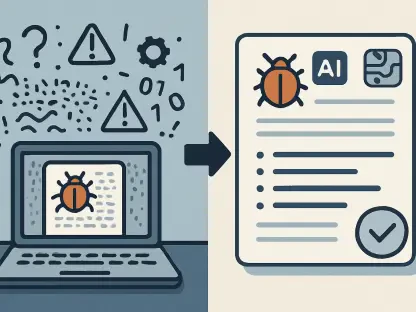
Technical teams should begin by running the AI-enabled platform against a known data subset to calibrate its understanding of the disparate taxonomies before letting it loose on the full environment. Once the AI completes that 80% of the heavy lifting, the remaining 20%—often the most “noisy” or unique data points—must be funneled to a dedicated task force of cross-business experts who understand the tribal knowledge behind the numbers. These experts are essential for identifying duplicate client details or conflicting financial definitions that a machine might overlook. This validation process typically reduces the traditional manual effort by about 30%, ensuring that accuracy is never sacrificed for the sake of automation.
Using AI during the due diligence phase can uncover hidden security gaps and drive consistency across deal evaluations. How can these tools identify risks that traditional audits might miss, and what role does this early data play in shaping the eventual post-merger governance and security policies?
Traditional audits often rely on sampling or manual checklists, which can miss subtle inconsistencies in how security policies are actually applied across different departments. AI-driven due diligence tools can ingest vast amounts of documentation and process logs to find patterns of non-compliance or “shadow IT” that would be invisible to a human auditor under a tight deadline. By being aggressive about identifying these security and compliance gaps in the early days, a CIO can bake mitigation strategies directly into the day-one governance model. This early data is foundational; it dictates whether you need a restrictive policy to “quarantine” certain inherited systems or if you can move directly into a shared security architecture.
Beyond technical stacks, AI is being used to help employees of acquired companies navigate complex internal policies and rules. In what ways does this improve cultural alignment, and how do you prevent a “Big Bang” integration from overwhelming the staff during the transition period?
Cultural friction often stems from the overwhelming “weight” of new documentation—employees are suddenly expected to master hundreds of pages of unfamiliar policies and operating models. By using AI assistants to summarize these rules and provide instant answers to “how-do-I” questions, we lower the cognitive load on the workforce, making them feel supported rather than colonized. To prevent the “Big Bang” from overwhelming staff, we must sequence the technology migration based on standards that appreciate the human complexity of the change. It is vital to carry the people along with the process, using AI as a supportive guide that smooths the transition rather than a tool that simply automates their world away.
Success often hinges on aligning taxonomies and cleansing data of duplicates across disparate finance and CRM systems. What is the most effective workflow for harmonizing these taxonomies, and how can knowledge graphs provide a better alternative to traditional data warehousing for generating immediate insights?
The most effective workflow starts with defining a clear operating model and standardized KPIs before even touching the data, followed by using AI to synthesize fragmented information into a unified performance view. Instead of the traditional “smash-and-load” approach of a data warehouse, which can take months to structure, knowledge graphs allow us to triangulate data points and understand relationships between entities across the two organizations. This creates a “logical” data set that feels cohesive to the user without requiring every underlying record to be moved or reformatted. This approach turns data ingestion into a competitive advantage, allowing the organization to grow its intelligence with every new acquisition rather than just growing its storage costs.
What is your forecast for AI in M&A integration?
I believe we are moving toward a “frictionless integration” era where the concept of a multi-year IT merger becomes obsolete. In the near future, AI will not just be an incremental tool but the core architect of the integration, capable of redesigning workflows from the ground up rather than just fitting old processes into new pipes. We will see the rise of autonomous integration pods that can ingest a company’s entire digital footprint and stand up a secure, harmonized environment in weeks, not months. The winners in this space will be the leaders who stop treating AI as “magic dust” to be sprinkled on top and instead use it to rethink the entire sequence of how two businesses become one.