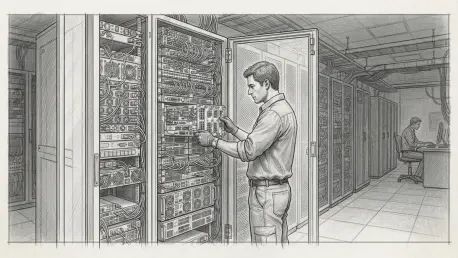

Strategic investment in infrastructure allows growth-focused business units to experiment with new digital experiences while preserving the stability of legacy operational systems. This dual-track strategy has become the cornerstone of digital transformation in 2026, marking a significant departure from the early, often chaotic, rush to migrate entire portfolios to the public cloud without considering the specific needs of individual workloads. Today, technology leaders recognize that modernization is not a binary choice between old and new but a nuanced orchestration of diverse environments. The goal is no longer just moving data; it is about creating a resilient foundation capable of supporting sophisticated artificial intelligence and automated workflows. By evaluating applications through a cloud-worthy lens, enterprises ensure that mature systems continue to provide value in their current state while high-impact projects leverage the immense scalability of modern cloud-native architectures to drive immediate business innovation and agility.
Strategic Shifts in Infrastructure
Balancing Local and Cloud Environments
Genworth Financial illustrates this pragmatic shift through its sophisticated use of a multicloud strategy involving Microsoft Azure and Amazon Web Services. For its CareScout subsidiary, which focuses on providing digital health experiences, a cloud-native foundation is essential for the agility to scale services up or down based on consumer demand. This flexibility allows the company to remain competitive in a fast-moving market where user experience is a primary differentiator. Conversely, Genworth maintains its own data center resources for its closed-block business, which involves mature workloads that are stable and operational. This selective approach proves that total cloud migration is rarely the most efficient path. Instead, the decision to modernize is increasingly driven by managing operating expenses relative to the specific business value each platform generates. By matching the workload to the environment, IT leaders can optimize performance without incurring the unnecessary costs of over-provisioning resources.
The implementation of a hybrid model allows organizations to maintain strict control over sensitive data while benefiting from the high-speed processing capabilities of the public cloud. Many financial institutions and healthcare providers have found that keeping core transactional data on-premises reduces the risk of compliance violations while still allowing them to use cloud-based analytics for reporting and forecasting. This balanced methodology ensures that legacy systems, which have often been refined over decades, continue to function as reliable systems of record. Meanwhile, the cloud serves as a system of engagement where new features can be tested and deployed in a matter of days rather than months. By avoiding a one-size-fits-all approach, businesses can allocate their capital more effectively, investing in high-growth areas while keeping maintenance costs for legacy systems at a predictable level. This strategic realism has replaced the idealism of the past, leading to more sustainable and profitable technology roadmaps.
Artificial Intelligence: The Infrastructure Catalyst
Artificial intelligence has emerged as the most powerful catalyst for these ongoing infrastructure decisions, reshaping how organizations view their cloud partnerships. Enterprises are no longer satisfied with simple hosting; they seek adjacency to specialized AI tools and third-party marketplaces that can enhance their operational capabilities. This trend signifies a broader industry consensus where the choice of a cloud provider is heavily influenced by the breadth of its integrated service portfolio, especially in automation and predictive analytics. Being situated within a major cloud ecosystem allows for the seamless integration of large language models and machine learning frameworks into existing business processes. This proximity reduces the latency and complexity typically associated with moving massive datasets for analysis. As organizations move through 2026 and look toward 2027, the focus is shifting from raw compute power to the strategic placement of data within reach of these transformative intelligence tools.
The rapid enterprise-wide adoption of tools like Microsoft 365 Copilot highlights the critical importance of these interconnected ecosystems. By operating within a robust Microsoft environment, organizations have managed to integrate advanced AI into their investment teams’ daily workflows without the friction of standalone deployments. This reflects a wider industry movement where nearly 40% of enterprise applications feature task-specific AI agents as of 2026, a significant increase from just a few years ago. The pressure to build AI-ready infrastructure has transitioned from a future consideration to a present-day mandate for survival. Modern technology leaders are now evaluating cloud providers not just for their storage capacity but for their ability to support horizontal expansion and complex automation. This ensures that when new AI capabilities emerge, they can be snapped in effortlessly, allowing the business to stay at the forefront of innovation without having to undergo a complete and costly architectural overhaul.
Modernizing for Performance and Scalability
Upgrading Systems: The Infrastructure-First Approach
One of the most effective strategies for modernization involves upgrading the infrastructure surrounding an application rather than attempting to rewrite the application’s core code. Rewriting legacy systems is often a high-risk endeavor that can lead to significant cost overruns and operational disruptions. Instead, many enterprises are finding that substantial performance gains can be achieved by modernizing the plumbing—the underlying storage, networking, and security layers—that supports their existing transactional databases. This infrastructure-first methodology allows businesses to keep their core logic intact while benefiting from modern throughput and low-latency environments. By focusing on the ecosystem surrounding the application, companies can achieve the resilience and scalability of the cloud while avoiding the dangers associated with complex code refactoring. This approach significantly accelerates the delivery of business value, providing a safer and more predictable path toward achieving modern performance standards.
AdvisorEngine serves as a primary example of this successful infrastructure-centric approach, having faced the challenge of improving Microsoft SQL Server performance without disrupting its wealth management platform. Rather than pursuing a risky and expensive database rewrite, the company modernized its underlying storage layer using Amazon FSx for NetApp ONTAP. This strategic move allowed them to achieve the low-latency storage performance required for high-volume transactional workloads while enhancing overall system resilience. By utilizing SQL Server Failover Cluster Instances across multiple availability zones and regions, AdvisorEngine ensured high availability without modifying the application architecture. Furthermore, the implementation of advanced cloning capabilities allowed for rigorous integrity checks and disaster recovery replication without placing additional load on production systems. This case study reinforces the idea that modernization is a spectrum; for many, the greatest gains come from enhancing the environment rather than the software itself.
Navigating: The New Economic Reality
The industry has moved decisively past the all-in-cloud era, settling instead into a sophisticated hybrid reality where on-premises and cloud resources coexist in harmony. Organizations are now comfortable maintaining local data centers for specific data-heavy environments or mature workloads, while simultaneously leveraging the public cloud for dynamic digital experiences and rapid experimentation. This hybrid model provides superior operational flexibility, allowing growth-focused units the freedom to experiment without the heavy upfront capital expenditures traditionally associated with new hardware. The ongoing shift from capital expenditure to operating expenses remains a powerful motivator for this transition, as it allows businesses to scale their costs in direct proportion to their current needs. This ability to manage expenses dynamically is a crucial feature for enterprises operating in volatile markets, enabling them to pivot quickly and allocate resources where they will have the most impact.
By the mid-point of 2026, the transition toward an AI-ready state was recognized not as a single project, but as a continuous cycle of targeted improvements and ecosystem integration. Successful enterprises prioritized the development of liquid data architectures that allowed information to flow seamlessly between legacy databases and modern analytical engines. They invested heavily in training their IT staff to manage hybrid environments, ensuring that the human element of transformation kept pace with technological shifts. Moving forward into 2027 and 2028, the focus remains on refining these environments to support even more autonomous operations. Businesses that took the time to modernize their underlying storage and networking layers discovered that they could implement advanced security protocols and governance frameworks more effectively. These organizations moved beyond simple cost-saving measures and transformed their IT departments into engines of growth. The path forward required a commitment to architectural flexibility and a focus on business value.