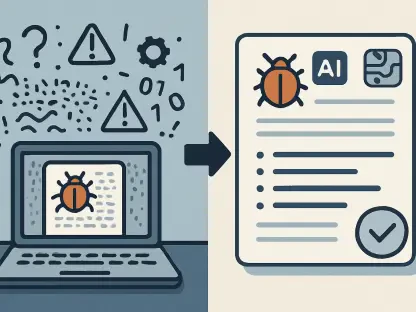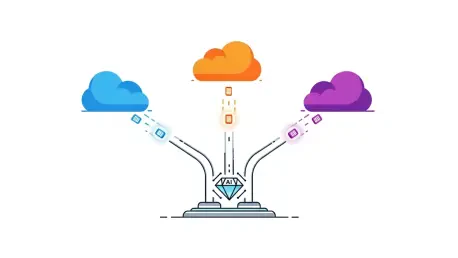

The relentless expansion of digital infrastructure has pushed modern enterprise environments to a breaking point where the sheer density of cross-cloud microservices now exceeds the cognitive limits of even the most seasoned engineering teams. This structural complexity is not merely an inconvenience; it is a fundamental barrier to agility that traditional automation has failed to dismantle. While early AIOps offered basic pattern recognition, the arrival of Large Language Models (LLMs) integrated into cloud orchestration represents a paradigm shift toward truly autonomous infrastructure. This review examines how Generative AI (GenAI) is transforming multicloud management from a fragmented manual struggle into a unified, intent-driven ecosystem.
The Convergence of Generative AI and Multicloud Architecture
The evolution of multicloud management has moved through distinct phases, beginning with manual scripting and progressing to the structured templates of Infrastructure as Code (IaC). However, even the most advanced IaC frameworks remain deterministic, requiring human operators to anticipate every possible failure state and configuration variable across disparate providers like AWS, Azure, and Google Cloud. The convergence of GenAI and cloud architecture introduces a probabilistic reasoning layer that understands the intent behind a deployment rather than just the syntax. This technology does not simply execute commands; it interprets high-level business requirements and translates them into the technical specifications required for a heterogeneous environment.
The transition from traditional AIOps to LLM-driven management is characterized by a shift from reactive monitoring to proactive synthesis. Where traditional systems flagged anomalies based on static thresholds, GenAI-driven platforms utilize historical telemetry and natural language processing to understand the broader context of an outage or a performance bottleneck. This emergence marks the end of the “siloed” management era, where separate teams were required for each cloud provider. Instead, a centralized AI orchestration layer provides the necessary abstraction, allowing organizations to treat their entire multicloud estate as a single, fluid resource pool.
Core Capabilities of AI-Driven Cloud Orchestration
Automated Code Translation and Portability
One of the most significant barriers to a true multicloud strategy has always been the “technical debt” of provider-specific services. Moving a data pipeline from AWS Glue to Azure Data Factory typically requires a complete rewrite of the underlying logic and integration code. Generative AI functions as a sophisticated technical linguist in this context, capable of analyzing proprietary cloud-native configurations and refactoring them into cross-cloud compatible formats. This capability effectively neutralizes vendor lock-in, as the AI can automatically generate the necessary “wrappers” or translate the logic into open-source alternatives like Apache Airflow or Terraform.
This translation capability goes beyond simple syntax swapping; the AI understands the architectural nuances of each provider. For instance, when moving a serverless function, the AI accounts for differences in execution timeouts, memory allocation patterns, and trigger mechanisms between AWS Lambda and Google Cloud Functions. By automating this migration logic, GenAI allows developers to focus on the core functionality of their applications rather than the idiosyncratic requirements of the hosting platform. This fluidity is what differentiates GenAI-driven management from previous “cloud-agnostic” tools that often forced users into a “lowest common denominator” feature set.
Intelligent Policy Synthesis and Configuration
Security in a multicloud environment is notoriously difficult due to the incompatible Identity and Access Management (IAM) models used by different vendors. A “read-only” role in one cloud does not have a direct, identical equivalent in another, leading to configuration drift and security vulnerabilities. AI agents address this by synthesizing a unified policy layer. An administrator can define a security intent in plain language—for example, “Ensure all database instances in the production environment are encrypted and accessible only by the application tier”—and the AI generates the specific, localized IAM policies and security group rules for every active cloud provider.
This automated template generation ensures that security postures remain consistent, regardless of how many clouds are in use. The AI continuously audits the live environment against these synthesized policies, identifying instances where a manual change might have introduced a security gap. This proactive configuration management is unique because it bridges the gap between high-level governance and low-level execution. It eliminates the need for human experts to manually map hundreds of permissions across different platforms, a task that has historically been the primary source of enterprise cloud data breaches.
Contextual Observability and Telemetry Analysis
The sheer volume of logs and metrics generated by a multicloud estate often results in “alert fatigue,” where critical signals are lost in a sea of noise. GenAI-driven observability platforms create a unified semantic layer over these fragmented data streams. By using LLMs to parse unstructured log data and correlate it with structured performance metrics, these systems can identify the root cause of an issue that spans multiple providers. For example, the AI can correlate a latency spike in an Azure-hosted frontend with a specific database lock occurring in an AWS-hosted backend, providing a cohesive narrative that traditional monitoring tools would miss.
This contextual intelligence enables AI copilots to act as a first line of defense for Site Reliability Engineers (SREs). Instead of presenting a dashboard of 50 disconnected alerts, the system surfaces a single “high-value incident” with a detailed explanation of the impact and a suggested remediation script. This reduces the Mean Time to Resolution (MTTR) by eliminating the investigative phase of incident response. The implementation is unique in its ability to understand the “why” behind system behavior, transforming raw telemetry into actionable business intelligence that reflects the health of the entire digital ecosystem.
Current Trends in Autonomous Cloud Operations
The industry is currently witnessing a decisive move toward “Shift Right” operational resiliency. While the previous decade focused on “Shift Left” (integrating testing and security earlier in the development cycle), the current focus is on how systems behave in production. Autonomous agents are now being integrated directly into CI/CD pipelines, where they do more than just deploy code; they monitor the deployment in real-time and execute autonomous error recovery. If a new microservice deployment causes a memory leak or a regional outage, the AI can independently trigger a rollback, redirect traffic to a healthy cluster in a different cloud, and notify the engineering team of the specific line of code that caused the failure.
Furthermore, the rise of sovereign cloud requirements and localized data laws is driving the development of AI agents that can optimize workload placement based on geopolitical constraints. These agents are becoming increasingly sophisticated, capable of making real-time decisions about where to run a specific task based on a combination of cost, latency, carbon footprint, and regulatory compliance. This level of autonomous decision-making marks a departure from static orchestration and suggests a future where the underlying infrastructure is essentially invisible to the developer, managed entirely by an intelligent, self-optimizing layer.
Sector-Specific Applications and Implementations
In the financial services sector, where regulatory scrutiny is intense, AI-driven compliance synchronization has become a critical tool. These organizations must prove to regulators that their data is handled consistently across all environments. GenAI allows these firms to automate the mapping of complex regulatory frameworks, such as GDPR or PCI-DSS, directly into cloud configurations. This ensures that a policy change at the corporate level is instantly propagated across the entire global infrastructure, reducing the risk of multi-million dollar fines and ensuring a continuous “audit-ready” state.
Healthcare providers are also leveraging GenAI for proactive FinOps, particularly when managing the massive datasets required for medical imaging and genomic research. AI provides predictive scaling that goes beyond simple usage-based rules; it analyzes historical patterns and upcoming clinical demands to pre-allocate resources across multiple cloud estates. By dynamically moving non-critical workloads to lower-cost providers or utilizing “spot” instances during off-peak hours, AI-driven FinOps can reduce cloud expenditures by as much as 40%. This proactive optimization is essential for organizations that must balance the high cost of cutting-edge technology with the need for fiscal responsibility in public service environments.
Critical Challenges and Structural Constraints
Despite the rapid advancement of GenAI, several structural constraints remain. The most persistent is the concept of “data gravity.” Even if an AI can perfectly translate a workload’s code, the cost and time required to move petabytes of data between clouds—known as egress costs—often make frequent migrations economically unfeasible. Furthermore, the reliance on AI-generated configurations introduces the risk of “hallucinations” in infrastructure-as-code. An LLM might suggest a configuration that appears valid but contains subtle security flaws or logical errors that could lead to systemic failures.
To mitigate these risks, the necessity of “human-in-the-loop” verification cannot be overstated. Current implementations require strict security guardrails and “shadow” testing environments where AI-generated scripts are validated before they reach production. There is also the technical hurdle of latency; the time it takes for an LLM to process complex telemetry and generate a response may still be too slow for high-frequency trading or real-time industrial IoT applications. These challenges highlight the fact that while GenAI is a powerful accelerator, it must be integrated into a broader framework of human expertise and robust platform engineering.
Future Outlook and Evolutionary Trajectory
The evolutionary trajectory of this technology points toward the total transition from assistive copilots to fully autonomous multicloud agents. In the coming years, the role of platform engineering will likely shift from building and maintaining infrastructure to “training and auditing” the AI agents that manage that infrastructure. Breakthroughs in cross-cloud interoperability are expected to simplify the currently cumbersome networking layers, allowing AI to move workloads between clouds with the same ease that a modern operating system moves tasks between processor cores.
Long-term, the impact on the enterprise will be a significant reduction in the “cloud talent gap.” Organizations will no longer need to maintain separate, expensive teams of specialists for every cloud provider. Instead, a smaller team of generalist architects will oversee an AI-driven orchestration layer. This democratization of cloud expertise will allow smaller enterprises to compete with global giants, as the technical complexity of maintaining a resilient, high-performance multicloud environment becomes increasingly automated and accessible through natural language interfaces.
Final Assessment of GenAI in Multicloud Ecosystems
The integration of Generative AI into the multicloud ecosystem proved to be a transformative force that addressed the inherent limitations of traditional infrastructure management. By automating the translation of proprietary service logic and synthesizing unified security policies, the technology effectively lowered the barrier to entry for complex, cross-provider architectures. The research indicated that GenAI-driven observability significantly reduced operational noise, allowing human teams to focus on strategic initiatives rather than repetitive troubleshooting. The technology demonstrated its value not as a replacement for engineering expertise, but as a critical cognitive multiplier that bridged the gap between intent and execution.
The future of digital enterprise agility depended on the successful deployment of these autonomous systems to manage the growing sprawl of decentralized resources. Actionable next steps for organizations included the establishment of comprehensive “AI Guardrails” to validate automated configurations and the investment in data fabric technologies to mitigate the costs of data gravity. As the cloud landscape continued to fragment with the rise of edge computing and specialized AI hardware, the role of GenAI as a unifying orchestration layer became indispensable. Ultimately, the successful implementation of GenAI in multicloud environments signaled the end of the manual configuration era and the beginning of a truly autonomous, self-healing digital infrastructure.