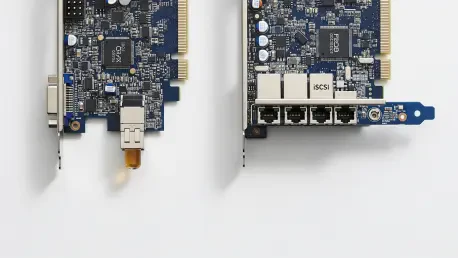

For decades, the digital backbone of the global enterprise has rested upon a silent but fierce rivalry between specialized hardware fabrics and the ubiquitous connectivity of standard Ethernet protocols. The Fibre Channel vs. iSCSI landscape represents a significant advancement in the data storage networking industry, particularly as organizations grapple with the exponential growth of data generated by artificial intelligence and high-performance computing. This review explores the evolution of the technology, its key features, performance metrics, and the impact it has had on various applications. The purpose of this review is to provide a thorough understanding of the technology, its current capabilities, and its potential future development in a market that increasingly values flexibility over rigid specialization.
The industry has witnessed a remarkable shift where the distinction between high-end performance and budget-friendly accessibility has largely dissolved. Modern storage arrays now routinely support multiple protocols within a single chassis, turning what was once a binary choice into a nuanced architectural decision. As businesses move toward 2027 and beyond, the focus has transitioned from simply acquiring storage to architecting resilient, low-latency fabrics that can handle diverse workloads. This review assesses how these two protocols have adapted to the needs of the modern enterprise and whether the traditional performance gap still justifies the complexities of specialized hardware.
The Evolution of Block Storage Networking
Storage Area Networks (SANs) emerged as a response to the limitations of direct-attached storage, which created isolated islands of data that were difficult to manage and scale. Initially, Fibre Channel was the only viable option for high-speed, block-level data access, offering a dedicated network specifically tuned for storage traffic. This specialized context allowed it to dominate the early data center landscape, providing the reliability and throughput necessary for the first generation of enterprise resource planning and database applications. Over time, the need for a more accessible alternative led to the development of iSCSI, which leveraged existing Ethernet infrastructure to democratize storage networking for smaller organizations.
What began as a “budget” alternative has evolved into a mainstream enterprise standard capable of rivaling dedicated fabrics in many scenarios. The technological evolution has been driven by the massive leap in Ethernet speeds, moving from 1 Gbps to 400 Gbps and beyond in less than two decades. This advancement allowed iSCSI to shed its reputation as a lower-tier protocol, making it a competitive choice for virtualized clusters and enterprise-grade applications. The shift from isolated storage silos toward integrated, multi-protocol SAN environments reflects a broader industry trend of consolidation, where administrators seek to manage all storage traffic through a single, unified interface rather than maintaining separate, disparate networks.
The relevance of this evolution in the current technological landscape cannot be overstated. As organizations adopt hybrid cloud strategies and containerized microservices, the storage network must be as agile as the applications it supports. The transition from monolithic, hardware-defined storage toward software-defined models has forced both Fibre Channel and iSCSI to innovate. While Fibre Channel has refined its efficiency and speed to maintain its mission-critical status, iSCSI has focused on scalability and ease of deployment. This dual development path ensures that the storage network remains a facilitator of innovation rather than a bottleneck for the modern digital enterprise.
Technical Architectures of Modern Storage Protocols
Fibre Channel: The Specialized Layer 2 Fabric
Fibre Channel stands as a purpose-built, high-speed network technology designed specifically for the rigorous demands of block storage. Unlike general-purpose networks, it operates as a specialized Layer 2 fabric, utilizing a credit-based flow control system known as buffer-to-buffer credits. This mechanism ensures that a sender only transmits data when the receiver has confirmed available buffer space, effectively creating a lossless delivery environment. This inherent reliability is a primary feature of the protocol, as it prevents the packet drops and subsequent retransmissions that can introduce jitter and latency in standard networking environments.
The hardware-centric nature of Fibre Channel is further exemplified by its use of “cut-through” switching. In this processing model, the switch begins forwarding a frame as soon as the destination address is identified, rather than waiting for the entire frame to be received and checked for errors. This significantly reduces micro-latency, making it an ideal candidate for high-frequency trading platforms and real-time data processing systems. The protocol also employs a unique naming and addressing scheme, utilizing World Wide Names (WWNs) and fabric logins to establish secure, dedicated paths between servers and storage targets, ensuring that storage traffic is entirely isolated from the “noise” of the general data network.
Efficiency in Fibre Channel is also derived from its low CPU overhead. Because the protocol is processed almost entirely on the Host Bus Adapter (HBA) hardware, the host server’s primary processor is freed to focus on application logic rather than network management. This offloading capability remains a significant advantage in 2026, particularly for dense virtualization environments where every CPU cycle is valuable. The specialized fabric also provides robust congestion notification mechanisms, allowing the network to throttle traffic at the source before it leads to performance degradation, maintaining a deterministic environment that general-purpose Ethernet continues to struggle to replicate perfectly.
iSCSI: The Ubiquitous Ethernet-Based Protocol
The Internet Small Computer Systems Interface (iSCSI) takes a fundamentally different approach by facilitating the transport of SCSI commands over standard TCP/IP networks. By encapsulating block-level data within standard Ethernet frames, iSCSI allows organizations to leverage their existing investment in network switches, cabling, and administrative expertise. This ubiquity is the protocol’s greatest strength, as it eliminates the need for the specialized training and dedicated infrastructure required by Fibre Channel. To the operating system, the remote storage appears as a locally attached disk, providing a familiar interface for administrators managing virtualized enterprise clusters.
Technically, iSCSI relies on the robustness of the TCP/IP stack to handle data delivery, error correction, and sequencing. While this provides great flexibility, it does introduce a layer of encapsulation overhead that can impact performance. Unlike the credit-based system of Fibre Channel, iSCSI must deal with the potential for network congestion and packet loss inherent in standard Ethernet. However, modern implementations have mitigated these issues through the use of high-speed 100 Gbps and 200 Gbps Ethernet fabrics, combined with advanced features like Quality of Service (QoS) and Jumbo Frames to streamline data flow and minimize processing delays.
One of the most significant developments in the iSCSI ecosystem is the rise of specialized Offload Engines (iSOEs) on modern Network Interface Cards. These hardware components mimic the behavior of Fibre Channel HBAs by processing the iSCSI stack directly on the card, significantly reducing the burden on the server’s CPU. This architectural shift has bridged the performance gap, allowing iSCSI to handle intensive workloads that were previously reserved for dedicated fabrics. As Ethernet technology continues to advance toward 800 Gbps, the technical ceiling for iSCSI performance continues to rise, making it an increasingly attractive option for organizations seeking a balance between performance and operational simplicity.
Performance Metrics and Operational Trends
Recent developments in the storage industry have shown a marked narrowing of the performance gap between high-speed Ethernet and dedicated Fibre Channel fabrics. While Fibre Channel remains the king of micro-latency, the raw throughput of 400 Gbps Ethernet often exceeds the capabilities of current Gen 7 Fibre Channel installations. This shift has led many organizations to question the necessity of a dedicated storage network when standard Ethernet can provide sufficient bandwidth for all but the most demanding applications. The performance conversation has moved away from simple “top speed” metrics toward a focus on consistency, predictability, and the elimination of latency spikes that can disrupt modern AI-driven workloads.
Industry behavior is moving away from a binary “either-or” choice toward a “best-fit” implementation strategy. This trend is visible in the proliferation of multi-protocol arrays that allow administrators to assign specific volumes to either FC or iSCSI based on the priority of the application. For instance, a critical financial database might be mapped over Fibre Channel for deterministic performance, while a backup repository or a general-purpose virtual machine cluster might use iSCSI over the existing Ethernet fabric. This pragmatic approach allows enterprises to optimize their infrastructure costs without compromising the performance of their most valuable data assets.
Moreover, the rise of software-defined storage (SDS) and hyper-converged infrastructure (HCI) has bolstered the status of Ethernet-based protocols. These modern architectures favor the flexibility and scalability of standard networking, where nodes can be added or removed without reconfiguring a complex physical fabric. As a result, the operational trend is leaning toward the “Ethernet-first” data center, where specialized protocols like Fibre Channel are reserved for specific legacy systems or specialized high-performance computing niches. This shift reflects a broader desire for agility and the reduction of proprietary hardware silos in favor of standardized, interchangeable components.
Practical Deployment Across Industry Sectors
In the real world, Fibre Channel continues to dominate mission-critical database environments where uptime and deterministic performance are paramount. Large-scale financial institutions, healthcare providers, and global retailers often rely on Fibre Channel to power their core transactional systems. The protocol’s ability to guarantee lossless delivery and its isolation from standard network traffic provide a layer of security and reliability that these sectors demand. For an Oracle or SAP environment processing thousands of transactions per second, the micro-latency benefits of a 64GFC or 128GFC fabric translate directly into faster response times and improved user experiences.
In contrast, iSCSI has found its primary home in virtualized enterprise clusters and mid-market data centers. The ease of integrating iSCSI with VMware, Hyper-V, and K8s environments makes it a natural choice for organizations that need to scale their compute and storage independently without the cost of a dedicated SAN. This prevalence is particularly noticeable in cloud service providers and managed service environments, where the ability to use standard Ethernet allows for greater automation and lower operational costs. The flexibility of iSCSI allows these providers to offer block storage services at a lower price point, making high-performance storage accessible to a wider range of businesses.
A unique and growing use case is the deployment of unified storage systems that handle both protocols within a single chassis to meet diverse workload requirements. This strategy is particularly effective in research institutions and engineering firms where different departments have varying performance needs. A single array can provide Fibre Channel connectivity for a high-performance simulation cluster while simultaneously serving iSCSI to the general administrative department. This unification simplifies the physical footprint of the data center and allows for centralized management, proving that the most effective storage strategy in 2026 is one that embraces the strengths of both protocols rather than choosing one over the other.
Implementation Challenges and Economic Constraints
One of the most significant challenges facing Fibre Channel technology is its high Total Cost of Ownership (TCO). The requirement for specialized HBAs, dedicated switches, and high-quality optical cabling adds a substantial premium to the initial capital expenditure. Beyond the hardware costs, the specialized skill sets required to design and manage an FC fabric are becoming increasingly rare and expensive. As the workforce shifts toward generalist cloud and DevOps engineers, finding administrators who understand the intricacies of FC zoning and fabric management has become a hurdle for many organizations, leading to a “hidden cost” in operational maintenance.
iSCSI faces its own set of technical hurdles, primarily centered on network overhead and the potential for performance interference. Because iSCSI traffic shares the network with other types of data, it is susceptible to the “noisy neighbor” effect, where a sudden burst of general network traffic can impact storage performance. Mitigating these issues requires a well-designed network with robust Quality of Service policies and, in many cases, physically separate VLANs or switches for storage traffic. While this adds complexity, it is generally considered more manageable than maintaining an entirely different physical architecture like Fibre Channel.
To address these limitations, the industry has seen ongoing development in specialized hardware offload engines and “SmartNICs.” These devices are designed to handle the TCP/IP and iSCSI encapsulation at the hardware level, effectively providing iSCSI with the low-CPU-overhead benefits traditionally associated with Fibre Channel. However, the adoption of these specialized cards can sometimes negate the cost advantages of using standard Ethernet. Organizations must carefully weigh the economic constraints of high-end Ethernet hardware against the traditional costs of a dedicated Fibre Channel SAN to determine which path offers the best long-term value for their specific workload profile.
The Road Ahead: NVMe-oF and Next-Generation Fabrics
Looking toward the future of SAN technology, the focus is shifting rapidly toward Non-Volatile Memory express over Fabrics (NVMe-oF). This protocol is designed to eliminate the bottlenecks associated with the aging SCSI command set, allowing high-speed flash storage to communicate over the network with the same efficiency as it does over a local PCIe bus. NVMe-oF can run over both Fibre Channel (FC-NVMe) and Ethernet (NVMe/TCP), effectively evolving both protocols to meet the demands of the next decade. This breakthrough is essential for AI-driven data centers where the speed of data ingestion is the primary factor in training complex machine learning models.
The development of Gen 8 Fibre Channel and the continued evolution of NVMe/TCP represent the two primary paths for next-generation fabrics. Gen 8 FC promises even higher speeds and enhanced automation features, aiming to maintain its lead in the ultra-high-end enterprise space. Meanwhile, NVMe/TCP is gaining significant traction because it provides the performance benefits of NVMe without requiring the specialized RDMA-capable switches needed for earlier versions of NVMe over Ethernet. This makes high-performance, low-latency storage accessible over standard 100/400 GbE infrastructure, potentially signaling a long-term shift away from specialized fabrics even for high-end workloads.
The impact of these breakthroughs will be most visible in the realms of big data analytics and real-time AI inference. As data volumes continue to grow, the ability to move that data quickly and efficiently from storage to processing units will define the success of modern enterprises. The long-term outlook suggests a convergence where the physical medium becomes less important than the protocol’s ability to provide low-latency, high-bandwidth access to massive datasets. Whether through the refined specialization of Fibre Channel or the massive scale of Ethernet, the storage fabric of the future will be defined by its ability to support the data-intensive applications that drive the 2026 economy.
Final Assessment of the SAN Landscape
The technology review of these two storage heavyweights established that the choice between them was never about identifying a universal winner, but rather about aligning infrastructure with organizational priorities. The analysis demonstrated that Fibre Channel maintained its status as the premier choice for deterministic, lossless performance in the most demanding mission-critical environments. Its specialized architecture provided a level of reliability and low-latency throughput that remained difficult to replicate on general-purpose networks. For organizations where every millisecond of database response time translated into significant revenue, the investment in a dedicated fabric proved to be a justifiable and strategic expenditure.
In contrast, the evaluation of iSCSI highlighted how the protocol transformed from a secondary option into a robust, high-performance standard capable of supporting the vast majority of enterprise workloads. The findings suggested that the ubiquity of Ethernet, combined with massive leaps in bandwidth and the introduction of hardware offloading, made iSCSI the more flexible and cost-effective solution for modern virtualized and cloud-native architectures. The ability to manage storage through familiar networking tools reduced operational complexity and allowed for a more agile response to changing business needs, particularly as organizations moved toward 400 Gbps fabrics.
The transition toward NVMe-over-Fabrics indicated that the future of the SAN landscape would be defined by a unified pursuit of extreme performance across both physical mediums. For the next steps, IT leaders should prioritize protocol flexibility by investing in multi-protocol storage arrays and high-bandwidth Ethernet fabrics that can support both iSCSI and NVMe/TCP. Organizations with existing Fibre Channel investments ought to focus on Gen 7 or Gen 8 upgrades for their most intensive database workloads, while simultaneously exploring Ethernet-based protocols for their emerging AI and containerized applications. Ultimately, the modern enterprise storage sector was shaped by a shift toward software-defined intelligence that leveraged the unique strengths of each protocol to create a resilient and scalable data foundation.