
The rapid migration of autonomous digital workers from isolated experimental sandboxes into the high-stakes environment of corporate production has fundamentally exposed the fragility of traditional monitoring frameworks. While standard DevOps practices were sufficient for tracking the binary “up or down” status of microservices, they are spectacularly ill-equipped to oversee agents that possess agency, memory, and the capacity for non-deterministic reasoning. This technological shift marks the birth of AgenticOps, a discipline that moves beyond simple logs to provide a forensic, real-time narrative of an AI’s cognitive journey. By treating every interaction as a stateful event rather than a stateless transaction, observability platforms now allow enterprises to peer into the “black box” of machine logic, ensuring that autonomy does not descend into unpredictability.
The Paradigm Shift Toward AgenticOps
The transition from static, large language models to autonomous agents represents a move from passive information retrieval to active execution. Unlike a chatbot that merely answers a query, an agent interprets a goal, selects tools, and executes a multi-step workflow across diverse software environments. This evolution demands a shift in the core principles of oversight, as the technical integrity of the system is now inextricably linked to its contextual integrity. If an agent makes a logically sound but operationally disastrous decision, traditional infrastructure alerts will remain silent because the underlying server did not crash; the failure occurred within the reasoning layer itself.
Emerging from this necessity, AgenticOps focuses on the lifecycle of the agent’s “state,” which includes its short-term memory and its ability to maintain a consistent persona across long-running sessions. This context is vital because agents frequently encounter feedback loops where a single error in an early decision-making step can cascade into a series of expensive or risky hallucinations. By implementing observability at this level, organizations can finally treat AI agents as reliable components of the workforce rather than unpredictable experimental scripts.
Architectural Pillars of Observable AI Systems
Distributed Tracing and Stateful Monitoring
To understand why an AI agent took a specific action, engineers must be able to reconstruct the “Chain of Thought” with surgical precision. This requires a sophisticated form of distributed tracing that captures not just the inputs and outputs, but the hidden internal monologues and tool-call justifications the model generates before arriving at a conclusion. By tagging every interaction with a unique session identifier, observability platforms create a continuous thread of causality that survives across disparate API calls and external database queries.
This stateful monitoring is the only way to effectively debug “logic drift,” where an agent gradually loses sight of its original constraints over the course of a long conversation. Instrumentation at every decision boundary allows teams to visualize the exact moment an agent deviated from its intended path. This granular visibility is what separates modern observability from old-school logging; it provides a narrative of intent rather than just a record of activity, making it possible to audit the “why” behind the “what.”
Automated Guardrails and Evaluation Criteria
Moving an agent into production without standardized performance benchmarks is akin to hiring an employee without an interview or a job description. Modern observability frameworks have introduced automated evaluation criteria that act as a filter for release readiness, ensuring that only agents meeting specific safety and accuracy thresholds are deployed. These benchmarks are no longer static; they are dynamic datasets that include complex edge cases and adversarial prompts designed to stress-test the agent’s reasoning limits.
The role of these guardrails extends beyond simple error catching to the prevention of “AI technical debt,” a phenomenon where poorly understood agentic behaviors become baked into essential business processes. By enforcing strict adherence to organizational alignment through automated scoring, companies can ensure that their AI assets are predictable. This systematic approach allows for a “fail-fast” mentality in development, where agents that exhibit biased or erratic behavior are flagged and quarantined before they can impact real-world data or customer experiences.
Integrated Security and Threat Detection
The convergence of observability with Data Security Posture Management (DSPM) has become a non-negotiable requirement for the modern enterprise. Because agents are often granted the authority to read from and write to sensitive data repositories, they represent a significant new attack surface for prompt injection and unauthorized data exfiltration. Robust observability must therefore monitor the integrity of data transfers, scanning every outgoing request for signs that an agent has been manipulated into bypassing its internal security protocols.
Moreover, these systems must provide a shared visibility layer between DevOps and Information Security teams. When an agent interacts with an external server via the Model Context Protocol, the observability platform logs the handshake as a security event, allowing for real-time threat detection. This integrated approach ensures that if an agent is compromised, the breach is identified through its behavioral anomalies—such as attempting to access a database it doesn’t need for its current task—rather than waiting for a traditional firewall alert that may never come.
Innovations in Real-Time Verification and Governance
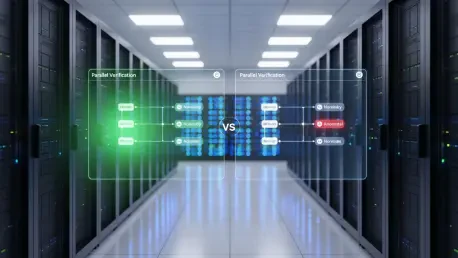
The most significant recent advancement in this field is the transition from manual human oversight to automated “parallel verification.” In this architecture, a secondary, highly constrained supervisor agent audits the primary agent’s output in real-time, functioning as a digital peer reviewer. This setup allows for the detection of “subtle failures” that might look correct to a casual observer but violate specific business logic or regulatory requirements. By automating this scrutiny, enterprises can scale their AI operations without proportionally increasing their headcount for manual quality assurance.
Furthermore, the emergence of standardized protocols for Maintaining Causality across disparate external tools has solved the problem of fragmented logs. When an agent uses a plugin to access a financial ledger and then calls a different API to send an email, the Model Context Protocol ensures that the reasoning behind that sequence is preserved in a single, auditable record. This development is crucial for maintaining a “paper trail” that satisfies the rigorous demands of legal and compliance departments, who require proof that every automated action was authorized and logical.
Enterprise Deployment and Industrial Use Cases
In the financial sector, observability has enabled the automation of complex record management where agents must synthesize data from thousands of inconsistent sources. Organizations use tiered observability protocols to manage risk; for instance, an agent summarizing a public transcript is monitored with basic technical metrics, while an agent authorized to execute trades is subjected to millisecond-level reasoning audits. This risk-based categorization allows companies to deploy AI aggressively where it is safe while maintaining extreme caution where the stakes are high.
Customer service orchestration provides another compelling use case, where agents manage end-to-end problem resolution across multiple platforms. Here, observability tools track the “sentiment trajectory” of an interaction, alerting human supervisors if an agent’s tone becomes inappropriate or if its problem-solving logic begins to circularize. By integrating knowledge synthesis with real-time monitoring, internal help desks can now provide instant, accurate support that was previously impossible without significant human intervention, all while maintaining a complete log of every data source the AI consulted.
Technical Obstacles and Regulatory Challenges
Despite these advancements, the “black box” nature of non-deterministic outputs remains a formidable obstacle. It is notoriously difficult to prove to an auditor exactly why a model chose one word over another in a specific context, especially when dealing with high-dimensional reasoning. Ongoing development efforts are currently focused on making these decision chains more “legible” to non-technical stakeholders, translating complex probability matrices into human-readable justifications that can stand up to regulatory scrutiny.
There is also the persistent challenge of detecting “reasoning drift,” where an agent’s performance degrades over time due to changes in underlying data distributions or updates to the base model. To combat this, developers are building robust remediation processes that can automatically “roll back” an agent to a previous, verified state if its confidence scores drop below a certain threshold. Satisfying the demands of future auditors will require these systems to be not just observable, but fully auditable, with every change in the agent’s logic documented and reproducible.
The Future of Autonomous Oversight
Looking ahead, the industry is moving toward a model of “active observability,” where the monitoring system is no longer a passive recorder but an interventionist force. We are seeing the rise of specialized “Observability Agents” that possess the authority to autonomously throttle or quarantine production agents that exhibit erratic behavior. This self-healing architecture would allow a system to detect a logic loop and shut it down before it consumes excessive compute resources or sends a barrage of incorrect emails to clients.
This transition from recording to intervening will likely define the next several years of enterprise AI. As agents become more integrated into the physical world—managing supply chains or controlling energy grids—the need for real-time, autonomous “kill switches” will become a standard safety requirement. The future of oversight lies in these invisible, watchful systems that ensure the benefits of AI autonomy are never outweighed by the risks of machine error.
Final Assessment of AI Agent Observability
The review of current trends and technical capabilities reveals that observability has transitioned from a backend luxury to a foundational requirement for any enterprise serious about autonomous systems. The shift from stateless monitoring to context-aware, stateful tracking has provided the necessary clarity to manage the inherent unpredictability of large-scale AI deployments. While challenges regarding the transparency of deep-learning models remain, the implementation of distributed tracing and automated guardrails has significantly reduced the risks associated with AI technical debt.
The evaluation of these frameworks showed that organizations adopting a proactive “AgenticOps” stance were far better positioned to scale their automation efforts without sacrificing security or compliance. Ultimately, the development of parallel verification and standardized protocols like the Model Context Protocol provided the missing link between experimental AI and industrial-grade software. The move toward active, intervention-based observability demonstrated that the technology has matured enough to handle the complexities of the modern corporate environment, providing a necessary safety net for the next generation of digital workers. It was clear that without these robust oversight mechanisms, the move toward full enterprise autonomy would have been hindered by insurmountable trust and safety barriers.