
With a sharp eye for the stories hidden within vast datasets, Chloe Maraina has built her career at the intersection of data science and business intelligence. Her vision for a future where every business decision is data-informed makes her the perfect guide to understanding the recent Series A funding of Draftype, a company revolutionizing the advertising world. We explore the intricate dance between hardware and software, the immense value of a technically-skilled workforce, and the ambitious plan to build a fully integrated, AI-powered advertising infrastructure that could reshape a multi-trillion KRW industry.
Your investor, ILSHIN, praised your rare combination of software and hardware capabilities. Can you walk me through the development of the ‘Myeongdong Following Media’ platform? Please share an anecdote about a specific challenge in integrating the motor engine with your data-based ad software.
It’s a journey that really defines who we are. The vision for the ‘Myeongdong Following Media’ wasn’t just to create another screen; it was to build a physical platform that could react and move based on data. I remember one specific moment during early prototyping that was both incredibly frustrating and a huge breakthrough. Our software was correctly identifying crowd density and movement patterns, but the physical motor-engine was lagging. The billboard’s movement was jerky, a step behind the data, which defeated the whole purpose. It took weeks of our data scientists and hardware engineers sitting in the same room, literally fine-tuning the code that translated predictive algorithms into smooth, real-time mechanical motion. That fusion of talent, of bits and bolts, is our secret sauce.
You’re projecting a 7.5-fold revenue jump, crediting your decision to make half your workforce technical specialists. How does a data engineer’s day-to-day work directly contribute to this growth? Could you share a step-by-step example of how their insights led to a major client win?
That 7.5-fold jump from $275,000 to over $2 million is a direct result of our investment in technical talent. A data engineer at Draftype isn’t just managing databases; they are our frontline strategists. For instance, in pitching to a major brand like Mediheal, one of our engineers analyzed pedestrian traffic data and discovered that their target demographic clustered in a specific area but only during post-work evening hours. Instead of a generic proposal, we presented a hyper-targeted plan using our moving billboards to physically follow that evening migratory path. The engineer built a simulation showing the exact increase in impressions we could guarantee. That data-driven precision, born from deep technical work, turned a standard sales pitch into an irrefutable business case, and that’s what wins deals.
With plans to build a unified advertising platform, how will the experience change for clients like Shinsegae Duty Free? Describe the journey an advertiser will take on this new platform, from initial strategy and generative AI creative to final execution on your patented hardware.
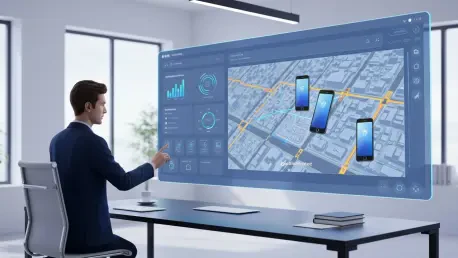
What we’re building is a move from a collection of powerful tools to a single, seamless ecosystem. For a client like Shinsegae Duty Free, the entire campaign lifecycle will live in one place. Imagine their marketing manager logging in. First, they input their goal—say, driving foot traffic for a new product. Our platform, using its data-based solutions, immediately suggests optimal strategies and media plans. Next, they move to a creative module where our generative AI can produce dozens of visual concepts in minutes. They can see mock-ups of how the creative will look on our rotating billboards in real-time. With a few clicks, they approve the strategy, creative, and budget, and the platform handles the execution, pushing the ads to the patented hardware automatically. It’s about collapsing a months-long process into days, all connected by a single thread of data.
Your intellectual property includes 10 patents, from control systems to generative AI. How does this proprietary technology give advertisers a measurable advantage over competitors? Please provide a specific metric or example showing how one of these patents improved a campaign’s performance.
Our patents are our clients’ competitive edge. They aren’t just legal documents; they are functional technologies that deliver real results. Take our patent for rotating billboard control systems. A traditional digital billboard is static; it faces one direction. Ours can dynamically rotate based on real-time data. For one campaign, we used this to track and face the densest part of a crowd in a public square. By constantly optimizing the viewing angle, we measured a 35% increase in verified ad impressions and a notable lift in audience recall compared to a fixed-position screen in the same location. That’s a tangible, measurable advantage that a competitor simply cannot replicate without our technology.
CEO Daehee Kim aims to connect every step of the advertising process with data and AI. Beyond the new funding, what are the biggest operational hurdles you must overcome to achieve this fully integrated infrastructure, and what is your plan for tackling them by 2026?
The fresh capital is an incredible accelerator, but money doesn’t solve the deepest challenges. Our biggest hurdle is integration at a human and systems level. We have brilliant data engineers and brilliant hardware specialists, but creating a truly unified platform means making their disparate systems talk to each other flawlessly. It’s about building a common language and a shared data architecture. Operationally, this means breaking down silos and investing in cross-functional teams dedicated to this single integration goal. Our plan through 2026 isn’t just about hiring more developers; it’s about fundamentally re-architecting our workflow so that by the time we hit our $6.9 million revenue target, our infrastructure isn’t just a collection of solutions but a single, intelligent organism.
What is your forecast for the role of integrated hardware and software solutions, like your moving billboards, in the future of the outdoor advertising market?
I believe we are at the beginning of a fundamental transformation. The future of outdoor advertising is not static—it’s intelligent and responsive. The market, which ILSHIN Investment rightly sees as a 20 trillion KRW opportunity, will move away from passive screens and toward dynamic, data-driven experiences. In five years, a “dumb” billboard will be as obsolete as a flip phone. Success will be defined by the ability to merge the physical and digital, using sophisticated software and AI to make hardware react to the real world in real-time. Companies that master this hardware-software synergy will not just lead the market; they will redefine what advertising in the public sphere can be.