
In a strategic move poised to redefine the boundaries of identity security, Delinea, a prominent provider of solutions for securing human and machine identities, announced its acquisition of StrongDM on January 16, 2026. This merger brings together Delinea’s established expertise in identity management with StrongDM’s innovative universal access platform, which is purpose-built for modern engineering, DevOps, and AI-driven environments. The acquisition signals a critical industry shift away from static, perimeter-based security toward a dynamic, identity-centric control plane. This article will dissect the strategic rationale behind this union, explore its technological implications for Privileged Access Management (PAM), and analyze its impact on the future of securing continuous, always-on digital infrastructures.
The Evolution from Traditional PAM to Dynamic Access Control
For years, Privileged Access Management has been a cornerstone of enterprise security, focused on vaulting and managing credentials for critical systems within well-defined network perimeters. However, the mass migration to the cloud, the adoption of CI/CD pipelines, and the recent explosion of AI have rendered this traditional model insufficient. Modern environments are ephemeral and borderless, with developers, applications, and autonomous agents requiring temporary, on-demand access to a vast array of databases, servers, and cloud services. This fundamental shift has created a significant security gap, as persistent, standing privileges—even when vaulted—present a continuously exposed attack surface for credential theft and lateral movement. The Delinea-StrongDM acquisition directly addresses this challenge, acknowledging that the future of security lies not in managing credentials but in controlling access itself.
A New Paradigm for Identity Security
Integrating Just-in-Time Access for a Zero Standing Privilege Future
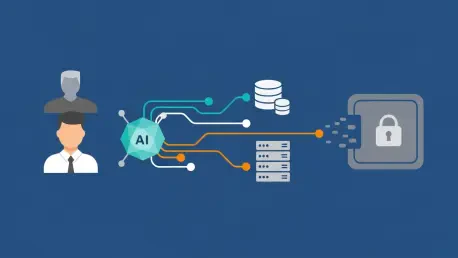
The core of this acquisition is the fusion of StrongDM’s Just-in-Time (JIT) runtime authorization with the Delinea Platform, which is powered by its Iris AI. This integration creates a new class of identity security control plane designed to enforce the principle of least privilege precisely at the moment of action. Instead of granting long-lived credentials, the unified platform will provide ephemeral access that is brokered, authenticated, and authorized in real time, for a specific purpose, and for a limited duration. By eliminating the need for standing privileges, this Zero Standing Privilege (ZSP) model dramatically shrinks the attack surface, mitigating the risks of credential theft, phishing, and software supply chain attacks that exploit compromised secrets.
Bridging the Gap: Modernizing Security Without Disrupting Operations
A key strategic goal of the combined entity is to provide enterprises with a manageable and non-disruptive pathway toward a modern security posture. Recognizing that most organizations operate in hybrid environments, the platform is designed to support both ephemeral, JIT access and traditional credential-based access simultaneously. This pragmatic approach allows businesses to modernize their security controls without being forced into a costly and complex “rip-and-replace” of their existing PAM investments or legacy infrastructure. Organizations can progressively adopt ZSP for their cloud-native applications and DevOps workflows while continuing to manage access to on-premise systems through familiar methods, all within a single, unified governance framework.
Securing the New Frontier: Developer Workflows and AI Identities
The acquisition squarely addresses the unique access challenges of two critical user groups: developers and AI agents. For developers, the platform promises frictionless yet secure access to sensitive resources like cloud infrastructure, databases, and containers, integrating seamlessly into their native workflows without sacrificing productivity. More profoundly, the merger introduces a forward-looking solution for AI governance. As autonomous agents increasingly perform critical business functions, the unified platform will provide real-time control and visibility over their actions. By extending the same rigorous policy enforcement and auditing to machine and agentic AI identities, Delinea is positioning itself to secure the next generation of non-human workers, ensuring their activities align with security and compliance mandates.
Projecting the Trajectory of Identity-Centric Security
This acquisition is more than a consolidation of two companies; it represents an acceleration of a broader industry trend where identity is unequivocally the foundational layer of all security. As Delinea CEO Art Gilliland noted, stolen credentials remain the leading cause of breaches, making robust identity controls paramount. The combined Delinea and StrongDM platform sets a new competitive benchmark, challenging other vendors to move beyond credential vaulting and embrace dynamic, policy-driven access. In the near future, we can expect AI-driven governance and JIT access to become standard features in enterprise security stacks, with a greater emphasis on securing non-human identities as autonomous systems become more prevalent. This merger will likely catalyze further innovation and consolidation in the market as organizations seek holistic platforms that can manage access for every identity across every environment.
Strategic Imperatives for Modern Security Leaders
For CISOs and security leaders, this acquisition underscores the urgent need to re-evaluate their identity security strategies. The primary takeaway is that relying solely on traditional PAM is no longer a viable long-term approach in a cloud-first, AI-driven world. Organizations should begin planning a deliberate, phased transition toward a Zero Standing Privilege model, starting with high-risk environments like cloud infrastructure and developer workflows. A key best practice is to seek out platforms that offer a hybrid model, enabling a gradual modernization that minimizes operational disruption. Furthermore, security teams must expand their focus to include the governance of machine and AI identities, ensuring that automated processes are subject to the same strict access controls as their human counterparts.
A Defining Moment for Identity Security
The union of Delinea and StrongDM marks a pivotal evolution in the journey to secure the modern enterprise. By creating an integrated control plane for both human and machine identities, the acquisition directly confronts the challenges of ephemeral infrastructure and the rise of autonomous systems. It champions a move from managing static credentials to governing dynamic access, establishing a new standard for enforcing least privilege in real time. For organizations navigating the complexities of digital transformation, this merger serves as a powerful call to action: to secure the future, they must place identity at the very center of their security architecture.