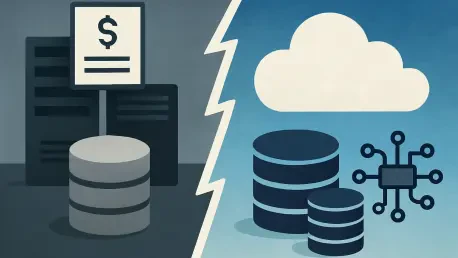

Maintaining expensive on-premises database licenses while attempting to modernize operations in the cloud has long felt like paying for two parallel lives that never actually meet. AWS recently introduced the Bring Your Own Media (BYOM) capability for SQL Server on Amazon RDS to dismantle the financial friction that often halts migration projects before they even start. This shift allows organizations to salvage existing software investments while finally gaining the keys to managed database features and high-performance AI tools. By removing the licensing barrier, enterprises can transition their operational data into an environment specifically built for the next generation of analytics.
Bridging the Gap Between Legacy Licenses and Cloud Innovation
The move toward a cloud-first infrastructure frequently hits a wall when the conversation turns to the cost of re-purchasing software that a company already owns. By allowing enterprises to use their own media, AWS is essentially offering a bridge between the capital-heavy past and the elastic future. This is not just a change in billing; it is a fundamental shift in how data moves across boundaries. Organizations no longer have to choose between the reliability of their legacy SQL Server setups and the innovation found in the Amazon ecosystem.
Furthermore, this transition enables a more focused approach to data strategy rather than a constant struggle with procurement cycles. When the license cost is removed from the immediate migration equation, the focus shifts toward optimizing the database for speed and scalability. This environment encourages IT departments to experiment with advanced features like automated scaling and multi-AZ deployments without the looming shadow of duplicative licensing fees. Consequently, the organization moves from a state of maintenance to a state of active cloud-native evolution.
The Financial and Legal Quagmire of Traditional SQL Server Licensing
Historically, the act of moving Microsoft SQL Server workloads to a public cloud was synonymous with a double-pay trap that frustrated financial officers and architects alike. Enterprises often found themselves paying for their original on-premises licenses while simultaneously incurring separate hourly cloud fees for the same software utility. These licensing agreements were frequently tethered to specific physical hardware, creating data silos that kept essential information locked away from the compute resources required for modern business intelligence.
AWS’s BYOM initiative serves as a direct intervention into these restrictive capital expenditure traps. By allowing Microsoft Software Assurance customers to utilize their existing rights, the cloud provider has created a pathway for true license portability. This move effectively decouples the software from the underlying hardware, allowing companies to break free from the silos that have traditionally prevented data elasticity. It transforms what was once a legal burden into a strategic asset that can be deployed wherever it provides the most value.
A Technical Roadmap for Implementing BYOM on Amazon RDS
The actual transition to a BYOM model is a structured process that requires a careful blend of administrative foresight and technical precision. It is not a simple toggle switch but rather a series of intentional steps designed to keep the organization both operationally sound and legally protected. By following a clear roadmap, teams can minimize downtime and ensure that the migration remains compliant with all existing software agreements.
1. Preparing Media and Validating Compliance
The foundation of a successful migration is built long before the first database instance is ever launched in the cloud environment. Organizations must first reconcile their current standing with Microsoft to ensure that every planned move is supported by their current legal agreements. This preparation phase is crucial because any oversight in the initial stages can lead to significant compliance risks or technical failures during the deployment process.
Verifying Software Assurance and Mobility Rights
Enterprises must confirm they possess active Software Assurance, which is the primary vehicle for license mobility in this scenario. This verification process involves more than just internal record-keeping; it requires the formal submission of a License Mobility Verification Form to Microsoft. This step ensures that the transition is recognized by the software vendor, providing the legal cover necessary to operate SQL Server within a third-party cloud infrastructure without violating terms.
Staging SQL Server RTM Media in Amazon S3
Once the legal groundwork is established, the technical preparation involves handling the actual software bits that will power the database. Organizations are required to provide their own licensed Release to Manufacturing media, which must be uploaded to a secure Amazon S3 bucket. This media acts as the unique blueprint for the RDS instances, ensuring that the version and edition used in the cloud perfectly match the licenses the company already owns and operates.
2. Launching and Monitoring Managed Instances
With the media properly staged and the legalities confirmed, the focus moves to the active deployment of the database resources. This phase is where the theoretical benefits of the cloud become a tangible reality, as the organization begins to run its workloads on managed infrastructure. However, the ease of deployment must be balanced with a rigorous system for monitoring usage to prevent unexpected deviations from the licensed capacity.
Deploying Instances within the Amazon RDS Environment
Users initiate the launch of BYOM instances through the standard Amazon RDS console, selecting the custom media they uploaded during the preparation phase. This process allows the enterprise to maintain its specific SQL Server versioning while benefiting from the automated maintenance and patching provided by the RDS platform. It effectively blends the control of a self-managed database with the operational efficiency of a fully managed cloud service.
Utilizing AWS License Manager for Automated Tracking
To maintain a healthy relationship between cloud usage and license counts, the deployment integrates directly with AWS License Manager. this tool provides a centralized dashboard to track vCPU usage across the entire fleet of RDS instances, offering real-time visibility into how the hardware resources are being consumed. Such automated tracking is essential for keeping the cloud environment aligned with the purchased license volume, acting as an early warning system against potential compliance issues.
3. Managing Post-Migration Responsibilities
Migrating to a managed service does not mean an organization can completely walk away from its administrative duties regarding the software. While AWS takes over the heavy lifting of infrastructure management, the user remains the primary steward of the licensing lifecycle. Understanding where the cloud provider’s duties end and the customer’s responsibilities begin is the key to maintaining a sustainable and legal cloud presence.
Navigating the Shared Responsibility Model for Compliance
AWS provides the technical tools for tracking and monitoring, but the legal and financial onus of maintaining an accurate license count stays with the enterprise. This shared responsibility model means that while the platform ensures the database stays up and running, the customer must ensure they have the rights to run it at that specific scale. Regular internal audits are necessary to confirm that the number of active vCPUs does not exceed the count authorized by the organization’s Software Assurance agreement.
Mitigating the Risks of vCPU Overages
One of the critical operational realities of this model is that AWS will not automatically block database operations even if license limits are exceeded. This design choice prioritizes availability but places the burden of restraint on the IT leadership to avoid costly overages during peak periods. Enterprises must actively monitor their environments and implement internal policies to scale resources responsibly, ensuring that the flexibility of the cloud does not lead to an accidental breach of contract.
Key Takeaways for Streamlined SQL Server Migration
The primary advantage of this approach is the total elimination of licensing duplication, which stops the bleeding of capital into redundant software fees. By reusing Enterprise or Standard licenses, companies can redirect those funds toward more productive technical initiatives. Moreover, the move provides immediate access to managed services like automated backups and high availability without the traditional hurdle of re-purchasing the software.
However, success is contingent upon meeting specific prerequisite requirements, most notably the possession of active Microsoft Software Assurance and the completion of the formal verification process. It is also important to remember that this is a self-managed media model; the organization is entirely responsible for the integrity and maintenance of the RTM media uploaded to S3. These factors combined create a framework where cost savings and operational excellence are achieved through diligent preparation.
Data Proximity: Fueling the Rise of Agentic AI
The strategic logic behind BYOM extends far beyond simple cost reduction; it is increasingly about positioning data for the age of agentic AI. When SQL Server sits on RDS, it resides in the same low-latency environment as advanced tools like Amazon Bedrock, allowing AI agents to access transactional data instantly. This proximity is the secret sauce for building agents that can reason over real-time information without being hampered by the delays of external data pipelines.
Nevertheless, moving the data is only half the battle, as industry experts often warn against the trap of a lift-and-forget mentality. Simply moving an old and messy data architecture to the cloud will not magically produce better AI outcomes; it often just makes the inefficiencies more expensive. To truly benefit from the proximity to AI services, organizations must use the migration as an opportunity to clean and modernize their data structures, ensuring the information is ready for autonomous systems to digest.
Strategic Recommendations for Navigating the Cloud Transition
The implementation of AWS BYOM for SQL Server acted as a catalyst for a much broader organizational transformation. Leaders who successfully navigated this transition utilized the capital saved on licensing to fund critical data governance programs. They understood that the licensing bottleneck was merely the first obstacle in a long journey toward becoming an AI-driven enterprise. By resolving the cost issue early, they cleared the path for more complex discussions regarding data quality and architectural optimization.
The strategy implemented by forward-thinking leaders focused on the long-term total cost of ownership rather than just the immediate migration budget. They recognized that the value of the cloud was found in the proximity of data to innovation, not just in the hardware shift. As the migration matured, the integration of SQL Server with cloud-native AI services delivered a measurable business impact that far outweighed the initial administrative effort. These organizations proved that when licensing barriers were removed, the only remaining limit was the creativity of their data strategy.