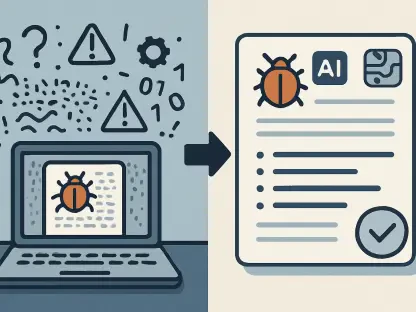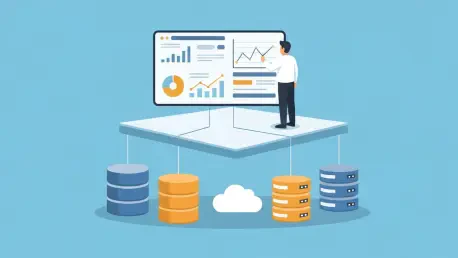

The promise of artificial intelligence to revolutionize industries hinges on a resource that is simultaneously abundant and elusive: high-quality, analysis-ready data. While organizations are awash in information from countless sources, the vast majority of this data remains locked in disparate silos, inconsistent in format, and ultimately unfit for the sophisticated demands of machine learning models. This critical gap between data availability and data usability has become the primary bottleneck for AI innovation, turning ambitious projects into costly failures. The solution to this foundational challenge lies not in generating more data, but in mastering the data that already exists through sophisticated software solutions known as data integration tools. These tools are engineered to perform the essential work of migrating, consolidating, and transforming information from a chaotic landscape of applications, databases, and cloud services into a unified, accessible, and analyzable format. The strategic implementation of these tools is no longer a technical consideration but a core business imperative, dictating the pace and potential of an organization’s journey into the age of AI. As the industry evolves from standalone utilities to comprehensive platforms, understanding their role is paramount for any leader aiming to build a data-driven enterprise.
The Foundational Functions of Data Integration
The intricate process of transforming raw, fragmented data into a strategic asset is governed by a series of core functions that are fundamental to all modern integration tools. This journey begins with data extraction, the critical first step of copying or exporting information from a multitude of source systems. These sources can be incredibly diverse, ranging from cloud-based SaaS applications and on-premises customer relationship management (CRM) systems to highly structured relational databases. The extraction process itself utilizes various techniques, including direct database queries, file transfers, or programmatic interactions via application programming interfaces (APIs). A crucial capability of today’s tools is their proficiency in handling data in all its forms—structured, semi-structured, and unstructured—ensuring no valuable information is left behind. Once data is liberated from its source, data mapping becomes essential. This function involves creating and defining schemas that establish clear correspondences between data elements from different systems. Because source systems often employ unique terminologies, codes, or data structures, mapping serves as the critical translation layer that aligns these disparate elements, ensuring the resulting integrated dataset is coherent, consistent, and ultimately usable for its intended purpose.
Following the initial collection and alignment, the data undergoes a crucial refinement stage to prepare it for downstream use. This is where data transformation comes into play, a comprehensive function that processes the raw, extracted data to ensure its quality and compatibility with target systems and applications. This phase is where data is truly polished for analysis and involves a range of critical sub-processes, including data cleansing to identify and remove inaccuracies, data standardization to enforce consistent formatting across the dataset, data audits to verify compliance with business rules, data encryption to protect sensitive information, and data enrichment to add supplementary context from other sources. Closely linked to this is data quality assurance, a dedicated function that systematically identifies and rectifies errors, inconsistencies, and other quality issues. These processes are vital for maintaining the overall accuracy and reliability of the integrated data, thereby fostering organizational trust in the information used for critical business decisions and the training of AI models. Without this rigorous purification, the “garbage in, garbage out” principle would undermine the validity of any resulting analytics or predictions.
The final and ongoing stages of the integration lifecycle ensure that prepared data reaches its destination and remains current over time. The data loading function is responsible for transferring the processed data into its target system, which is typically a centralized repository like a data warehouse, a data lake, or a specific business application. The state of the data being loaded—whether it is raw or has already been transformed—depends entirely on the integration architecture being employed, such as ETL versus ELT. After the initial population, data synchronization becomes the ongoing process that keeps the target repository aligned with its source systems. This can be configured to occur through periodic batch updates for less time-sensitive needs or through immediate, real-time updates for applications requiring up-to-the-minute information. Overseeing this entire lifecycle are two critical governance functions. Data governance encompasses the policies and procedures that ensure data security, quality, and compliance with regulations, while metadata management organizes the “data about data,” providing essential context on origin, structure, and meaning to ensure the final integrated asset is both reliable and understandable.
A Guide to Modern Data Integration Tools
The landscape of data integration has evolved dramatically from its origins in manually written, error-prone SQL scripts, giving rise to a diverse ecosystem of specialized tools designed for unique challenges. The most traditional of these are Extract, Transform, Load (ETL) tools, which follow a methodical, sequential process. Data is first extracted from its sources, then moved to a separate staging area where it is cleansed, standardized, and transformed into a consistent format. Only after this rigorous preparation is the data finally loaded into the target system, such as a data warehouse. This approach guarantees that the destination repository contains only high-quality, pre-processed data, making it ideal for organizations working with structured data and target systems that may have limited processing power. In contrast, Extract, Load, Transform (ELT) tools have emerged to leverage the immense computational power of modern cloud data platforms. This approach reverses the sequence by loading raw data directly into the target system first. The transformations are then performed in place, utilizing the scalable processing capabilities of the data warehouse or data lake itself. ELT is particularly effective for ingesting very high volumes of structured, semi-structured, and unstructured data, making it the preferred choice for big data pipelines and advanced analytics workflows.
Beyond the core ETL and ELT paradigms, other tools focus on enhancing data availability and providing more flexible access models. Data replication tools, for example, are designed specifically to create and maintain multiple synchronized copies of the same data across different systems or geographic locations. They can operate in batch mode for less time-sensitive scenarios or in real-time to ensure immediate consistency for mission-critical applications. By keeping data replicas synchronized, these tools significantly improve data availability, fault tolerance, and resilience, forming a crucial component of modern disaster recovery and business continuity strategies. A fundamentally different approach is offered by data virtualization tools. Instead of physically moving data, these tools create a virtual, unified data layer—a software abstraction—that allows users to query information from disparate sources as if it were all stored in a single location. This method minimizes the need for physical data consolidation, thereby reducing storage costs and the complexity associated with managing separate data platforms, making it an agile solution for creating virtual data lakes and warehouses on demand.
The modern, distributed nature of IT has spurred the development of even more specialized integration solutions. Integration Platform as a Service (iPaaS) provides a comprehensive, cloud-based suite of services for connecting both cloud and on-premises applications and data sources. These platforms offer advanced features like workflow automation, self-service tools for business users, and a wide array of pre-built connectors that simplify the integration process. To address the challenge of data in motion, streaming data integration tools are built to handle real-time data streams. They continuously consume data from sources like IoT devices, sensors, and social media feeds, perform transformations on the fly, and load the processed data into target systems, enabling organizations to analyze information as it is generated. For maximum efficiency, Change Data Capture (CDC) tools identify and deliver only the incremental changes—such as insertions, deletions, and updates—that occur in a source database. By processing only these deltas, CDC tools keep systems synchronized with minimal resource consumption and latency, making them ideal for real-time analytics.
Finally, a distinct class of tools has emerged to manage an organization’s most critical information assets and the pathways between them. Master Data Management (MDM) tools are focused on establishing and maintaining a single, authoritative, and consistent view of an organization’s core business entities, often referred to as master data. This includes information about customers, products, employees, and suppliers. By cleansing, standardizing, and synchronizing this master data across all systems, MDM tools eliminate data silos and provide a holistic understanding of key business domains. Complementing this are API Integration Platforms, which have become indispensable in today’s application-centric world. These platforms provide the necessary tools to design, publish, manage, and secure the application programming interfaces (APIs) that facilitate seamless communication and data exchange between different systems and applications. In an architecture where an organization may rely on hundreds or even thousands of different services, these platforms provide an efficient and scalable solution for ensuring robust connectivity and interoperability across the entire enterprise.
Unlocking Strategic Value with Data Integration
The strategic implementation of a capable data integration platform directly translates into tangible business advantages, empowering organizations to manage data proliferation and gain a significant competitive edge. One of the most critical benefits is the ability to deliver reliable data for AI. A 2025 study of Chief Data Officers revealed a startling lack of confidence, with only 26% believing their organization’s data was ready to support new artificial intelligence initiatives. Data integration tools directly address this challenge by systematically collecting, unifying, and preparing diverse, distributed data streams for consumption by AI and machine learning pipelines. They also ensure that the data feeding these models remains perpetually fresh through real-time or near-real-time synchronization, which is essential for maintaining model accuracy and relevance. This capability transforms data from a liability into a high-octane fuel for innovation, making advanced analytics and AI a practical reality rather than a distant goal.
Furthermore, these tools are instrumental in breaking down one of the most persistent barriers to enterprise agility: the data silo. The same CDO study found that an overwhelming 82% of leaders believe data is effectively wasted if employees cannot easily access it for decision-making. Data integration platforms dismantle these organizational barriers by consolidating information from across the enterprise into a unified, centralized view, often referred to as a single source of truth. This centralized access fosters better cross-functional collaboration, eliminates conflicting reports, and leads to deeper, more comprehensive insights. Many modern solutions further this goal by promoting self-service data access through user-friendly dashboards and APIs, empowering both technical and non-technical users to explore and leverage organizational data. This democratization of information is a key driver of a data-driven culture and directly supports smarter decision-making by providing leaders with a holistic and continually refreshed understanding of their operations, business processes, and customers.
Beyond enabling AI and improving access, data integration is foundational to establishing trust and control over an organization’s information assets. High-quality data is the bedrock of any effective analytical or operational system, and these tools are instrumental in improving data quality. By embedding automated data transformation, cleansing, and validation processes directly into the data lifecycle, they systematically identify errors, correct inconsistencies, and reduce redundancies. This automation not only enhances the accuracy and reliability of the data but also significantly reduces the time that data teams spend on manual data preparation, freeing them to focus on higher-value activities. Concurrently, enterprise-grade data integration tools play a vital role in strengthening data security and compliance. They increasingly incorporate automated data governance capabilities that help organizations consistently enforce data policies, such as data residency requirements and privacy regulations like GDPR, across all their data pipelines. These platforms offer granular control over integration workflows, allowing for precise modifications to align with an organization’s specific security controls and data privacy needs, thereby reducing risk and ensuring regulatory adherence.
The Next Generation of Integration Platforms
The data integration needs of today’s enterprises have expanded far beyond basic data migration, driven by the explosive growth of information, the intensification of data silos, and the urgent race to create AI-ready data. In response, the industry is undergoing a significant shift away from a fragmented, tool-based approach toward unified, modern data integration platforms that offer a cohesive, end-to-end solution. These platforms are increasingly characterized by their ease of use, often providing intuitive low-code or no-code interfaces that democratize the process of building and managing data pipelines. This allows a broader range of users, not just highly specialized engineers, to participate in the data integration process. A 2027 Gartner prediction underscores this trend, suggesting that AI assistants integrated into these tools will reduce the need for manual intervention in data management tasks by as much as 60%. This evolution is also marked by the embedding of native AI capabilities, with intelligent agents that automate and streamline pipeline design, maintenance, and optimization, often allowing users to perform complex integration tasks simply by using natural language commands.
A defining characteristic of these modern platforms is their architectural flexibility, designed to operate seamlessly within complex, distributed IT landscapes. They offer robust support for hybrid cloud environments, empowering organizations to process data regardless of where it resides—on-premises, in a single public cloud, across multiple clouds, or within emerging data architectures like data mesh and data fabric. This capability is vital for breaking down silos without necessitating costly and insecure data movement. Furthermore, these platforms directly address the pervasive issue of tool sprawl—where studies show 70% of organizations use more than one integration tool—by supporting multiple integration styles within a single, unified environment. By accommodating everything from high-performance batch loads and data replication to real-time event streaming, they provide a comprehensive solution that helps organizations reduce costs, simplify their technology stack, and eliminate the complexity associated with managing a portfolio of disparate point solutions. This consolidation allows data teams to work more efficiently and maintain consistent governance across all data flows.
To ensure the dependability of the data they deliver, the next generation of integration platforms places a strong emphasis on reliability and control. A key feature is the inclusion of built-in data observability, which provides continuous, end-to-end monitoring of data pipelines. These observability features enable the automatic detection and, in some cases, the proactive remediation of pipeline anomalies, data quality issues, and performance degradation. This constant vigilance improves the overall trust, reliability, and quality of the integrated data, giving business users the confidence they need to act on analytical insights. Finally, recognizing that not all organizations can or should operate entirely in the public cloud, many leading platforms offer client-managed versions. These deployments cater to enterprises with stringent data sovereignty, compliance, or security requirements, providing them with direct and complete control over their data integration processes. With options for local hosting and custom configurations, these versions ensure that organizations can leverage the full power of a modern integration platform while adhering to their unique governance and security mandates.
A Retrospective on Building Data Foundations
The journey from manual, labor-intensive data scripting to the adoption of intelligent, automated integration platforms ultimately established the bedrock upon which modern data strategies were built. Organizations that successfully navigated this evolution discovered that the benefits extended far beyond mere technical efficiency. They found themselves fundamentally better equipped to manage the immense complexities of preparing data for artificial intelligence, enabling them to move from experimental AI projects to production-grade solutions with greater speed and confidence. The implementation of robust integration and governance frameworks proved instrumental in achieving and maintaining compliance with an increasingly complex web of global data privacy regulations. This was not simply about connecting disparate systems; it represented a strategic transformation that converted raw, chaotic information into a reliable, enterprise-wide asset. This foundational work fostered a deeply ingrained data-driven culture, where decisions were guided by trusted insights rather than intuition, and ultimately provided a durable competitive advantage in a rapidly changing digital landscape.