
The clinical landscape of hepatopancreatobiliary medicine is currently experiencing a foundational shift as historical diagnostic boundaries dissolve in the face of massive computational power and multi-layered data sets. This transition from traditional, experience-based intuition toward a data-driven paradigm was a focal point of recent international medical gatherings, illustrating that algorithms are no longer merely academic curiosities but essential components of the modern surgical and oncological toolkit. By integrating high-fidelity electronic health records with real-time predictive modeling, physicians are now capable of navigating the immense biological complexity of liver, pancreatic, and biliary diseases with a level of precision that was previously unattainable. This evolution signifies a move away from reactive medical interventions, where treatment begins only after symptoms manifest, toward a proactive model that prioritizes early detection and personalized risk assessment through the rigorous application of artificial intelligence.
Advancements in Surgical Oncology and Multi-Omics
The treatment of complex cancers within the hepatopancreatobiliary system has historically been limited by the fragmented nature of diagnostic data, which often forced surgeons to make critical decisions based on incomplete biological information. However, the current era of “omics” integration is rapidly changing this dynamic by combining genomics, proteomics, and metabolomics into a unified clinical narrative. Projects such as the European-led AiRGOS initiative serve as a primary example of this shift, creating a framework where imaging and pathology are no longer viewed in isolation. Instead, these diverse data streams are synthesized to provide a comprehensive view of the tumor microenvironment, allowing for a more nuanced understanding of how a specific malignancy might respond to surgical or systemic interventions. This holistic strategy ensures that the biological fingerprint of a tumor dictates the surgical approach, rather than relying solely on the anatomical location seen on a standard scan.
Integrating Diverse Data Streams for Better Outcomes
A major breakthrough in this field involves the rise of radiomics and pathomics, which allow for the extraction of quantitative data from standard medical images and histology slides that are entirely invisible to the naked human eye. Deep learning algorithms are now trained to analyze tumors at a voxel-by-voxel level, detecting subtle variations in texture, density, and vascularity that correlate with aggressive biological behavior or a high likelihood of post-operative recurrence. By identifying these “digital biomarkers,” clinicians can stratify patients into specific risk categories long before they enter the operating room. This level of granularity is particularly transformative for pancreatic adenocarcinoma, where the ability to distinguish between early-stage localized disease and micrometastatic spread can fundamentally alter the recommended course of therapy, potentially sparing patients from unnecessary surgeries or directing them toward more intensive neoadjuvant protocols.
Furthermore, the integration of digital pathology into this multi-omics framework is proving to be a game-changer for diagnostic accuracy and speed. While traditional genomic sequencing remains a powerful tool, it is often hindered by high costs and logistical delays that can postpone critical treatments. In contrast, pathomics utilizes computer vision to analyze digitized biopsy slides, identifying cellular patterns that rival the predictive power of genetic testing but at a fraction of the time and cost. These AI-driven pathology tools are capable of identifying specific protein expressions and cellular architectures that indicate how a tumor might interact with the patient’s immune system. This information allows for the development of highly customized treatment plans that are tailored to the unique biological profile of the individual, moving the needle closer to the ideal of truly personalized oncology.
Real-Time Guidance and the Rise of Surgomics
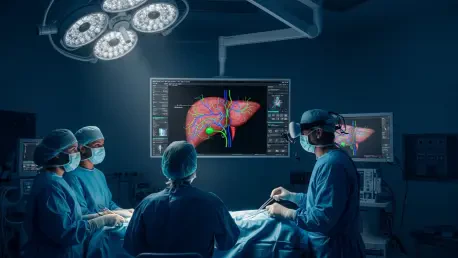
The evolution of the operating room is perhaps most visible in the emergence of “Surgomics,” a discipline that applies AI to the analysis of intraoperative video and sensory data. This technology effectively turns the surgical suite into an intelligent navigation environment, where computer vision algorithms monitor the procedure in real-time to identify critical anatomical structures and potential hazards. By comparing the live surgical feed against vast databases of recorded procedures, these systems can provide surgeons with immediate feedback, suggesting the safest planes of dissection or highlighting subtle signs of tissue ischemia. This real-time support is invaluable during complex resections, such as a Whipple procedure, where the margin for error is razor-thin and the preservation of major vascular structures is paramount to a successful outcome.
Despite the clear technical advantages, the widespread adoption of Surgomics faces a complex landscape of regulatory and ethical challenges that must be navigated with care. In regions like the European Union, strict data privacy laws often complicate the sharing of intraoperative video data across institutional borders, which is necessary to train the robust algorithms required for high-level surgical guidance. Additionally, the legal framework surrounding AI-assisted surgery remains in a state of flux, as questions persist regarding liability in the event of a technological malfunction or a misinterpreted algorithmic suggestion. For these innovations to reach their full potential, there must be a concerted effort to harmonize international data standards and establish clear legal guidelines that protect both patients and practitioners while fostering continued technological development.
Big Data’s Role in Metabolic Liver Disease
While the focus in oncology is often on high-stakes intervention, the application of big data in the management of metabolic liver diseases is focused heavily on the power of prevention and long-term population health. With the global prevalence of metabolic-associated steatotic liver disease reaching critical levels, researchers are leveraging massive international cohorts to uncover the underlying drivers of disease progression. These datasets, which encompass millions of individuals and decades of follow-up care, allow for the identification of subtle trends that would be lost in smaller clinical trials. By harmonizing electronic health records with lifestyle data from wearable devices, the medical community is gaining an unprecedented understanding of how daily habits, environmental factors, and genetic predispositions intersect to drive the transition from simple fatty liver to cirrhosis or hepatocellular carcinoma.
Large-Scale Population Analysis and Lifestyle Interventions
The analysis of these vast datasets has led to the discovery of highly specific, actionable lifestyle markers that can be used to mitigate the risk of chronic liver disease. For example, recent longitudinal studies utilizing data from over 100,000 individuals with wearable fitness trackers have demonstrated a quantifiable link between daily step counts and liver health. These findings indicate that reaching a specific threshold, such as 7,500 to 12,000 steps per day, can significantly reduce the risk of developing metabolic complications, effectively halving the likelihood of disease progression over a three-year period. This provides clinicians with concrete, evidence-based targets to discuss with their patients, moving beyond generic advice to stay active and toward a more “prescriptive” approach to lifestyle modification that is grounded in hard data.
In addition to physical activity, big data is shedding new light on the role of nutrition and micronutrients in liver preservation. By analyzing complex dietary questionnaires alongside serum biomarker data, researchers have identified specific nutritional components, such as manganese and other essential minerals, that appear to have a protective effect against the development of liver malignancies. While many of these associations are currently used to generate new research hypotheses, they highlight the potential for AI to sift through the noise of traditional nutritional studies to find meaningful correlations. This data-driven approach allows for the creation of more effective public health strategies that are tailored to the metabolic needs of specific populations, potentially reducing the overall burden of liver disease on global healthcare systems.
Predictive Modeling for High-Risk Patients
Predictive modeling is also playing a vital role in identifying individuals at the highest risk for developing hepatocellular carcinoma, especially in settings where advanced diagnostic imaging is not readily available. By employing decision tree-based algorithms and machine learning techniques, clinicians can now utilize routine blood tests and basic anthropometric data to generate highly accurate risk scores. This democratization of risk assessment is particularly important for resource-limited environments, as it allows for the effective stratification of patients without the need for expensive genomic testing or frequent high-resolution MRI scans. This ensures that screening efforts are concentrated on those who will benefit most, maximizing the impact of available medical resources and improving early detection rates for a disease that is often asymptomatic in its early stages.
Furthermore, these predictive models are becoming increasingly sophisticated by incorporating longitudinal changes in clinical markers rather than relying on a single snapshot in time. By tracking the trajectory of liver enzymes, platelet counts, and other metabolic indicators over several years, AI systems can detect the subtle “velocity” of decline that often precedes a catastrophic clinical event. This “trend-aware” analysis allows for earlier intervention, such as the initiation of more frequent surveillance or the aggressive management of underlying metabolic triggers. As these models continue to be refined with more diverse data from around the world, their predictive power will only increase, making them an indispensable tool for the long-term management of patients with chronic liver conditions.
Ethical Integrity and Diagnostic Innovation
The rapid integration of artificial intelligence into the clinical workflow has necessitated a parallel focus on the ethical frameworks that govern data usage and algorithmic transparency. As these tools begin to influence high-stakes medical decisions, the importance of ensuring that the underlying models are fair, unbiased, and transparent cannot be overstated. This involves not only the technical validation of the software but also a deep consideration of how the data is collected, who owns that data, and how it is protected from misuse. The goal is to create a healthcare environment where technology enhances the human element of medicine, fostering a culture of trust between patients, providers, and the developers of these advanced computational systems.
Navigating Bias and Data Transparency
One of the most pressing ethical concerns in medical AI is the presence of systemic bias, which can lead to significant disparities in diagnostic accuracy across different demographic groups. For instance, some current models used for liver cancer prediction have demonstrated a marked difference in performance when applied to male versus female patients, likely due to an overrepresentation of male subjects in the initial training data. To address these inequities, there is a critical need for researchers to prioritize diverse data collection and conduct rigorous subgroup validations before deploying any algorithm in a clinical setting. This ensures that the benefits of AI are distributed equitably and that no patient is put at a disadvantage because of their gender, ethnicity, or socioeconomic background.
In tandem with efforts to eliminate bias, the medical community is exploring innovative technologies like blockchain to enhance data transparency and patient autonomy. By utilizing decentralized ledgers, patients can maintain greater control over who accesses their medical information and how it is used for research purposes. This approach not only provides a secure and immutable audit trail but also encourages participation in large-scale data sharing initiatives by building a foundation of trust and accountability. When patients feel that their data is being handled ethically and that they have a say in its utilization, they are much more likely to contribute to the massive datasets required to train the next generation of life-saving AI tools, creating a virtuous cycle of innovation and trust.
Enhancing Imaging and the Future of Diagnostics
Diagnostic imaging remains the frontline of clinical practice in hepatopancreatobiliary medicine, and it is here that AI is making some of its most immediate and practical impacts. In the field of Endoscopic Ultrasound (EUS), which is notorious for its steep learning curve and operator dependency, AI-driven real-time segmentation tools are now assisting clinicians in identifying suspicious lesions and anatomical landmarks. These systems provide a digital “safety net,” ensuring that even less experienced endoscopists can achieve a level of diagnostic accuracy that matches that of a seasoned expert. This standardization of care is essential for improving outcomes at a population level, as it reduces the likelihood of missed diagnoses and ensures that every patient receives a high-quality examination regardless of where they are treated.
Looking forward, the integration of Large Language Models (LLMs) and generative AI into the diagnostic process offers exciting possibilities for streamlining clinical documentation and interpreting complex reports. While there is a healthy level of caution regarding the potential for “hallucinations” or errors in probabilistic models, their ability to synthesize vast amounts of text and imaging data into a coherent clinical summary is already proving useful in multidisciplinary tumor board discussions. The key for the future lies in maintaining a “human-in-the-loop” approach, where the processing power of AI is used to augment the clinical intuition of the physician. By combining these advanced tools with a grounded, patient-centric philosophy, the medical field is poised to enter an era of precision medicine that is more efficient, more accurate, and more attuned to the individual needs of every patient.
Moving forward, the primary objective for practitioners and researchers must be the transition from theoretical models to validated, cross-institutional clinical protocols. This requires a dedicated focus on the “last mile” of implementation, where technological potential is converted into tangible improvements in patient survival and quality of life. Clinicians should advocate for the adoption of standardized data collection practices and participate in collaborative, multi-center studies to ensure that the tools of tomorrow are built on a foundation of diverse and high-quality evidence. By prioritizing ethical transparency and the rigorous validation of every algorithm, the hepatopancreatobiliary community can ensure that these powerful technologies serve as a bridge to a more equitable and effective healthcare system. Ultimately, the successful integration of big data will be measured not by the complexity of the code, but by the measurable reduction in disease burden and the enhanced ability of physicians to provide compassionate, informed care.