
While many Division III athletic programs rely heavily on tradition and grit, a quiet revolution is taking place on the fields and in the weight rooms of Denison University, where data is the new currency of performance. The institution is moving beyond the standard metrics of points scored and games won, instead prioritizing a sophisticated integration of sports analytics into the daily lives of its student-athletes. This shift is not coming from outside consultants but from a dedicated group of five data analytics majors who also happen to be varsity competitors. These students have bridged the gap between academic theory and physical application by developing a custom performance dashboard that translates biometric data into actionable training intelligence. By leveraging their dual roles, these innovators are creating a culture where statistical rigor and athletic passion coexist, proving that advanced technological tools are not the exclusive domain of professional leagues or high-budget Division I programs.
Mastering the Mechanics of Athlete Performance
Quantifying Capacity: Force-Plate and Wearable Metrics
The technical backbone of this transformation involves the implementation of advanced force-plate technology, which allows the athletic department to measure ground reaction forces with incredible precision. Twice every week, athletes perform specific movements on these plates to generate data that reveals explosive power, stability, and subtle physical imbalances that might be invisible to the naked eye. This objective measurement provides a baseline for each individual, allowing coaches to see exactly how a player’s body is responding to the demands of the season. When these insights are combined with wearable sensors that track player load in three dimensions, the picture of an athlete’s physical state becomes remarkably clear. These sensors monitor every jump, sprint, and change of direction, calculating the cumulative toll that practice and competition exert on the body. This granular approach ensures that training regimens are based on evidence rather than guesswork, allowing for a more tailored and effective physical development program.
Beyond simply collecting data, the success of the initiative depends on the ability to interpret these complex signals within the context of a rigorous competitive schedule. By tracking the metrics over the course of the season, the analytics team can identify trends that indicate when an athlete is reaching peak capacity or when they are starting to show signs of mechanical breakdown. For example, a sudden decrease in vertical jump height or a shift in weight distribution during a squat can signal underlying fatigue before a player even feels the symptoms. This proactive monitoring allows for early intervention, where strength coaches can adjust individual lifting programs or suggest specific recovery protocols to address the identified weaknesses. The integration of force-plate data with real-time movement tracking represents a significant leap forward in how the university manages its human capital. It turns the weight room into a laboratory for human performance, where every repetition is an opportunity to gather intelligence that informs game-day decisions.
Visualizing Readiness: The Traffic Light Dashboard System
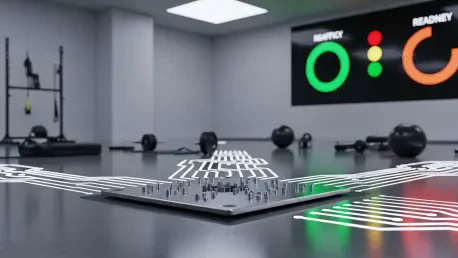
To ensure that the massive influx of data remains useful for busy coaches and athletes, the student developers created a centralized dashboard that simplifies complex biometric output into a clear format. At the heart of this interface is a traffic light readiness system, which uses color-coded zones to categorize each player’s current physical and mental state. A green status indicates that an athlete is fully recovered and ready for high-intensity exertion, while a yellow status suggests a need for caution or moderated training volume. If a player is flagged in the red zone, it serves as an immediate warning that they are at a significantly higher risk of injury due to extreme fatigue or overtraining. This simplified visualization allows coaching staffs to make rapid, informed decisions during practice sessions without needing to spend hours poring over spreadsheets or raw sensor data. It bridges the gap between the high-level math performed by the data analysts and the practical, fast-paced environment of collegiate athletics.
The dashboard also incorporates subjective data points that complement the objective measurements taken from sensors and force plates, creating a more holistic view of the student-athlete. Players contribute to the system by reporting their own perceptions of sleep quality, stress levels, and muscle soreness, which the dashboard then correlates with the physiological data. This dual-layered approach helps the staff understand the relationship between lifestyle factors and on-field performance, highlighting how external pressures like academic deadlines can impact physical readiness. By centralizing this information, the athletic department has created a shared language for performance that everyone involved can understand and act upon. The ability to see all these variables in one place allows for a more nuanced approach to player management, where the focus is not just on what an athlete can do today, but on how to keep them healthy and productive throughout the entire year. This systematic approach to readiness is now a cornerstone of the university’s athletic strategy.
Strategic Integration: Communication and Career Development
Perhaps the most transformative aspect of this data-driven model is the way it has reshaped the interpersonal dynamics between coaches and their players. Instead of relying solely on traditional coaching intuition, which can sometimes overlook the subtle signs of burnout, staff members now use the performance dashboard as a diagnostic tool for conversation. When the system identifies a player in the red zone, it doesn’t just mean they sit out of practice; it triggers a focused dialogue about their overall well-being. Coaches can ask targeted questions about a student’s sleep habits or current academic workload, recognizing that the load on a college athlete is never purely physical. This approach replaces the old-school mentality of pushing through exhaustion with a more sophisticated understanding of human limits and recovery. By using data as a neutral starting point, these conversations become less about performance criticism and more about collaborative health management, building trust across the entire team.
The success of this implementation suggested that the next logical step for collegiate programs involved the expansion of data literacy across all departments. It was essential for institutions to move beyond the mere acquisition of sensors and instead focus on the human systems required to interpret and communicate that information effectively. The project highlighted that the most effective solutions were those that prioritized the psychological safety and physical recovery of the participants above all else. This meant that future strategies needed to incorporate data-driven insights into the very earliest stages of talent identification and long-term developmental planning. By fostering a culture where athletes were seen as partners in their own performance data, the university established a foundation for more ethical and effective sports management. These lessons provided a definitive framework for any organization looking to balance the demands of high-stakes competition with the necessity of holistic personal growth in the modern technological landscape.