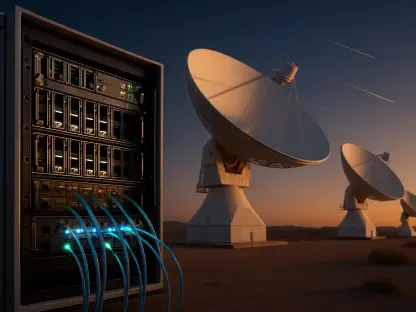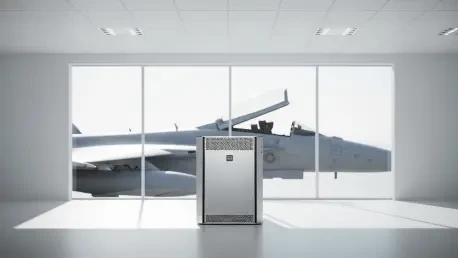

The decision to modernize a national air force often hinges on aerodynamic performance or stealth capabilities, but the modern battlefield increasingly prioritizes the control of the digital architecture underlying every flight hour. Saab has aggressively pushed this narrative in the Canadian market by proposing a localized sovereign data center in Montreal. This facility is intended to serve as the nerve center for the Gripen E/F fighter jets and GlobalEye platforms, offering a stark contrast to traditional procurement models where sensitive mission data often flows through foreign servers. By promising total control over source codes and electronic warfare signatures, the Swedish manufacturer is tapping into a growing desire for national self-sufficiency that transcends simple equipment acquisition. This strategy forces a re-evaluation of how sovereign nations manage their defense assets in an era where data is as vital as fuel. The proposal highlights a shift in military philosophy, where the ability to modify software independently becomes a core requirement for ensuring long-term national security and operational readiness.
The Shift Toward Digital Sovereignty
Operational Independence in the Digital Age
True operational independence requires more than just owning the physical airframe; it demands the ability to update mission parameters and threat libraries without seeking external permission from a foreign government. In the current geopolitical landscape, the reliance on proprietary systems managed by external allies can create a strategic bottleneck during high-intensity conflicts. When a nation operates an aircraft that requires a data link to a foreign headquarters for its daily mission planning, it essentially cedes a portion of its sovereignty to that partner. Saab’s Montreal proposal aims to eliminate this tether by ensuring that the Royal Canadian Air Force possesses the keys to the digital kingdom. This means that Canadian technicians and engineers would have the authority to alter the aircraft’s software in response to emerging threats in the Arctic or other theaters. This level of autonomy is becoming a non-negotiable demand for nations that want to maintain a credible and independent defense posture without being locked into a specific foreign policy.
Building on this need for control, the technical depth of the proposed data center would allow for the localized management of electronic warfare signatures and advanced sensor fusion algorithms. In modern aerial combat, the winner is often the one who can most quickly adapt to the enemy’s changing electronic emissions. If an air force must wait for a foreign contractor to analyze data and push a software patch, the tactical window of opportunity may have already closed. By housing these processes within a domestic facility in Montreal, Canada would be able to develop its own unique “threat library,” which is a database of electronic signals used to identify and jam adversary radars. This creates a distinct advantage because the specific capabilities of the Canadian fleet would remain a closely guarded secret, even from its closest allies. This move toward localized data processing represents a fundamental break from the globalized supply chains of the past, prioritizing national resilience and technical agility over the convenience of off-the-shelf solutions.
Domestic Infrastructure as a Defense Priority
The establishment of a sovereign data center in Montreal is not merely a technical requirement but a strategic investment in the Canadian industrial base and its long-term aerospace ecosystem. By centralizing the data management of seventy-two Gripen E/F jets and six GlobalEye airborne early warning platforms, Canada can foster a new generation of cybersecurity and aerospace experts. This initiative ensures that high-value intellectual property remains within the country, creating a feedback loop between the military and domestic tech firms. Furthermore, this approach mitigates the risks associated with international data breaches or shifts in foreign export laws that could suddenly restrict access to vital aircraft updates. When mission data is stored and processed on Canadian soil, it is subject to Canadian laws and security protocols, providing a level of legal and operational certainty that is impossible to achieve when data resides in a multi-tenant cloud environment located in a foreign jurisdiction.
Furthermore, the comparison between Saab’s decentralized approach and the more centralized models used by competitors reveals a deep divide in how future warfare is envisioned. Some modern fighter programs rely on cloud-based logistics and mission support systems that are integrated across all partner nations, which creates a highly efficient but potentially vulnerable network. If the central hub of such a system is compromised or suffers a technical failure, the entire global fleet could be grounded or its data exposed. In contrast, the Montreal data center provides a “hardened” alternative that isolates Canadian operations from global network fluctuations or external political pressures. This redundancy is vital for a country with vast, remote territories like Canada, where maintaining a continuous and secure connection to foreign servers is not always guaranteed. By investing in domestic infrastructure, the government is essentially purchasing an insurance policy against the unpredictable nature of global digital networks and international relations.
Evolving Defense Procurement Models
Bridging the Gap Between Hardware and Software
As aircraft become flying supercomputers, the distinction between a defense contractor and a software company has nearly vanished, necessitating a new approach to how these platforms are maintained. The Gripen E/F was designed from the outset with a modular software architecture that separates flight-critical functions from mission-specific applications. This design allows for rapid updates to the combat systems without requiring a full recertification of the aircraft’s flight safety software, a process that can take years in more rigidly integrated systems. By utilizing the Montreal data center, Canada would be able to leverage this modularity to integrate domestic sensors or specialized weapons systems with unprecedented speed. This capability is essential for staying ahead of technological breakthroughs by adversaries who are also investing heavily in artificial intelligence and machine learning. The data center would serve as the laboratory where these new Canadian-made digital capabilities are refined and tested before being uploaded.
Moreover, the integration of the GlobalEye airborne early warning platforms into this localized data ecosystem creates a powerful “system of systems” that enhances situational awareness across the entire Canadian Arctic. The GlobalEye acts as a massive data gatherer, sweeping up information from the air, sea, and land, which must then be processed and disseminated to the fighter fleet in real time. If this vast stream of intelligence were to be processed externally, it would introduce latency and increase the risk of interception. By keeping this data loop entirely within Canadian borders, the RCAF ensures that its maritime and northern sovereignty operations remain secure and responsive. The ability to fuse data from multiple sources domestically allows for a more accurate and timely picture of the battlespace. This internal processing capability is the cornerstone of modern multi-domain operations, where the speed of information processing is just as critical as the speed of the aircraft itself, ensuring that commanders can make informed decisions.
Establishing a New Framework for National Security
The Canadian government faced a pivotal choice in the mid-2020s regarding whether to prioritize the immediate benefits of a global program or the long-term security of a sovereign data stack. Decision-makers evaluated the proposal from Saab not just as a purchase of hardware but as a foundational shift toward technological self-reliance. This evaluation required a deep dive into the legal frameworks governing data sharing and the long-term costs of maintaining a digital infrastructure. The conclusion reached was that the initial investment in a localized data center provided a significant return in the form of reduced life-cycle costs and increased mission availability. By avoiding the subscription-like fees and restrictive access agreements often associated with foreign-managed systems, Canada secured a more predictable and sustainable defense budget. The move also served as a catalyst for the Montreal tech corridor, attracting international talent and encouraging local startups to develop specialized applications for the new sovereign defense cloud.
To ensure the success of this transition, the Canadian defense ministry prioritized the recruitment of specialized personnel to manage the new Montreal facility. This involved creating partnerships with local universities to develop curricula focused on aerospace data science and cybersecurity. The next step in this evolution was the implementation of a rigorous “sovereign-first” policy for all future military acquisitions, ensuring that no new platform would be purchased without a clear plan for domestic data control. This shift encouraged other global defense firms to offer similar localized packages, fundamentally changing the landscape of international procurement. For other nations watching this development, the Canadian model proved that it was possible to maintain high-end military capabilities while asserting digital independence. The focus transitioned from merely operating advanced technology to truly mastering it, ensuring that the defense of the nation remained firmly in the hands of its own citizens and institutions for the decades ahead.