
The sudden realization that national power grids and water treatment facilities are operating under a patchwork of aging security protocols has forced a dramatic rethinking of how the Department of Homeland Security coordinates with the private sector. The federal government is currently attempting to fill a massive organizational vacuum with a new initiative known as the Alliance of National Councils for Homeland Operational Resilience – Critical Infrastructure, or ANCHOR-CI. This framework serves as a direct response to the fractured state of national security communications that followed the dismantling of previous advisory structures in early 2025. By establishing a formalized environment for intelligence sharing, the DHS aims to restore the flow of sensitive data between government agencies and the private corporations that own and operate approximately eighty percent of the nation’s essential services. The primary challenge lies in convincing these private entities that the new system provides enough protection to justify the inherent risks of transparency.
Rebuilding the Bridge: After a Systemic Collapse
To understand the urgency behind the ANCHOR-CI proposal, it is necessary to examine the long-standing role of the Critical Infrastructure Partnership Advisory Council, which provided the blueprint for federal-private cooperation for nearly two decades. This predecessor allowed industry leaders and government officials to sit in the same room and discuss granular vulnerabilities without the looming threat of public disclosure through freedom of information requests or potential regulatory retaliation. Such a “safe harbor” was not merely a legal convenience; it was the foundation of trust required for utility companies to admit to flaws in their cybersecurity architecture. Without this specific legal protection, the exchange of raw, actionable intelligence often grinds to a halt, as corporate legal departments prioritize liability mitigation over collective national security interests. The loss of this environment created a significant barrier to proactive defense.
When the previous coordination framework was terminated in March 2025, the resulting communication blackout left the nation’s digital and physical defenses in a state of dangerous isolation. Private operators, suddenly stripped of their confidentiality protections, became understandably hesitant to report minor intrusions or suspicious network activity that might later be used against them in litigation. This silence occurred exactly as state-sponsored threat actors and sophisticated ransomware syndicates were intensifying their campaigns against municipal water systems and regional energy cooperatives. The intelligence gap became a tangible threat, as federal agencies lost their primary window into the real-time operational status of the civilian networks they are tasked with protecting. ANCHOR-CI is the vehicle intended to navigate out of this darkness, but it must first overcome the skepticism of an industry that feels abandoned by previous policy shifts.
The Blueprint: For a Decentralized Defense
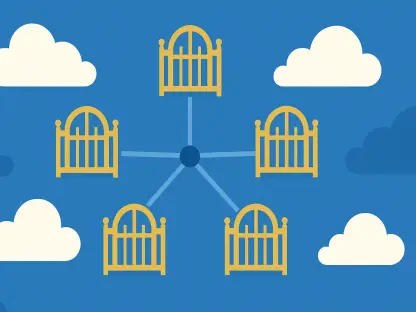
The operational core of ANCHOR-CI rests upon a complex “umbrella system” that categorizes national resilience efforts into four distinct council types to address the modern reality of interconnected systems. By organizing participation into Sector-Specific, Cross-Sector, Industry, and Regional councils, the DHS is attempting to acknowledge that a disruption in one area, such as a cyberattack on a major telecommunications provider, can trigger a cascading failure in the banking or emergency services sectors. This architecture is designed to break down the traditional silos that have historically prevented intelligence from moving horizontally across the economy. Instead of treating the power grid and the digital cloud as separate entities, the framework encourages a holistic view of national stability, identifying how a single point of failure could potentially ripple through multiple layers of society simultaneously.
A notable shift in this new strategy is the heavy emphasis on regional and local management, effectively moving the center of operational gravity away from the federal offices in Washington, D.C. The DHS operates on the theory that resilience is best cultivated on the ground where the infrastructure actually resides, involving local utility managers and state officials who understand the unique geographic constraints of their regions. However, this decentralized approach has sparked a significant debate among cybersecurity experts regarding the uneven distribution of technical expertise. While larger corporations have the resources to engage with these regional councils effectively, smaller municipalities and rural cooperatives often lack the budget to employ high-level security analysts. There is a persistent concern that these smaller nodes could become the “weak links” in the national chain, providing a path of least resistance for sophisticated global adversaries.
Navigating Governance: The Liability Gap
Management of this sprawling network falls under the purview of the Cybersecurity and Infrastructure Security Agency, which is tasked with vetting memberships and ensuring that councils maintain a balanced representation of diverse stakeholders. The current plan includes a two-year trial period from 2026 to 2028, allowing for iterative updates as the threat landscape evolves and new technological challenges emerge. This “probationary” status is intended to maintain flexibility, but it has inadvertently caused some private partners to hesitate before making long-term commitments of personnel and capital. Industry veterans often view temporary programs with suspicion, fearing that another administrative shift could once again dissolve the cooperative structures they worked to build. For the framework to succeed, CISA must demonstrate that ANCHOR-CI is a permanent fixture of the national security apparatus rather than a fleeting political experiment.
Perhaps the most significant obstacle to the success of ANCHOR-CI is the absence of the explicit legal safeguards that once defined the relationship between the public and private sectors. Unlike its predecessor, the new proposal does not yet offer a comprehensive shield against the discovery of shared information during private lawsuits or regulatory audits. Without a robust guarantee that sensitive vulnerability data will remain confidential, infrastructure owners may choose to remain silent during the early stages of a cyber incident, prioritizing their legal safety over the national need for rapid information dissemination. This liability gap remains a primary point of contention in ongoing negotiations, as corporate leaders demand that the government match its request for transparency with a commitment to legal protection. The effectiveness of the entire system hinges on whether federal legislators can codify these protections into law before the next major crisis.
Strategic Imperatives: Moving Toward Resilience
For private organizations and municipal authorities looking to navigate this new landscape, the immediate focus should be on internal technical auditing and the formalization of their own reporting structures. Entities that proactively align their internal security standards with the emerging ANCHOR-CI guidelines will likely find themselves in a better position to influence the direction of the regional councils. This involvement requires more than just attending meetings; it demands a commitment to real-time data integration and the adoption of shared communication protocols that can withstand high-pressure scenarios. Organizations should also prioritize the training of local staff to interpret federal threat briefings, ensuring that the information received from the DHS actually leads to tangible improvements in network defense. Engagement at the local level will be the primary mechanism for securing future funding and technical support.
The implementation of ANCHOR-CI represented a pivotal attempt to reconcile the conflicting demands of corporate privacy and national security in an increasingly hostile digital environment. It became clear that the success of the initiative depended not only on technological integration but also on the restoration of the legal trust that was lost in the previous year. As the framework moved through its initial stages, the focus shifted toward establishing a permanent legislative foundation that could survive political transitions. Stakeholders across all sectors recognized that the cost of silence was far higher than the risk of collaboration, provided the government could guarantee a secure environment for that dialogue. Ultimately, the program sought to build a more resilient nation by ensuring that no single entity was forced to face global threats in isolation, marking a significant transition in the history of homeland operational defense.