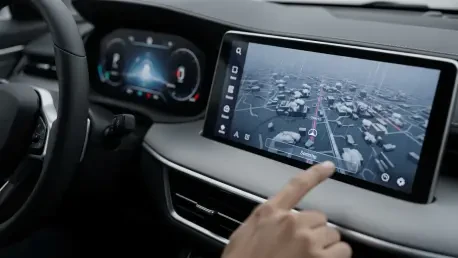

The sophisticated digital displays now central to the modern driving experience demand increasingly rich, interactive 3D graphics, yet automakers face significant hurdles with the high licensing fees and substantial resource requirements of existing commercial game engines. To overcome these obstacles, Toyota Connected North America, a key subsidiary of the automotive giant, has embarked on an ambitious project to develop a proprietary, open-source engine named Flourite. This initiative aims to deliver high-performance, console-grade visuals specifically tailored for the embedded and often lower-powered hardware found in vehicle infotainment systems. By creating a custom solution from the ground up, the company is strategically positioning itself to control the entire software stack, optimize performance for its unique needs, and foster a new ecosystem around in-car user interfaces, moving beyond the limitations of off-the-shelf options that are not designed with automotive constraints in mind.
A New Architecture for Automotive Graphics
At the heart of Flourite lies a carefully engineered architecture designed for maximum efficiency and seamless integration with modern development workflows. The engine’s foundation is a high-performance Entity Component System (ECS) core written in C++, a choice that maximizes computational speed and minimizes overhead on less powerful embedded processors. This ECS architecture allows for a clean separation of data and logic, enabling the system to handle complex scenes with numerous interactive elements without compromising responsiveness. Flourite is built to integrate deeply with Google’s Flutter UI framework, allowing developers to use the Dart programming language for both the user interface and the underlying 3D logic. This unified approach simplifies the development process significantly. For rendering, Flourite leverages Google’s Filament, a real-time physically based rendering engine optimized for modern graphics APIs. This ensures that the system can produce visually stunning, high-quality graphics while still running efficiently on automotive-grade hardware, striking a crucial balance between aesthetic appeal and real-world performance.
Streamlining Development and Future Potential
Beyond its technical underpinnings, the Flourite engine introduced several key features that streamlined the development workflow and expanded its potential application beyond the automotive industry. A significant innovation was the implementation of model-defined trigger touch zones, which allowed digital artists to designate interactive areas directly within their 3D modeling software, bridging the gap between design and engineering. This feature, combined with support for Flutter’s Hot Reload capability, enabled developers to see changes to their scenes almost instantly, drastically accelerating iteration cycles and fostering greater creative experimentation. While conceived to power Toyota’s next-generation vehicle displays, the decision to release Flourite as an open-source project signaled a broader vision. This move made its powerful, efficient toolset available to the wider game development community, offering a new alternative for creating rich 3D experiences on a variety of resource-constrained platforms, from smart devices to interactive kiosks.