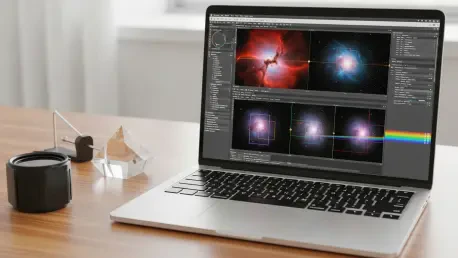

Capturing the ethereal glow of a distant nebula or the intricate spiral arms of a galaxy requires more than just a telescope and a camera; it demands a sophisticated digital bridge to translate raw data into a visual masterpiece. While many enthusiasts begin their journey with general-purpose photo editors like Adobe Photoshop, they quickly discover that these tools, despite their ubiquity in the creative world, are not fundamentally designed to handle the unique mathematical challenges of deep-sky imaging. Astrophotography is a discipline of accumulation, where the signal from celestial objects is often buried beneath layers of electronic noise and atmospheric interference. Siril emerges as a specialized, open-source solution that provides the high-level algorithms necessary to perform complex tasks such as frame alignment, background extraction, and data stacking with professional-grade precision. By focusing exclusively on the needs of the astronomical community, this software transforms dozens or even hundreds of individual, noisy exposures into a single, coherent image that reveals details otherwise invisible to the naked eye.
Beyond its technical capabilities, the software represents a cross-platform powerhouse that democratizes access to high-end astronomical processing tools for users on Windows, macOS, and Linux. Currently maintained in version 1.2.6, it serves as a robust alternative to the increasingly common subscription-based models that can drain a hobbyist’s budget over time. The development team has successfully bridged the gap between basic observation and high-end digital art, offering a suite of tools that manage the rigorous preprocessing stages required before any creative adjustments can even begin. This specialized focus ensures that the software remains lean and efficient, prioritizing the integrity of astronomical data over the flashy, AI-driven filters found in mainstream consumer applications. For the dedicated stargazer, it provides a stable and powerful environment where the physics of light meets the art of digital development without the barrier of a high entry price.
The Philosophy: Open-Source Excellence
Operating under the GNU General Public License, the application is maintained by a global community of dedicated contributors rather than a profit-driven corporation. This collaborative framework ensures that the software remains free to use, modify, and redistribute, fostering a unique ecosystem where the users themselves often influence the development roadmap. In an industry where professional-grade tools frequently cost hundreds of dollars annually, this “homespun” approach is a significant outlier that prioritizes accessibility and scientific transparency. However, this community-driven model brings a specific set of expectations; the developers prioritize raw technical power and mathematical accuracy over the polished, hand-holding user interfaces found in commercial products. Consequently, the platform is often viewed as a tool for the serious practitioner who is willing to trade a streamlined “one-click” experience for total control over every step of the image-processing pipeline.
This commitment to open-source principles also means that the software evolves rapidly, with frequent updates that reflect the latest advancements in astronomical imaging techniques. While a corporate product might wait for a major annual release to introduce new features, the contributor network ensures that bug fixes and performance enhancements are integrated as soon as they are ready. The trade-off for this agility is a steep learning curve that requires a genuine investment of time and intellectual effort from the user. Newcomers must be prepared to engage with technical documentation and community forums to master the intricacies of the software. For those who persevere, the reward is a deep understanding of the underlying science of their craft, as the software does not hide its processes behind “black box” automation, but rather invites the user to understand exactly how their data is being manipulated to achieve the final result.
Hardware Logistics: System Compatibility
Running a sophisticated processing engine does not necessarily require a state-of-the-art workstation, but the sheer volume of data involved in modern astrophotography makes certain hardware choices critical. The software is optimized for 64-bit architectures across all major operating systems, requiring a minimum of 4GB of RAM to function, though 16GB or more is recommended for those working with large sensor formats or extensive image sequences. A notable characteristic of the software’s architecture is its heavy reliance on the Central Processing Unit rather than the Graphics Processing Unit. This means that users with integrated graphics on their laptops can still achieve excellent results, provided their processor has sufficient cores and clock speed to handle the multi-threaded nature of the stacking operations. This hardware-agnostic approach makes professional-level processing accessible to a wider range of enthusiasts who might not own high-end gaming or video editing rigs.
While the CPU handles the heavy lifting of the calculations, the storage medium acts as the primary bottleneck during the initial stages of processing. The software generates numerous intermediate files during calibration and alignment, which can lead to massive data throughput requirements. Utilizing a Solid State Drive is not just a luxury but a practical necessity for anyone looking to process hundreds of high-resolution RAW files without waiting hours for the software to read and write data. Furthermore, a display with a minimum resolution of 1280 x 768 is required to navigate the dense interface effectively, though a high-dynamic-range monitor is preferred for making accurate color and contrast adjustments. By understanding these hardware dynamics, users can optimize their existing systems to ensure that the software runs smoothly, allowing them to focus on the creative aspects of their work rather than fighting against technical lag or system crashes.
Technical Interface: Navigating Complexity
The user interface of the platform is a reflection of its scientific roots, favoring a minimalist, script-based aesthetic that prioritizes functionality over modern design trends. Upon first launch, a new user might find the layout intimidating, as it lacks the colorful icons and intuitive “drag-and-drop” zones common in modern smartphone apps. Instead, the workspace is organized into a series of logical tabs that mirror the standard astrophotography workflow: from the initial loading of frames to the final stages of stretching and enhancement. This structured environment encourages a disciplined approach to image processing, where each step must be completed before moving to the next. Success within this ecosystem depends heavily on a user’s willingness to adopt a specific organizational philosophy, particularly regarding how raw data is categorized and stored on their local machine before the software even begins its work.
To take full advantage of the software’s automated features, users must adhere to a strict folder architecture, sorting their raw exposures into sub-folders labeled for darks, lights, flats, and biases. This level of preparation allows the built-in scripts to locate and process files without constant manual intervention, effectively turning a complex series of commands into a streamlined operation. While this may feel rigid compared to the flexibility of general editors, it is this very structure that enables the software to perform its heavy-duty calculations with such high reliability. For those who prefer a more hands-on approach, the interface also provides a command-line console where every individual function can be executed manually. This dual nature allows the software to grow with the user, serving as a relatively simple automation tool for beginners while offering a deep, command-driven environment for those who wish to fine-tune every variable of their astronomical data.
Processing Power: Stacking and Science
At the core of the application’s utility is its ability to perform high-precision stacking, a process that is fundamental to capturing the faint details of the cosmos. In the realm of astrophotography, a single long exposure is often ruined by satellite trails, cosmic rays, or simple electronic noise from the camera sensor. Stacking involves taking multiple shorter exposures and mathematically combining them to improve the signal-to-noise ratio. The software utilizes advanced statistical methods, such as sigma-clipping rejection, to identify and remove transient artifacts while reinforcing the consistent light coming from a distant nebula or star cluster. This results in a “master” image that is significantly cleaner and more detailed than any of its individual components, providing a solid foundation for the subsequent stages of artistic enhancement and color correction that define a successful astronomical photograph.
Once the stacking process is complete, the software offers a suite of preprocessing tools designed to clean the resulting image of common defects. Background extraction is a critical feature here, allowing users to remove the gradients caused by light pollution or the natural “airglow” of the atmosphere, which can often overwhelm the delicate colors of a deep-sky object. By defining a grid of samples across the image, the software can model the unwanted light and subtract it with surgical precision, leaving behind a neutral background and a vibrant subject. This stage of the workflow is where the scientific nature of the software truly shines, as it allows the photographer to objectively improve the quality of their data before any subjective edits are made. The ability to manage these complex variables in a free, open-source environment is what makes the platform an indispensable resource for anyone serious about capturing the wonders of the night sky.
Color Calibration: Precision and Accuracy
One of the most technically impressive features within the application is Photometric Color Calibration, a tool that elevates an image from a mere pretty picture to a scientifically grounded representation of the cosmos. By connecting to online star catalogs, the software can perform a “plate solve” on a user’s image, identifying the exact celestial coordinates and the specific stars captured in the frame. Once the stars are identified, the software compares their recorded colors to known physical data, automatically adjusting the white balance and color channels to match the actual light emissions of those distant suns. This removes the guesswork from color correction, ensuring that the oranges, blues, and magentas of a nebula are represented as accurately as possible based on established astronomical data. This feature alone places the software in a category of its own, offering a level of precision that even many expensive commercial suites struggle to replicate.
In addition to its calibration prowess, the software provides specialized noise reduction tools that are tailored to the specific patterns found in astronomical data. Unlike standard denoising filters that often blur fine details, the wavelet-based denoising in this platform allows users to target noise at different scales of detail independently. A photographer can choose to smooth out large-scale mottling in the background while keeping the sharp, needle-like structures of a galaxy’s dust lanes perfectly intact. This granular control is essential for maintaining the “look” of a high-end astrophotograph, where the goal is a clean, noise-free image that still feels sharp and authentic. By combining these advanced calibration and cleaning tools, the software empowers users to produce images that are both aesthetically stunning and scientifically meaningful, bridging the gap between amateur hobbyist and professional imager.
Automation: Custom Scripting Models
For those who have mastered the basics, the software reveals its true potential through a powerful scripting engine that allows for the total automation of the processing pipeline. Most users begin by using the pre-installed scripts that handle standard workflows for color or monochrome cameras, but the real power lies in the ability to write custom command sequences. These scripts can handle everything from the initial conversion of RAW files to the final stacking and stretching, allowing a photographer to process an entire night’s worth of data with a single click. This level of automation is not just a convenience; it ensures consistency across multiple projects and allows the user to experiment with different processing parameters without having to manually repeat dozens of tedious steps. It transforms the software from a simple editor into a programmable engine for celestial data.
The scripting language used is straightforward and well-documented, making it accessible to those with even a basic understanding of logic or programming. Advanced users can create scripts that incorporate conditional logic or specialized mathematical functions to handle unique challenges, such as blending data from different filters or processing images taken over multiple nights. This flexibility is rarely found in mainstream commercial software, which often restricts users to a fixed set of tools and workflows. By providing an open scripting environment, the developers have created a platform that adapts to the user’s specific needs rather than forcing the user to adapt to the software. This capability makes it an ideal choice for collaborative projects or scientific research where repeatable, documented processing steps are a mandatory requirement for the validity of the final results.
Future Considerations: Mastering the Digital Darkroom
To maximize the potential of this powerful software, users should move beyond basic automation and begin exploring the manual controls offered in the post-stacking phase. While the automated scripts provide an excellent starting point, the most breathtaking images often come from a user’s ability to manually adjust the “stretch” of the data, carefully bringing the faintest nebulosity into view without blowing out the bright cores of stars. Future efforts should focus on mastering tools like the Generalized Hyperbolic Stretch, which offers a non-linear way to brighten an image while preserving high-level contrast. Transitioning from a passive user of scripts to an active manipulator of the histogram is the key to developing a unique style and extracting every bit of information the camera sensor has captured.
Furthermore, integrating this software into a broader workflow can yield even more impressive results. While it excels at the heavy lifting of calibration and stacking, many photographers choose to export their final linear images into traditional editors for localized adjustments and final color grading. Learning how to properly save and transfer 32-bit files between different applications ensures that no data is lost during the transition, maintaining the high dynamic range required for professional-quality work. For those looking to push the boundaries of their craft, the next logical step is to engage with the global community of contributors, perhaps by sharing custom scripts or providing feedback on new feature releases. By participating in the open-source ecosystem, users not only improve their own skills but also contribute to the ongoing evolution of a tool that continues to define the standard for free, professional-grade astrophotography.