
The quiet streets of Vienna’s historic districts and the sleek modern skyline of its international quarter now serve as the primary backdrop for one of the most sophisticated electronic warfare and surveillance operations on the European continent. Since the geopolitical ruptures of 2022, the Austrian capital has undergone a silent but profound transformation, evolving from a traditional site of Cold War-era human espionage into a high-tech nerve center for Russian signals intelligence (SIGINT). This shift represents a calculated response by Moscow’s Foreign Intelligence Service (SVR) to the hardening of security environments in other Western capitals. By repurposing the literal rooftops of its diplomatic real estate, Russia has established a “technical fortress” that exploits the city’s unique status as a global diplomatic crossroads. This transition reflects a broader strategic pivot toward data-driven intelligence gathering, where the ability to intercept digital communications and satellite telemetry has become just as critical as the traditional recruitment of human assets.
Technical Infrastructure and Interception Capabilities
The Physical Manifestation of Surveillance
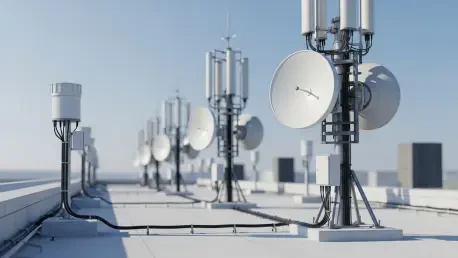
The visible skyline of Vienna’s Donaustadt district now offers a striking visual confirmation of Russia’s evolving intelligence priorities, characterized by a dense thicket of specialized equipment. On the roofs of the Russian Embassy and its various residential and commercial annexes, an array of satellite dishes and sophisticated antenna arrays has grown with startling speed over the last few years. These installations are far from standard telecommunications equipment; they represent a significant investment in offensive technical hardware. Observers and intelligence analysts have identified at least eight massive parabolic antennas on the embassy roof alone, many of which are shielded by specialized covers to hide their specific orientation and technical specifications from casual observation. The presence of these devices signifies a move away from large-scale personnel deployments in favor of remote, automated collection systems that can operate continuously without the risks associated with human field agents.
These antennas are not static monuments to surveillance but are instead equipped with precision-engineered motorized mounts that allow for the constant tracking and targeting of specific satellites. By aligning these dishes with commercial, governmental, and even military satellite constellations, the SVR is capable of intercepting vast quantities of unencrypted data, telemetric signals, and even certain layers of encrypted communication. This technical capability extends beyond the mere monitoring of Russian state communications, as the equipment is frequently calibrated to sweep for signals that originate entirely outside of the Russian Federation’s official networks. This proactive and offensive stance in the electromagnetic spectrum allows Moscow to maintain a persistent “digital ear” over the heart of Central Europe, turning diplomatic immunity into a literal shield for activities that would otherwise constitute a direct violation of host-nation sovereignty and international security norms.
Strategic Geographic Positioning
The effectiveness of Russia’s electronic surveillance in Vienna is significantly enhanced by the deliberate and strategic placement of its listening posts throughout the urban landscape. By maintaining a presence in both the historic city center and the high-rise district of Donaustadt, Russian intelligence assets enjoy a nearly unobstructed line-of-sight to some of the most sensitive locations in the international diplomatic community. The proximity of these facilities to the Vienna International Centre (VIC), which serves as a global headquarters for various United Nations agencies, is particularly concerning. This geographic advantage allows the SVR to intercept localized radio frequencies, microwave transmissions, and Wi-Fi signals that would normally be difficult to capture from a distance. The urban architecture of Vienna effectively serves as a conduit for “signal spillover,” where sensitive data leaking from one building can be vacuumed up by a well-positioned receiver just a few kilometers away.
Furthermore, this infrastructure creates a “persistent surveillance zone” that extends well beyond the physical walls of the Russian diplomatic compounds. The equipment is designed to act as a massive digital vacuum, pulling in everything from mobile phone metadata to the short-range radio communications used by security details and logistical staff. Because many of these signals operate on high-frequency bands that require a clear path between the transmitter and the receiver, the elevated position of the Russian antennas provides a decisive operational advantage. This capability allows the SVR to map the digital movements of diplomats and international civil servants in real-time, providing a wealth of information about meeting schedules, personnel movements, and the general operational rhythm of the international organizations stationed in the city. The result is a comprehensive intelligence picture built from the fragments of thousands of individual digital interactions.
The Strategic Value of the Vienna Hub
A Target-Rich Diplomatic Environment
Vienna’s enduring status as one of the world’s four primary United Nations seats makes it a “target-rich environment” for any intelligence service, but for Russia, the value of this location has reached a historical peak. The city hosts the Organization for Security and Co-operation in Europe (OSCE), which remains one of the few remaining forums where East and West still engage in direct, if often strained, dialogue regarding regional stability. For Moscow, the ability to monitor the internal deliberations and informal communications of OSCE delegations is invaluable for anticipating Western policy shifts and identifying potential fractures within the European security architecture. Accessing the political intelligence generated within these halls allows the Kremlin to adjust its diplomatic and military posturing with a level of foresight that would be impossible through traditional diplomatic channels alone.
The presence of the International Atomic Energy Agency (IAEA) in Vienna adds another layer of critical importance to Russia’s surveillance efforts. Given the ongoing complexities surrounding nuclear energy and the security of facilities in conflict zones, particularly the Zaporizhzhia plant in Ukraine, the IAEA’s internal reports and technical safeguards discussions are among the most sensitive documents in the world. By intercepting communications related to these topics, Russia can gain an unfair advantage in international negotiations and potentially manipulate technical narratives to suit its geopolitical objectives. Beyond nuclear issues, the city also houses UN offices dedicated to outer space affairs and international crime prevention, providing a broad spectrum of data ranging from satellite launch schedules to global law enforcement trends. For the SVR, every digital packet intercepted from these agencies is a piece of a larger puzzle regarding global governance and Western strategic intentions.
Efficiency and Force Multiplication
In the modern era of intelligence, the “Vienna Hub” serves as a powerful force multiplier that allows Russia to maintain a high level of operational impact with a relatively small and secure physical footprint. The centralization of technical assets in a single, well-protected location reduces the need for the dangerous and expensive deployment of field officers across multiple European capitals. Instead of risking the exposure and expulsion of human spies in more hostile environments like London or Paris, Moscow can achieve comparable results by monitoring the representatives of those nations when they visit or work in Vienna. This model of “hub-and-spoke” intelligence gathering prioritizes technical expertise over traditional tradecraft, relying on a small group of highly skilled technicians and linguists to process the massive amounts of data collected by the “forest of antennas” on the city’s rooftops.
This efficiency is further bolstered by the legal protections inherent in the city’s diplomatic culture. Because the technical infrastructure is located on premises that are legally considered sovereign Russian territory, it remains entirely unmolested by local Austrian law enforcement or counter-intelligence services. This provides a level of operational security that is impossible to replicate in non-diplomatic settings. The practitioners of this electronic espionage can work in shifts, 24 hours a day, without the fear of being followed or apprehended in the act of surveillance. Consequently, Vienna has become a sanctuary where the SVR can refine its digital collection techniques and test new interception technologies in a live environment. This streamlined approach ensures that Russia remains a dominant intelligence actor in Europe despite the significant diplomatic setbacks and personnel losses it has suffered elsewhere on the continent since 2022.
Geopolitical Shifts and the Austrian Exception
The Collapse of Northern Intelligence Hubs
The rise of Vienna as the primary center for Russian signals intelligence was not a matter of chance but a necessary adaptation following the systematic dismantling of its previous networks in Northern and Western Europe. Prior to 2022, cities like Brussels and The Hague served as the epicenters for Russian intelligence gathering, owing to their proximity to NATO headquarters and the seat of the European Union. However, the mass expulsion of over 400 Russian diplomats across the EU in early 2022 dealt a catastrophic blow to the SVR and GRU’s operational capabilities in those regions. These expulsions did more than just remove personnel; they stripped Russia of the technical experts, logistical support staff, and diplomatic cover required to maintain large-scale surveillance operations in the heart of the Western alliance. The traditional strongholds that had been built up over decades were essentially neutralized in a matter of months.
As these northern hubs became untenable due to increased surveillance by host nations and a lack of accredited personnel, the Russian intelligence leadership was forced to reorganize its entire European architecture. The goal was to find a location that offered both high-value targets and a permissive operating environment where the risk of mass expulsion was significantly lower. This search led directly to the reinforcement of the existing infrastructure in Austria. While countries like the Netherlands and Belgium adopted a zero-tolerance policy toward suspected intelligence officers, Vienna remained an accessible and relatively safe harbor. This radical reorganization involved relocating sophisticated hardware and specialized technical units to the Austrian capital, effectively shifting the gravity center of Russian espionage from the North Sea to the Danube. This move ensured that the flow of intelligence back to Moscow remained uninterrupted despite the aggressive counter-intelligence measures taken by other EU member states.
Austria’s Unique Position in Europe
Austria’s historical and constitutional commitment to neutrality has created a unique political landscape that Russian intelligence has skillfully exploited for decades. Unlike many of its European neighbors, Austria has traditionally sought to maintain a “bridge-building” role between East and West, which often translates into a more cautious and less confrontational approach toward Russian diplomatic presence. While the rest of the European Union moved to dramatically reduce the number of Russian officials on their soil, Austria maintained a much higher threshold for expulsion, removing only a small number of individuals even in the face of mounting evidence of espionage. Today, over 200 Russian diplomats remain accredited in Vienna, a figure that remains one of the highest in Europe per capita. Intelligence experts consistently estimate that a significant percentage of these individuals are not career diplomats but are instead intelligence officers operating under official cover.
This “soft” policy toward Moscow has effectively turned the Austrian capital into a sanctuary for Russian state interests and intelligence operations. The reluctance of the Austrian government to engage in the kind of sweeping expulsions seen in Prague or Warsaw provided the SVR with the stability it needed to build out its technical fortress. For Russia, Vienna represents a jurisdiction where the political cost of its activities is manageable, and the threat of a complete shutdown of its operations is remote. This environment of relative permissiveness allowed for the uninterrupted growth of the “forest of antennas” and the consolidation of technical staff who would have been persona non grata in almost any other Western capital. By positioning itself as a neutral ground for international dialogue, Austria inadvertently provided the perfect cover for a surveillance apparatus that is anything but neutral in its intent and execution.
The New Distributed Network
By the midpoint of the current decade, a new and resilient Russian intelligence architecture had fully emerged, characterized by a sophisticated Vienna-Belgrade axis. In this distributed model, Vienna functions as the “brain” and primary “SIGINT Hub,” focusing on the technical interception of European and international data. Meanwhile, Belgrade has evolved into the “body” of the operation, serving as a logistical and coordination center. Because Serbia has not aligned itself with EU sanctions or restrictive diplomatic measures against Russia, it offers a permissive environment for the movement of people, the transfer of funds, and face-to-face meetings between agents that would be too risky in the highly monitored streets of an EU capital. This partnership between a neutral EU member and a friendly non-member provides Russia with a level of operational flexibility that is difficult for Western counter-intelligence to counter.
This hybrid system makes the Russian network far more resilient to localized diplomatic crises. If the Austrian government were to suddenly increase its pressure on the Vienna embassy, the logistical functions in Belgrade could compensate, and vice versa. This model also allows Russia to rotate personnel and equipment between the two cities, making it harder for security services to track the full scope of their activities. The Belgrade connection is particularly vital for the maintenance of human networks, as it serves as a transit point for “illegals” and deep-cover agents who can then move more easily into the Schengen Area. By splitting its intelligence functions between these two hubs, the SVR has created a redundant and durable ecosystem that can bypass many of the barriers erected by the European Union. This strategic evolution demonstrates Moscow’s ability to turn geographical and political complexities into a coherent intelligence advantage.
Security Risks and Policy Challenges
Vulnerability and Reputational Damage
The existence of a massive, state-sponsored electronic surveillance hub in the center of a major European capital poses a direct threat to the integrity of international diplomacy and the safety of confidential communications. The most immediate risk is the systemic compromise of negotiations involving the OSCE, the IAEA, and other global bodies. When a state actor possesses the ability to monitor the real-time data flows and private communications of negotiators, the concept of a “level playing field” in international relations effectively disappears. This allows the intercepting party to anticipate the moves of its adversaries, identify internal disagreements within alliances, and preemptively counter diplomatic initiatives. Such an advantage does not just benefit Moscow in its immediate regional conflicts; it undermines the entire multilateral system by eroding the trust that is necessary for honest dialogue and compromise between nations.
Furthermore, this situation poses a severe threat to Austria’s long-term reputation as a secure and reliable “safe harbor” for international organizations. For decades, Vienna has traded on its image as a place where the world’s most sensitive problems can be discussed in private and without interference. However, if the city becomes synonymous with Russian interception and digital vulnerability, international agencies may begin to reconsider their presence there. The risk of “diplomatic flight” is a very real concern, as organizations may seek out alternative locations where the host government is more willing or able to guarantee the privacy of their operations. If Vienna loses its status as a primary UN seat, the economic and political consequences for Austria would be catastrophic. The perceived hesitation of the government to address the “forest of antennas” risks alienating its Western partners, who may increasingly view the city as a “leaky” and compromised environment for shared intelligence and sensitive policy discussions.
The Legal and Counter-Intelligence Maze
The “forest of antennas” on Russian diplomatic rooftops presents a nearly insurmountable legal and operational challenge for Austrian security and counter-intelligence authorities. Under the Vienna Convention on Diplomatic Relations, the premises of a diplomatic mission are strictly inviolable, meaning that local law enforcement cannot enter, search, or seize property within these compounds without the explicit consent of the sending state. This international legal framework, designed to protect diplomats from harassment by host governments, is being used as a shield for activities that are fundamentally hostile to the host nation’s security interests. Austrian authorities are essentially forced to watch from the street as sophisticated surveillance equipment is installed and operated in plain sight, knowing that they have no legal authority to dismantle or even inspect the hardware. This creates a frustrating stalemate where the surveillance is a matter of public record, yet remains legally untouchable.
The options available to the host government are limited and fraught with diplomatic risk. The primary recourse is the use of “quiet diplomacy” to request the removal of specific equipment, but such requests are easily ignored or met with denials from the Russian embassy. Alternatively, the government could move to expel the technical staff responsible for maintaining the SIGINT hub, but this often leads to reciprocal expulsions that damage the host nation’s own diplomatic presence in Moscow. Furthermore, proving that a specific antenna is being used for illegal interception rather than “standard diplomatic communication” is technically difficult without access to the internal data logs of the embassy. This legal “gray zone” allows Russia to push the boundaries of what is acceptable, betting that the Austrian government’s commitment to neutrality and its fear of diplomatic escalation will prevent any decisive action. The result is a persistent and growing threat that exploits the very rules intended to maintain global order.
Shifting the Austrian Stance
After years of downplaying the extent of foreign surveillance activities, there are clear indications that the Austrian government is beginning to adopt a more assertive and realistic stance toward the Russian technical presence. This shift is driven by a combination of intense pressure from European and American allies and increasingly alarming reports from Austria’s own internal security services. The Federal Ministry for European and International Affairs has recently changed its tone, publicly acknowledging the problem of the “forest of antennas” and signaling a desire to reduce the technical footprint of the Russian embassy. This marks a significant departure from the traditional policy of “quiet neutrality,” where such issues were often handled behind closed doors or ignored entirely in the interest of maintaining a functional relationship with the Kremlin. The willingness to label the antennas as a specific threat indicates that the political costs of inaction are starting to outweigh the benefits of avoiding conflict.
Efforts to “thin the forest” are now reportedly underway, involving more frequent and direct confrontations with Russian diplomatic representatives regarding the nature of their technical equipment. While the government remains cautious about disclosing specific operational details or the names of targeted individuals, the increased scrutiny has already made the operating environment more difficult for the SVR. There is also a growing domestic debate in Austria about the need to modernize its counter-espionage laws, which have historically been viewed as some of the weakest in Europe. Proposals are being discussed to grant security services more authority to monitor the electromagnetic spectrum and to provide better protection for the international organizations based in Vienna. While these changes will not dismantle the Russian hub overnight, they represent a fundamental hardening of the Austrian position. The goal is to send a clear message that the city’s neutrality is not a license for unchecked electronic warfare, and that the protection of international diplomatic integrity must take priority over bilateral ties.
A New Paradigm for Central European Security
The consolidation of Vienna as a primary signals intelligence hub marked a significant turning point in the silent war for information control across the European continent. As the traditional methods of human espionage faced increasing pressure from enhanced border controls and biometric surveillance, the shift toward a technical, roof-based collection model allowed Russian intelligence to maintain its strategic reach. The integration of high-altitude satellite interception with localized data vacuuming created a multi-layered surveillance environment that successfully bypassed the security measures of many international organizations. This transition proved that diplomatic real estate remains one of the most valuable assets in the modern intelligence landscape, providing both the physical elevation and the legal protection required for large-scale electronic operations. The transformation of the city’s skyline was not merely an aesthetic change but a functional realignment of Moscow’s regional power projection.
In response to these developments, Western intelligence communities and the Austrian government were forced to develop new protocols for securing sensitive data within the “interception zone” of the capital. The era of assuming privacy within the diplomatic quarter of Donaustadt ended as the technical capabilities of the SVR became more widely understood. Security agencies moved toward more robust encryption standards and implemented “digital hardening” for the offices of the OSCE and IAEA, treating the surrounding urban environment as a permanently contested space. While the “forest of antennas” continues to stand as a reminder of the ongoing electronic competition, the proactive steps taken by host authorities began to limit the effectiveness of these listening posts. The struggle for digital sovereignty in Vienna remains a central feature of European security, highlighting the need for a constant evolution in counter-surveillance tactics to match the rapid advancements in state-sponsored signal interception.