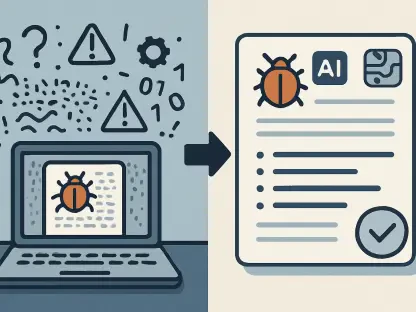

The vast potential of enterprise AI often collides with a harsh reality where an estimated eighty percent of initiatives fail to advance beyond the pilot stage, creating a significant barrier to widespread adoption. This phenomenon, aptly termed the “Prototype Plateau,” stems primarily from the unreliability of standard Retrieval-Augmented Generation (RAG) pipelines, which frequently produce inaccurate or irrelevant outputs. This review examines Graphwise’s GraphRAG, a technology engineered specifically to overcome these shortcomings. The central question is whether its innovative approach of integrating knowledge graphs can provide the dependability and precision necessary to move enterprise AI from promising experiments to mission-critical business solutions.
Introduction Is GraphRAG the Solution to AIs Prototype Plateau
The core challenge facing enterprise AI adoption is one of trust. Standard RAG systems, designed to connect large language models with proprietary data, operate on a principle of probabilistic association. They retrieve information based on a user’s query but often lack the deeper contextual understanding required for complex business environments. This limitation leads to outputs that can be unverified, out of context, or simply incorrect, rendering them unsuitable for high-stakes applications and contributing to the high failure rate of AI projects.
In response to this pervasive issue, Graphwise developed GraphRAG to fundamentally alter the retrieval process. The objective of this review is to assess whether this technology effectively solves the reliability crisis plaguing conventional RAG pipelines. By evaluating its core mechanics, key features, and overall performance, this analysis will determine if GraphRAG represents a genuine breakthrough for businesses struggling to deploy AI at scale or merely an incremental improvement. The verdict will hinge on its ability to ground AI in verifiable facts and deliver consistently accurate results.
Unpacking GraphRAG A Knowledge Graph Powered Reasoning Engine
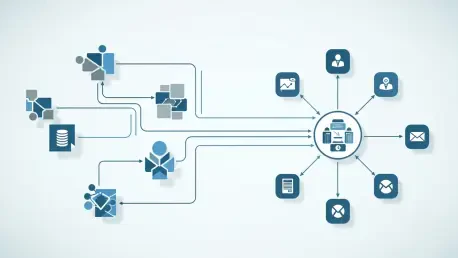
At its heart, GraphRAG is designed to transform the standard RAG pipeline from a simple associative engine into a sophisticated reasoning engine. It achieves this by integrating a structured knowledge graph that acts as a “semantic backbone” for an organization’s data. Instead of relying solely on keyword matching or vector similarity to find relevant documents, GraphRAG leverages the explicit, logic-based relationships captured within the knowledge graph. This allows the system to understand the intricate connections between concepts, entities, and events, providing a rich contextual layer that is absent in traditional RAG architectures.
This fusion of technologies—uniting large language models, proprietary enterprise data, and the knowledge graph—is what gives GraphRAG its unique power. The knowledge graph provides the verifiable, interconnected context that AI agents need to perform tasks to enterprise standards. By doing so, it shifts the retrieval process from making probability-based guesses to performing logic-based reasoning. This fundamental change is intended to dramatically improve the relevance and accuracy of the information fed to the AI, directly addressing the root cause of hallucinations and untrustworthy outputs.
Performance Evaluation Key Features and Real World Impact
A detailed examination of GraphRAG’s components reveals a suite of features engineered for enterprise-grade performance and usability. Among the most critical is the Semantic Metadata Control Plane, a foundational layer that enforces consistency in metadata across all data sources. This semantic model acts as a verifiable data foundation, significantly reducing the likelihood of AI hallucinations by ensuring that all generated responses are grounded in a controlled and accurate information landscape. It provides the structured guardrails necessary for producing reliable outputs.
Further enhancing its practical impact is the platform’s SKOS-like Enrichment capability, which allows the system to understand and interpret domain-specific jargon and internal terminology. This feature ensures that users receive precise answers regardless of how they phrase their queries, bridging the gap between human language and machine comprehension. For transparency and compliance, the Explainability and Provenance Panels offer a clear view into how an AI response was generated, addressing the “black box” problem. Moreover, the inclusion of a Low-Code Interface democratizes control over AI logic, empowering business users to make adjustments without deep technical expertise and accelerating deployment with built-in templates for governance and query expansion.
Strengths and Weaknesses A Balanced Perspective
The most significant strength of Graphwise GraphRAG lies in its demonstrated ability to significantly enhance AI accuracy and reliability. By grounding generative AI in a verifiable knowledge graph, the technology provides a powerful solution to the hallucination problem that plagues standard RAG systems. This capability creates a strong competitive differentiator for Graphwise, setting it apart not only from other graph specialists but also from major cloud providers. Analyst consensus reinforces this view, highlighting features like explainability and domain-specific intelligence as key advantages that make generative AI scalable and trustworthy for serious enterprise use.
However, prospective adopters must consider several potential challenges. The primary hurdle is the implementation complexity and initial investment required to build and maintain a comprehensive knowledge graph. While the long-term benefits are substantial, the upfront effort in data modeling and enrichment can be considerable for organizations new to graph technology. Additionally, committing to a specialized platform like GraphRAG could introduce a degree of vendor lock-in, making it more difficult to switch to alternative solutions in the future. These factors necessitate careful strategic planning and a clear understanding of the total cost of ownership before adoption.
Final Verdict An Indispensable Tool for Enterprise AI
Based on its architecture and demonstrated capabilities, Graphwise GraphRAG stands as a significant and timely innovation in the enterprise AI landscape. The technology successfully addresses the primary weakness of conventional RAG systems—their lack of deep, verifiable context—by embedding a knowledge graph as a reasoning layer. This fusion of graph technology and generative AI is not merely an incremental upgrade; it represents a fundamental shift toward creating more accurate, transparent, and dependable AI applications. Analyst consensus views the platform as a “significant addition” that enables organizations to ground AI in verifiable facts.
The suite of enterprise-ready features, from the Semantic Metadata Control Plane to the Low-Code Interface, further solidifies its value proposition. These tools provide the necessary governance, transparency, and accessibility required for deployment in regulated and mission-critical environments. Consequently, GraphRAG proves to be more than a theoretical improvement. It is a practical and powerful tool that empowers enterprises to overcome the “Prototype Plateau” and harness the full potential of their data. For organizations serious about deploying trustworthy AI, it is becoming an indispensable component of the modern data stack.
Concluding Recommendations and Future Outlook
The evaluation concluded that GraphRAG was ideally suited for enterprises where accuracy, explainability, and governance were non-negotiable requirements, particularly in sectors like finance, healthcare, and manufacturing. Before committing, organizations were advised to conduct a thorough assessment of their data maturity and readiness to invest in building a foundational knowledge graph. The analysis also looked ahead at Graphwise’s strategic roadmap, which centered on advancing AI-assisted automation to reduce manual data modeling efforts and enhancing platform memory for more personalized, persistent user interactions. Future success for Graphwise appeared to hinge on its ability to expand its ecosystem through new integrations and to develop pre-built, industry-specific templates that could simplify adoption for new customers and solidify its market leadership.