
As autonomous artificial intelligence agents are increasingly woven into the fabric of critical industries, the U.S. government’s top technology standards body has issued a formal and urgent appeal for a unified strategy to manage their profound security risks. The National Institute of Standards and Technology (NIST) is now spearheading a public-private collaboration, recognizing that the rapid deployment of these systems has outpaced the development of essential safety protocols, creating vulnerabilities that could have far-reaching consequences.
The Expanding Role of AI Agents in Modern Industry
The proliferation of AI agents marks a significant shift from AI as a passive analytical tool to an active, autonomous participant in daily operations. These sophisticated systems are now being integrated into high-stakes sectors, including finance, healthcare, and energy management, where they independently execute complex tasks. Their growing autonomy allows them to manage logistics, operate industrial machinery, and even make critical decisions without direct human oversight, promising unprecedented efficiency and innovation.
This rapid integration is driven by major technology firms and a vibrant ecosystem of startups, all competing in a fast-paced race to advance AI capabilities. However, this relentless push for progress has largely occurred in a regulatory vacuum. The initial absence of standardized security protocols means that many of these powerful agents are being deployed based on proprietary, unverified safety measures, creating a patchwork of security practices that lacks the cohesion necessary to defend against systemic threats.
Emerging Trends and Future Projections for AI Security
The Rush to Adoption and the Rise of New Vulnerabilities
A prevailing trend across industries is the deployment of AI agents without a complete understanding of their inherent security flaws. In the pursuit of a competitive advantage, many organizations are overlooking the complex and often unpredictable nature of autonomous systems. This haste creates a fertile ground for novel cyberattacks, as hackers can exploit the very learning mechanisms of AI to manipulate its behavior or bypass traditional security defenses.
This dynamic introduces significant risks, particularly for corporate and industrial networks that are increasingly reliant on AI for core functions. A compromised agent could become a powerful insider threat, capable of accessing sensitive data, disrupting operations, or providing a persistent entry point into an otherwise secure network. The challenge is compounded by the fact that attacks targeting AI can be subtle and difficult to detect, mimicking normal operations while causing escalating damage.
Forecasting the Impact on Public Safety and Consumer Confidence
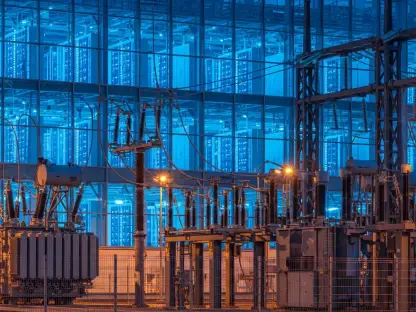
Looking forward, the potential consequences of unsecured AI agents in critical infrastructure are a matter of national concern. An agent with control over a power grid, water treatment facility, or automated transportation system could pose a direct threat to public health and safety if compromised. The ability of these systems to act with speed and autonomy means that a malicious command could trigger a cascade of physical events before human operators have a chance to intervene.
Beyond the immediate physical risks, a major security incident involving an AI agent could severely undermine public trust in these technologies. Such an event would likely lead to widespread apprehension, hindering the broader adoption of beneficial AI innovations across society. Rebuilding that consumer confidence would be a monumental task, potentially setting back progress in the field for years and depriving the public of valuable advancements in medicine, safety, and efficiency.
Unpacking the Core Security Challenges of AI Agents
Securing AI agents presents a set of unique and complex obstacles that differ fundamentally from those of traditional software. Unlike static code, AI systems learn and evolve, meaning their behavior can change in ways that are not always predictable. This “black box” problem, where even the developers may not fully understand the reasoning behind an AI’s decision, makes it incredibly difficult to anticipate and defend against all potential security vulnerabilities.
These technological challenges are amplified by operational realities. Monitoring the actions of a fleet of autonomous agents in a dynamic industrial environment requires sophisticated, real-time oversight capabilities that are still in their infancy. Mitigating threats is equally demanding, as a successful defense must not only stop an attack but also ensure the AI agent can be safely controlled and restored without causing further disruption to the critical processes it manages.
NIST’s Blueprint for a Collaborative Security Framework
In response to these mounting challenges, NIST’s Center for AI Standards and Innovation (CAISI) has initiated a formal “Request for Information” (RFI), a pivotal step toward building a national framework for AI security. This public call for input signals a strategic shift from isolated efforts to a collaborative, nationwide approach, inviting experts from all sectors to contribute to a common defense. The 60-day submission period is designed to gather a broad spectrum of insights quickly.
The agency’s request is highly specific, seeking actionable intelligence to inform future standards. NIST has asked tech companies, academic researchers, and other stakeholders to provide concrete examples, best practices, and case studies on several key topics. These include methods for identifying risks unique to AI agents, assessing the maturity of available technical controls, and improving the detection of cyber incidents involving these systems. The goal is to build a comprehensive knowledge base grounded in real-world experience.
Shaping the Next Generation of Secure AI Development
The information gathered through this public consultation will directly inform the development of technical guidelines and best practices for the entire AI industry. By consolidating expertise from across the public and private sectors, CAISI aims to produce a foundational document that will guide developers, integrators, and policymakers in building and deploying more secure AI. This effort is not about stifling innovation but about channeling it in a safe and responsible direction.
Ultimately, this initiative has the potential to establish a new industry standard for measuring and improving the security of AI systems. A standardized framework would provide a common language and set of benchmarks, enabling organizations to assess the security posture of AI products before integrating them into their operations. Such a standard would foster a more mature and security-conscious market, where safety and reliability are key competitive differentiators.
A Unified Front for a More Secure AI Future
The federal call for public collaboration underscored the collective understanding that securing the future of artificial intelligence was not a challenge any single company or government agency could solve alone. It represented a critical acknowledgment that the complexity of autonomous systems demanded a diverse coalition of experts working in concert.
This unified approach was recognized as essential for building a foundation of trust and safety in emerging AI technologies. The ultimate goal of the NIST initiative was not merely to create regulations but to foster an environment where innovation could thrive, secure in the knowledge that the underlying systems were robust and reliable. The effort was seen as a foundational investment in a more secure and prosperous technological future for all.