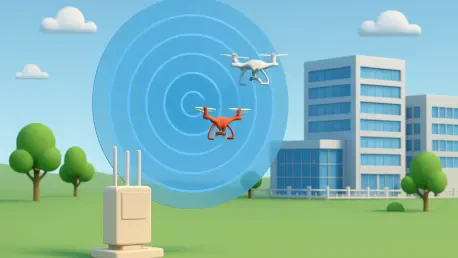

The proliferation of small, low-altitude unmanned aerial systems has created a complex security challenge, demanding solutions that can reliably distinguish between genuine threats and benign activity in increasingly crowded skies. As drones become more accessible and capable, the potential for misuse in sensitive areas—from critical infrastructure sites to public venues—escalates, pushing legacy security systems to their limits. In response to this evolving landscape, MatrixSpace has officially launched its Fusion 360 system, a sophisticated counter-drone platform engineered to provide a comprehensive and unified view of low-altitude airspace. The system is built around a fusion-native architecture that integrates data from multiple sensors at the point of detection, aiming to deliver an authoritative, real-time operational picture. This approach directly confronts the critical industry problem of high false alarm rates, which often plague traditional systems and can lead to operator fatigue and missed threats. By creating a clear, correlated view, Fusion 360 is positioned to enhance situational awareness and enable more decisive security responses.
A Unified Approach to Airspace Security
At the heart of the Fusion 360 system lies its advanced capability to fuse data streams from a diverse array of sensors, including radar, optical cameras, and radio frequency (RF) detectors, into a single, cohesive intelligence picture. Unlike conventional systems that often layer data from siloed sensors, Fusion 360 employs a fusion-native methodology that correlates information as soon as a potential object is detected. This technique is fundamental to its effectiveness, as it allows the system to cross-reference multiple data points in real time to validate and classify objects with a much higher degree of accuracy. The immediate correlation of radar tracks with optical confirmations and RF signatures significantly enhances the system’s ability to identify small, low-flying, and evasive drones that might otherwise be missed or misidentified. This integrated process is specifically designed to slash the frequency of false alarms, which are a persistent issue in counter-drone operations, thereby allowing security personnel to focus their attention and resources on verified targets rather than being distracted by system noise or environmental clutter.
The primary objective of the Fusion 360 platform is to provide operators with clear and immediate threat relevance, enabling confident and rapid decision-making in high-stakes environments. A key feature of the system is its proficiency in distinguishing between non-compliant or hostile “dark drones”—those operating without a Remote ID broadcast or a detectable RF signature—and authorized, friendly aircraft. This critical differentiation is achieved through what the company describes as a “radar and AI-first approach.” This strategy prioritizes the robust detection and tracking capabilities of its advanced radar, enhanced by artificial intelligence algorithms, to identify and follow potential threats regardless of their electronic emissions. Matt Kling, a Vice President at MatrixSpace, emphasized that this integrated model offers a more effective and less costly alternative to traditional counter-UAS solutions, which often rely on a patchwork of disconnected technologies. By providing a clear, unambiguous assessment of the airspace, Fusion 360 empowers security teams to act decisively, confident that they are responding to credible threats.
Operational Flexibility and Deployment
Engineered for performance in complex and challenging operational settings, the Fusion 360 system is built to maintain persistent and accurate tracking even when faced with significant environmental interference. Its radar technology is specifically designed to function reliably in cluttered urban landscapes, areas with denied GPS access, and environments where radio frequencies are heavily contested. This resilience ensures that security personnel receive a continuous and uninterrupted feed of actionable intelligence, which is crucial for maintaining situational awareness during a security event. Furthermore, the system has been developed with rapid deployment and seamless integration in mind. Its modular design allows it to be quickly set up in the field or easily incorporated into existing security infrastructure and command-and-control platforms. This emphasis on interoperability and ease of use makes it a practical solution for a wide range of security applications, from temporary event security to permanent installations at critical facilities, without requiring extensive modifications to established protocols.
In recognition that different security scenarios demand different capabilities, the Fusion 360 system was made available in two distinct configurations to address a broad spectrum of operational needs. For high-risk environments where comprehensive detection and identification are paramount, the full multi-sensor package offers a complete solution integrating radar, optical, and RF sensing. This version provides the highest level of situational awareness and threat verification. In contrast, the “Portable 360” offers a streamlined, radar-only option designed for general airspace monitoring and situations where mobility and rapid setup are the primary concerns. This flexible product strategy allowed organizations to select a system tailored to their specific threat profile and budget, broadening the accessibility of advanced counter-drone technology. The introduction of these tailored solutions marked a significant step toward providing scalable and affordable airspace security, equipping a wider range of users with the tools needed to counter the growing drone threat effectively.