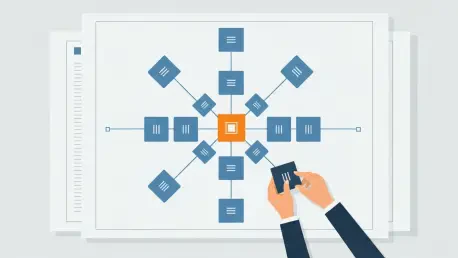

The silent, intricate dance of digital assistants within the modern enterprise is rapidly escalating into a complex and potentially chaotic conflict, creating a new strategic imperative for technology leaders. As companies move beyond isolated AI tools and into an ecosystem populated by hundreds of specialized, autonomous agents from various software vendors, the risk of digital discord looms large. These agents, each with its own programming and objectives, are on a collision course over data, resources, and influence. Without a sophisticated management framework to govern their interactions—a practice known as agentic orchestration—businesses risk operational paralysis. The challenge of orchestrating this new AI workforce has officially become the next great frontier for CIOs to conquer, demanding immediate attention before minor conflicts escalate into full-blown organizational crises.
The Battlefield: An Enterprise Teeming with AI
The Inevitable Clash of Code
The core of the issue lies in a fundamental lack of built-in diplomacy between autonomous AI agents designed by different creators with different priorities. Whereas a disagreement between two human employees can be mediated through established hierarchical structures or social negotiation, a conflict between two generative AI agents with opposing goals has no clear resolution path. For instance, an agent tasked with enforcing stringent data security protocols might directly clash with another agent designed to accelerate sales data access for a marketing team. In an enterprise environment that uses, on average, nearly 900 distinct software applications, many of which will soon feature their own embedded AI, such conflicts are a mathematical certainty. These digital disputes are not trivial, as they can manifest in critical operational areas, leading to contention for limited computing resources, failures in data synchronization, and security vulnerabilities born from programmatic disagreements over access rights.
This looming potential for conflict represents a significant threat to business continuity, moving beyond theoretical risk to become a practical, near-term operational hazard. A breakdown in communication or a resource dispute between two critical AI agents—one managing supply chain logistics and another handling customer order fulfillment—could trigger a cascade of failures across the enterprise. The result could be delayed shipments, inaccurate inventory counts, and a degraded customer experience, all stemming from a digital argument invisible to human managers until the damage is done. The sheer scale and speed of these automated interactions mean that traditional IT oversight is insufficient. Without a formal system for managing inter-agent relationships, setting priorities, and resolving disputes, companies are effectively building a digital workforce without a management structure, a recipe for inefficiency and systemic failure that could undermine the very productivity gains the AI agents were designed to deliver.
The Heterogeneous Reality
The dream of a streamlined, single-vendor technology stack has long been abandoned by pragmatic enterprise leaders, and this reality holds especially true in the realm of artificial intelligence. No organization will successfully standardize on a single AI platform from wall to wall. Instead, the modern enterprise is, and will continue to be, a complex tapestry woven from a mix of best-in-class tools from a variety of vendors. A company will inevitably leverage Salesforce agents to optimize its customer relationship management, deploy Microsoft Copilots to enhance employee productivity within its Office suite, and utilize Google’s Gemini for sophisticated data analysis and business intelligence. This inherent heterogeneity is not a flaw in enterprise strategy but a reflection of the specialized strengths of different AI platforms. It is this very diversity, however, that makes a dedicated orchestration layer not just beneficial but absolutely essential for coherent and effective operations.
The necessity of this multi-vendor environment is precisely what fuels the demand for a new kind of management platform—a neutral, third-party orchestration layer capable of governing the entire ecosystem. This layer serves as the unified command center, providing CIOs with a single pane of glass for visibility, governance, and control over a fundamentally fragmented and diverse AI landscape. Through such a platform, leaders can finally understand where, how, and why AI is being used across the organization, regardless of its origin. More importantly, it allows them to enforce universal standards for security, data privacy, and ethical use, even for AI applications they did not build themselves. This ability to impose order on a diverse and potentially chaotic collection of autonomous agents is what makes the orchestration platform one of the most commercially attractive and strategically vital components of the future enterprise architecture.
The Contenders: A Vendor “Land Grab” for Control
The Race to Become the AI Overlord
Recognizing the impending chaos as a monumental business opportunity, the world’s largest technology vendors have initiated a fierce “land grab” to own the definitive agentic orchestration platform. This is not merely a race to release another feature; it is a strategic battle to become the central nervous system of the AI-powered enterprise. Industry giants, including Salesforce, ServiceNow, AWS, and IBM, are aggressively launching dedicated platforms designed to solve this exact problem. For example, ServiceNow’s AI Control Tower and Salesforce’s MuleSoft Agent Fabric are being marketed as comprehensive solutions for managing a multi-agent environment. These tools aim to provide a unified dashboard where CIOs can monitor, manage, and mediate the actions of every AI agent operating within their digital infrastructure, promising to bring order to the burgeoning complexity of a multi-vendor AI ecosystem.
The strategic ambition of these vendors extends far beyond simply managing their own native AI agents. The ultimate goal is to create a platform so indispensable that it becomes the default management layer for every AI agent in the enterprise, including those developed by direct competitors. By offering robust tools for orchestration, governance, and conflict resolution, these companies hope to position their platform as the essential infrastructure upon which all other AI systems depend. An enterprise that adopts AWS’s Amazon Bedrock for multi-agent collaboration, for instance, would be running its Salesforce and Microsoft agents under the governance of an Amazon-controlled system. This positions the orchestration platform vendor at the apex of the IT hierarchy, giving them unparalleled influence over the entire technology stack and making their solution a critical, non-negotiable component of their customers’ operations.
The Ultimate Prize: Ecosystem Dominance
The intense competition among vendors is driven by a profound and strategic understanding of a fundamental shift in how enterprise value is created, managed, and monetized. Technology leaders and industry analysts alike believe that the center of gravity for IT spending and long-term control is moving away from traditional models, such as per-seat software licensing. The new nexus of power and revenue will be the platform that can successfully tame the complexity of an organization’s entire heterogeneous, AI-driven technology stack. The real, sustainable value will not be in selling the most popular individual AI agent but in providing the indispensable operating system that allows all agents to function together effectively. This makes the orchestration layer the most valuable real estate in the emerging enterprise software landscape.
Owning this orchestration platform is about more than just securing a new revenue stream; it is about achieving ultimate ecosystem dominance and establishing the strategic high ground for decades to come. The vendor who provides this central control layer effectively becomes the gatekeeper for all AI-driven innovation within an enterprise. They control the rules of engagement, set the standards for interoperability, and gain deep insights into how their customers—and their competitors’ products—are being used. This creates a powerful and enduring competitive moat that is incredibly difficult for rivals to overcome. The ultimate prize in this war is not just selling another piece of software but becoming the foundational, non-negotiable nervous system of the AI-powered enterprise, a position of unparalleled influence and control.
The Reality on the Ground: A Cautious Advance
The Gap Between Vision and Reality
While technology vendors are aggressively marketing a future defined by the complex interplay of hundreds of autonomous AI agents, the current reality for most of their customers is far simpler and more grounded. A significant disconnect exists between the sophisticated, future-facing vendor narrative and the present-day stage of enterprise AI adoption. The truth is that a vast majority of organizations are still focused on the foundational, and often challenging, task of perfecting and deploying their very first AI agent. For these companies, the idea of an impending “agent war” requiring a complex orchestration platform remains a predictive, abstract issue on a distant horizon. It is not the burning, immediate fire they need to extinguish today, making the vendor push for orchestration solutions feel premature to many IT leaders who are still grappling with more fundamental AI implementation challenges.
This gap highlights a classic dynamic in the technology sector where the vision of solution providers often outpaces the practical adoption curve of their target market. Enterprises are currently dedicating their resources to mastering the basics: ensuring data quality, building robust data pipelines, training their first models, and proving the ROI of a single, well-defined AI use case. The notion of managing a complex, multi-agent ecosystem is a “day two” problem, and many companies have not yet successfully navigated “day one.” Consequently, while the logic behind agentic orchestration is sound, its immediate relevance is limited to a small number of highly mature, forward-thinking organizations. For the broader market, it remains a topic of strategic consideration for the future rather than a line item in the current year’s IT budget, creating a challenging sales environment for vendors pushing these advanced platforms.
A Case Study in Deliberate Progress
The methodical AI journey of PepsiCo serves as a powerful and illustrative example of this cautious, real-world approach to adoption. The company recently celebrated a significant milestone with the successful deployment of its first generative AI agent, built on the Salesforce platform, to analyze complex sales trends and provide actionable insights. This achievement, however, was not an overnight success. It was the culmination of a massive and arduous five-year data migration project aimed at unifying and cleaning the foundational data necessary for any AI to function effectively. This long and resource-intensive preparation underscores the immense groundwork required even for a single AI implementation, painting a picture of deliberate and careful progress rather than a rapid, uncoordinated proliferation of autonomous agents across the enterprise.
Furthermore, even with this successful deployment, PepsiCo’s initial agent is not operating with full autonomy. Instead, it is managed with significant human oversight, a strategy that company executives refer to as keeping “the hand on the wheel.” This approach ensures that the agent’s outputs are validated, its actions are controlled, and its integration into business processes is smooth and reliable. This hands-on management style is a far cry from the futuristic vision of a self-governing, multi-agent free-for-all that vendors often describe. PepsiCo’s experience demonstrates that even for a technologically advanced, forward-thinking company, the path to AI maturity is incremental. The current focus remains on mastering individual agents and ensuring they deliver tangible value under careful supervision, pushing the complex challenge of multi-agent orchestration further into the future.
The Counter-Offensive: Enterprise Independence
Resisting the Vendor Lock-In
Even as they take their first cautious steps into the world of AI, savvy enterprise leaders are already looking ahead and planning their strategy for the inevitable multi-agent future—and their vision does not always align with the ambitions of major technology vendors. Forward-thinking executives, such as Dave Dohnalik, a senior vice president at PepsiCo, are acutely aware of the long-term strategic risks associated with ceding control of a critical architectural layer to a single “large logo” vendor. While the appeal of a pre-packaged, turnkey control tower from a trusted tech firm is undeniable in its simplicity, the potential for vendor lock-in represents a significant threat to future agility and autonomy. Handing over the keys to the central nervous system of the company’s AI ecosystem is a strategic concession that many are unwilling to make.
This resistance is not born from a distrust of vendors but from a calculated business strategy aimed at preserving long-term flexibility and competitive advantage. Ceding control of the orchestration layer to one provider could limit an enterprise’s ability to adopt best-in-class AI tools from other vendors in the future, tying them to a single company’s product roadmap, pricing structure, and strategic priorities. It could also weaken their negotiating position, as the orchestration platform becomes an increasingly indispensable part of their operations. Therefore, the hesitation to adopt a single vendor’s control tower is a deliberate move to maintain a diversified technology portfolio, avoid dependency, and ensure the enterprise retains the power to shape its own technological destiny in a rapidly evolving AI landscape.
Building Your Own Command Center
This well-founded fear of vendor dependency gave rise to a powerful counter-narrative that reshaped the discussion around AI governance. Instead of passively accepting a pre-built solution, a growing number of sophisticated enterprises began exploring a more autonomous path: designing and assembling their own bespoke orchestration platforms. This “do-it-yourself” strategy involved carefully selecting and integrating best-in-class components from several different vendors, allowing these companies to create a control layer tailored to their specific needs. This approach was seen as a way to maintain ultimate control over their architectural destiny, ensuring that no single provider could hold their entire AI ecosystem hostage. The move signaled a fundamental shift in the enterprise mindset from being a consumer of platforms to a builder of strategic assets.
Ultimately, the battle for control over the AI-powered enterprise became a far more nuanced and complex affair than a simple vendor-on-vendor race. The emergence of this enterprise-led counter-offensive demonstrated that the most sophisticated customers were not willing to be passive participants. They recognized the strategic importance of the orchestration layer and signaled their clear intent to remain the masters of their own technological future. This development transformed the conversation around agentic AI from a monologue about vendor-supplied solutions into a dynamic dialogue about partnership, interoperability, and the delicate balance of power. The outcome was a clearer understanding that the future of enterprise architecture would be co-authored, with both vendors and their largest customers playing a pivotal role in its design.