
Chloe Maraina brings a unique perspective to the intersection of big data and visual storytelling. As a Business Intelligence expert with a deep understanding of data science, she has spent years analyzing how massive datasets can be transformed into compelling narratives that drive business strategy. Today, she joins us to discuss the recent upheaval surrounding Meta’s Muse Image tool on Instagram, a feature that has put the privacy of millions of users—and the likenesses of Hollywood’s biggest stars—into the crosshairs of generative AI expansion.
This conversation explores the friction between rapid AI deployment and user privacy, the specific vulnerabilities of public figures whose likenesses are now being harvested, and the technical hurdles of “buried” settings. We also touch upon the massive infrastructure Meta is building, including a multi-billion dollar data center, to support its agentic AI ambitions and the practical steps everyday users can take to reclaim control over their digital footprints.
Meta’s Muse Image tool has sparked significant controversy by using public posts to train and generate AI content by default. From your perspective in data science and management, what are the ethical ramifications of this “opt-out” strategy for the average user?
Meta’s decision to automatically opt in every public account over the age of 18 feels like a significant breach of the unspoken social contract that users signed years ago. It is a strategic move that prioritizes the rapid feeding of AI models over the individual’s right to decide how their personal data is used. When you realize that your personal memories and creative snapshots are being blended into “high-quality creations” without a single notification appearing on your screen, the sense of digital trespassing is very real. By making the feature a default, the platform has essentially turned the daily lives of millions into a product, forcing them to hunt through complicated menus just to say “no” to a program they never requested.
With SAG-AFTRA representing over 160,000 professionals, the entertainment industry is leading the charge against unauthorized likeness use. What does this pushback reveal about the evolving value of our digital identities in the age of generative AI?
The reaction from SAG-AFTRA serves as a vital warning for the rest of society because they understand that a person’s likeness is a career-defining asset. We are seeing major icons like Matthew McConaughey and Taylor Swift take the defensive action of filing trademarks to block AI misuse, which highlights a desperate need for new legal protections. This isn’t just a concern for famous actors; it is a fight for anyone whose face or voice has value in a digital space. The urgency coming from Hollywood agencies like CAA emphasizes that consent must be the bedrock of the AI era, or we risk a future where anyone’s identity can be exploited for unauthorized endorsements.
Cybersecurity firms like Malwarebytes are sounding the alarm on potential scams and fraud facilitated by these tools. How do we balance the “agentic and coding” power of models like Muse Spark 1.1 with the urgent need for user security?
When cybersecurity experts warn that finding the opt-out switch is an “adventure,” they are highlighting a dangerous gap between technological power and user safety. Even as Meta’s AI chief touts Muse Spark 1.1 as their strongest model for complex coding tasks, we have to worry about how that same precision can be weaponized for sophisticated phishing attacks. The ability of AI to understand and mimic the specific visual style of a real person’s life makes it much easier for cybercriminals to commit impersonation fraud. We cannot celebrate the technical performance of these models if the trade-off is a platform that becomes a playground for scammers using our own public photos against us.
The process of opting out is described as being “buried deep” within the app’s settings. Could you walk us through the actual steps a user needs to take and why this specific design choice is so problematic for data sovereignty?
To protect your digital identity, you have to navigate a winding path: open your Instagram settings, find the “sharing and reuse” section, and then manually select whether you consent to people using your posts in Meta’s AI tools. It is a frustratingly hidden process that relies on user inertia, making it a significant hurdle for the average person who just wants to share photos with friends. For those who want a more certain shield, converting a public account to private is the most effective way to block the Muse Image feature entirely. This “opt-out” design is a classic example of making privacy difficult to achieve, which undermines the idea that users should have true ownership over their data.
Meta is investing $9 billion in its 33rd data center, located in Canada, to bolster its AI infrastructure. What does this scale of investment tell us about the long-term trajectory of AI integration in our social platforms?
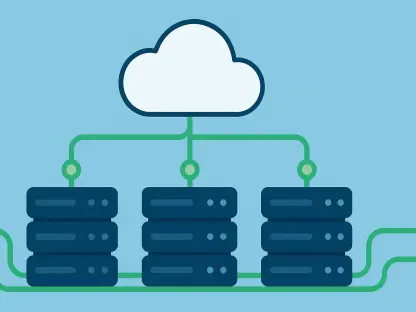
Meta’s announcement of a $9 billion data center in Canada—their 33rd such facility worldwide—is a clear signal that they are doubling down on an AI-first future. This massive infrastructure project will take at least two years to build, showing that the company is playing a very long and expensive game with our collective data. It suggests that AI won’t just be an optional feature, but the core engine that drives every single interaction on the platform. As they ramp up their capabilities to outperform rivals, the pressure on our traditional notions of data management and privacy will only become more intense and demanding.
What is your forecast for the future of digital likeness and privacy?
I forecast that we are entering a period of intense legal and social restructuring where digital likeness will eventually be treated with the same weight as physical property. As generative tools become more powerful, the current backlash will likely force a total redesign of how platforms harvest data, moving us away from hidden “opt-out” settings toward a mandatory “opt-in” standard. We will see a rise in personalized digital protection tools that act as a barrier between our public posts and AI crawlers, as users demand more than just a “sharing and reuse” toggle. Ultimately, the tension between massive corporate infrastructure growth and individual privacy will culminate in strict new regulations that prioritize human consent over machine learning efficiency.