
Amid the global race to harness the transformative power of artificial intelligence, a critical and often overlooked challenge has emerged: the immense energy demand required to fuel these complex computational systems. As organizations build out next-generation Artificial Intelligence Data Centers (AIDCs), the supporting infrastructure for power and cooling has been pushed to its limits, demanding a fundamental rethinking of design and efficiency. In a powerful acknowledgment of this challenge, Huawei Digital Power was recently honored at the prestigious Asia Cloud & Datacenter Awards 2025 ceremony in Singapore, securing two significant accolades for its pioneering work. The company received the “Sustainability in Design & Build” and “Innovation in Energy Optimization” awards, a strong industry endorsement of its advanced technologies developed to enable a more sustainable and reliable digital future. These honors, presented by the leading industry media publisher w.media, celebrate excellence and aim to catalyze industry-wide innovation across the Asia Pacific digital infrastructure landscape.
The Industry Shift Responding to the AI Boom
The High Density Dilemma in Modern Data Centers
The explosive growth in demand for training and inference of complex AI models has ignited a global boom in the construction of AIDCs, facilities fundamentally different from their predecessors. These next-generation data centers are characterized by two defining traits: extremely high power density and correspondingly high energy consumption. As computational requirements soar, rack power densities are increasing from tens to hundreds of kilowatts, with projections indicating a future where they will exceed one megawatt. This surge in power dramatically increases the number of cables within cabinets and complicates deployment, creating profound new complexities for the underlying power supply and cooling systems that are foundational to AIDC operation. The industry consensus is clear: the challenges posed by high density extend far beyond simply deploying more powerful hardware. Legacy infrastructure is proving incapable of efficiently and reliably supporting the 24/7, uninterrupted operational requirements of modern AI services, necessitating a new generation of high-density, converged, and intelligent solutions.
The paradigm shift driven by artificial intelligence has exposed the limitations of traditional data center infrastructure, which was designed for a world of lower power densities and less intensive computational loads. The sheer heat generated by high-performance processors running continuous AI workloads can overwhelm conventional air-cooling systems, leading to thermal throttling, reduced performance, and even hardware failure. Similarly, conventional power distribution units are not equipped to handle the massive and often fluctuating power draws of AI clusters, leading to inefficiencies, increased physical footprint, and greater risk of downtime. This high-density dilemma places immense pressure on data center operators to find solutions that not only deliver more power but do so sustainably and reliably. The industry is now at a critical juncture where innovation in power and cooling is no longer a secondary consideration but a primary driver of AIDC viability and a key enabler for the continued advancement of artificial intelligence itself, pushing technology providers to develop entirely new architectures.
Huawei’s End to End Strategy
In response to this pressing industry-wide challenge, Huawei has focused its innovation on creating comprehensive, end-to-end solutions that address the power and thermal management lifecycle in its entirety. The company’s strategic goal is to build an integrated power supply chain and an equally integrated thermal management solution, moving away from siloed components toward a holistic, system-level architecture. This approach recognizes that power delivery and heat dissipation are deeply interconnected and that optimizing one without considering the other yields diminishing returns. By engineering a cohesive ecosystem where every element is designed to work in concert, Huawei aims to enable universally accessible power and flawlessly smooth heat dissipation, creating a stable and efficient environment for high-performance computing. This end-to-end philosophy is crucial for achieving the levels of performance, reliability, and sustainability that the rapidly expanding AIDC landscape demands, transforming the foundational infrastructure from a collection of parts into a single, intelligent organism.
The ultimate aim of this integrated strategy is to achieve a critical industry metric: maximizing the computational output per unit of energy, often measured in “tokens per watt.” This metric represents the new frontier of data center efficiency, shifting the focus from simply minimizing power consumption to maximizing the value derived from every watt consumed. By creating a seamless link from the power grid to the individual chip, Huawei’s solutions are designed to minimize energy loss at every stage of delivery and conversion. Concurrently, the integrated thermal management systems ensure that processors can operate at their optimal temperature, preventing performance degradation and maximizing computational throughput. Achieving a higher “tokens per watt” ratio not only reduces operational costs and environmental impact but also enables organizations to train more complex models and deploy AI services at a larger scale. This focus on maximizing computational value is central to Huawei’s mission of building a robust foundation for the digital era.
Award Winning Innovation The PowerPOD Solution
A New Benchmark for Power Supply and Distribution
Huawei’s PowerPOD solution, recipient of the “Sustainability in Design & Build” award, stands as a testament to its innovative approach to power systems in the AI era. The solution directly confronts the escalating power density of modern data centers, which is rapidly increasing and creating unprecedented challenges for traditional power distribution architectures. The surge in power dramatically increases cabling complexity and complicates deployment, necessitating a new generation of high-density, converged systems. The PowerPOD fundamentally redesigns the power supply and distribution link, creating a hyper-converged system engineered to continuously advance AIDC power systems toward higher density, efficiency, and reliability. This innovative design meets the exceptionally high demands of 24/7, uninterrupted AI training and inference services, which require not just immense power but also unwavering stability and energy efficiency to be economically and environmentally viable for large-scale deployment.
The architecture of the PowerPOD is specifically tailored to the unique demands of modern AIDCs. By converging multiple power components into a single, integrated system, it drastically reduces the physical footprint required for power distribution. This allows for a configuration where a single PowerPOD can service an entire aisle or even a containerized data center module, a design that substantially improves the Space Usage Effectiveness (SUE) of the facility. A smaller footprint for power infrastructure means more available space for revenue-generating IT equipment, a critical advantage in high-cost data center environments. Furthermore, the converged design simplifies the entire power chain, reducing the number of potential failure points and streamlining the flow of energy from the utility input to the server rack. This inherent simplicity, combined with advanced engineering, allows the PowerPOD to establish new benchmarks for reliable, agile, and sustainable power delivery in the most demanding computational environments.
Engineering for Speed Efficiency and Reliability
A key innovation driving the PowerPOD’s success lies in its manufacturing and deployment methodology, which Huawei describes as “engineering productization and product modularization.” This strategy enables an estimated 90% of the onsite construction and integration work to be completed in a controlled factory environment. This prefabrication approach significantly shortens the time to market (TTM), a critical advantage for businesses racing to deploy AI services and capture market share. By moving complex integration tasks off-site, Huawei mitigates the uncertainties and potential quality issues associated with traditional onsite construction, leading to higher delivery quality and efficiency. This modular, productized approach transforms the process of building data center power infrastructure from a complex construction project into a streamlined assembly of factory-tested components, ensuring consistency, predictability, and rapid deployment cycles that align with the fast-paced nature of the AI industry.
To bolster the reliability essential for non-stop AI operations, the PowerPOD incorporates AI-based prediction technology to enable full-link, visualized management. This intelligent system provides proactive functions that were previously unavailable, such as low-load high-temperature warnings for copper busbars and predictive analytics on the service life of vulnerable components like fans and capacitors. This capability marks a crucial shift in maintenance philosophy, moving from a passive, reactive model—where technicians respond to failures after they occur—to a proactive, predictive one, where potential issues are identified and addressed before they can cause downtime. This intelligent oversight significantly enhances overall system uptime and reliability. The real-world impact of the PowerPOD is already evident in its widespread deployment across advanced facilities in Malaysia, Finland, and Norway, where it is helping to establish new standards for dependable, agile, and sustainable AIDC operations.
The Future of Cooling The Thermal Management Unit TMU
A Leap to Liquid Cooling
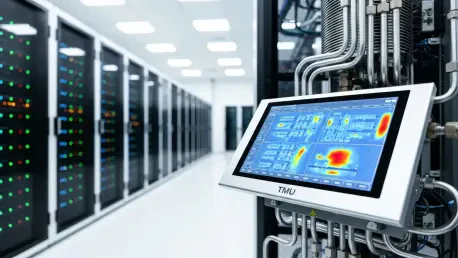
As rack power density in AIDCs continues to climb, traditional air cooling technologies are proving incapable of providing the efficient heat dissipation required by high-performance computing hardware. This industry trend has elevated liquid cooling from an optional, niche technology to an essential, mainstream solution for managing the immense thermal loads generated by AI processors. Recognizing this shift, Huawei completely redesigned the cooling link to develop the Thermal Management Unit (TMU), a solution that earned the “Innovation in Energy Optimization” award. The company describes this as a technological leap from a “smart cooling heart” to a “heart + brain.” The TMU not only performs the core functions of heat exchange and flow distribution—the system’s “heart”—but also acts as the “smart cooling brain,” intelligently orchestrating the entire process to ensure the liquid cooling system operates with maximum efficiency and reliability, adapting in real time to the dynamic workloads characteristic of AI applications.
This dual-function “heart + brain” architecture represents a significant advancement in data center thermal management. In its role as the “heart,” the TMU circulates coolant with precision, directly targeting heat-generating components to ensure they remain within optimal operating temperatures. However, its function as the “brain” is what truly sets it apart. The TMU integrates a suite of sensors and intelligent control algorithms that continuously monitor thermal conditions across the entire IT deployment. It dynamically adjusts coolant flow rates, temperature, and distribution based on the real-time computational load, ensuring that cooling resources are allocated precisely where and when they are needed. This intelligent orchestration prevents overcooling, which wastes energy, and undercooling, which risks performance throttling and hardware damage. By holistically managing the thermal environment, the TMU moves beyond simple heat removal to become an active, intelligent participant in maximizing the overall performance and efficiency of the AIDC.
Uninterrupted Performance and Simplified Maintenance
The TMU’s superior energy efficiency, which was central to its award recognition, is achieved through several key engineering features. It utilizes highly efficient plate heat exchangers that reduce the approach temperature—the critical difference between the primary and secondary loop coolants—to as low as 3°C, a figure cited as the lowest in the industry. A lower approach temperature directly translates to higher heat exchange efficiency and lower energy consumption for the entire cooling system. This physical efficiency is further augmented by the iCooling intelligent optimization algorithm and intelligent teamwork control. These systems allow multiple TMU units to work in concert, dynamically allocating cooling capacity to match fluctuating IT loads with precision. This intelligent control achieves optimal energy performance not just at the component level but across the entire cooling infrastructure, minimizing wasted energy and reducing the facility’s overall Power Usage Effectiveness (PUE).
To ensure the uninterrupted operation critical for AI services, the TMU features the industry’s first dual AC/DC power supply architecture. This design enables seamless, instantaneous switching between primary and backup power sources, guaranteeing zero interruption to the cooling process even during a power anomaly. Reliability was further enhanced by a 2N redundancy design for all key components, which also supports hot-swappable maintenance that can be completed in under one minute, ensuring a single component failure does not impact the entire system. From an operational standpoint, the TMU simplifies maintenance with a one-click self-check feature for its expansion tank, eliminating disruptive shutdown-based inspections. In accepting the awards, Steve Kim, President of Data Center Facility & Critical Power Marketing, Sales and Services at Huawei Digital Power, expressed that the industry’s endorsement fueled the company’s drive to continue innovating and leading with cutting-edge technologies that enable each watt of power to produce more computational value.