
When a single misconfigured network health monitor in a northern Virginia data center can silence global commerce, the myth of the invincible cloud finally dissolves into the reality of systemic fragility. The transition from cloud adoption as a novelty to its current status as an essential utility has rewritten the rules of the global digital economy. Today, the internet is not a decentralized web but a collection of dependencies anchored to a handful of massive provider regions. For the modern enterprise, the cloud is no longer a choice but the very air the business breathes, making any contamination of that air a life-threatening event.
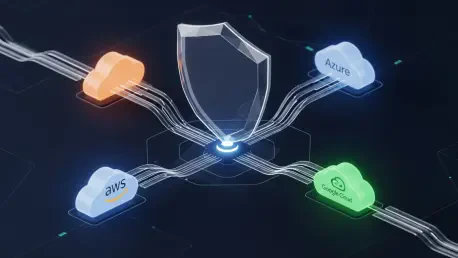
The dominance of major hyperscalers, specifically Amazon Web Services, Microsoft Azure, and Google Cloud Platform, has created a landscape where high-performance computing is accessible but deeply centralized. This oligopoly offers unprecedented scale and innovation, yet it simultaneously introduces a profound concentration risk. When a core control plane or an identity management system within one of these giants falters, the ripple effect is felt by millions of downstream users, from independent developers to multinational banks. The convenience of these platforms has inadvertently created a single point of failure for a significant portion of the global GDP.
Understanding how failures propagate requires a clear view of the cloud service segments, including Infrastructure as a Service, Platform as a Service, and Software as a Service. In a traditional IaaS model, the enterprise retains more control over its recovery, whereas PaaS and SaaS models often leave the business at the mercy of the provider’s internal restoration timelines. As enterprise architecture becomes more abstract, the visibility into the underlying health of the system decreases. This lack of transparency means that when a region goes dark, many organizations are left in a state of reactive paralysis, waiting for a status dashboard to turn green.
Emerging Trends and the Data Behind Cloud Instability
The normalization of infrastructure-layer failures has signaled the end of the always-on cloud myth that defined the previous decade. Businesses have realized that even the most advanced data centers are susceptible to thermal events, configuration errors, and physical hardware degradation. Consequently, the industry is seeing a shift in strategic planning where failure is not viewed as an anomaly but as a scheduled certainty. This change in perspective is forcing a departure from single-cloud reliance toward sophisticated resilience-first strategies that prioritize continuity over pure performance.
Moreover, the evolution of consumer expectations regarding uptime has put immense pressure on brand reputation during service interruptions. In the current market, a thirty-minute outage is no longer a minor technical glitch; it is a public relations crisis that plays out in real time on social media. Consumers have become less tolerant of excuses regarding third-party provider issues, holding the brand itself accountable for the stability of its digital storefront. This heightened accountability is driving companies to rethink their commitment to provider-agnostic architectures that can survive the total loss of a primary vendor.
Shifting Architectural Priorities and Modern Business Behaviors
Modern architectural priorities are moving away from the simplicity of a single-vendor ecosystem toward the robustness of a distributed model. Decision-makers are increasingly willing to trade some degree of integration ease for the security of knowing that a regional failure will not result in a total business blackout. This behavior shift is evident in the rising adoption of containerization and microservices, which allow applications to be more portable across different environments. By decoupling the application logic from the underlying cloud provider, businesses are regaining the leverage they once lost.
Quantifying the Financial Impact and Growth of Recovery Markets
Analyzing the direct revenue loss for high-volume enterprises reveals a staggering reality, with some sectors losing millions of dollars for every hour of regional downtime. For a global retailer or a financial service provider, the cost of an outage includes not just lost transactions, but also the long-term impact of customer churn and legal liabilities. These financial stakes have fueled massive growth in the disaster-recovery-as-a-service market, which is projected to expand significantly from 2026 to 2028. Organizations are now allocating a larger portion of their IT budgets to automated failover mechanisms and secondary standby environments.
To evaluate the effectiveness of these investments, enterprises are adopting more rigorous performance indicators centered on recovery time and recovery point objectives. The goal is no longer just to get back online, but to do so with zero data loss and minimal latency. This data-driven approach to resilience allows companies to calculate the exact return on investment for their redundancy strategies. It turns what was once an insurance cost into a competitive advantage, as the most reliable platform in a crowded market often captures the most loyal customer base.
Navigating the Technical and Operational Hurdles of Cloud Redundancy
Addressing the management complexity introduced by heterogeneous environments remains one of the primary obstacles to achieving true cloud redundancy. Operating across multiple providers means navigating different APIs, security protocols, and monitoring tools, which can lead to a fragmented view of the overall system health. This complexity often acts as a deterrent, leading many organizations to stay within the comfortable but dangerous confines of a single-provider ecosystem. Without a unified management layer, the risk of human error during a cross-cloud failover increases exponentially.
Furthermore, a significant skills gap continues to challenge enterprises attempting to maintain expertise across diverse provider operational models. Finding engineers who are equally proficient in the nuances of AWS, Azure, and Google Cloud is a difficult and expensive task. This shortage of specialized talent means that even if the technology for redundancy exists, the human capacity to execute it effectively might be lacking. Organizations are forced to invest heavily in continuous training or rely on external consultants, both of which add to the operational overhead of a multicloud strategy.
The financial trade-off is another hurdle, as companies must balance licensing costs and the overhead of maintaining secondary sites against the potential price of downtime. In some cases, the cost of a fully redundant, always-active secondary environment can nearly double the infrastructure budget. However, when compared to the catastrophic loss of revenue and brand equity during a prolonged outage, the investment begins to look more like a necessary protection. Finding the right balance requires a granular understanding of which workloads are mission-critical and which can afford a slower recovery path.
The Regulatory Environment and the Illusion of Service Level Agreements
Examining the limitations of traditional service level agreements reveals a frustrating gap between contractual promises and business realities. Most cloud providers offer service credits as the sole remedy for an outage, which typically only covers a fraction of the actual damages sustained by the business. These credits do nothing to compensate for lost sales, damaged reputations, or the man-hours spent on incident response. This discrepancy highlights the fact that an SLA is a financial instrument for the provider rather than a true guarantee of reliability for the customer.
In response to these risks, data sovereignty laws and regional regulations are exerting more influence on cloud storage and backup strategies. Governments are increasingly requiring that critical data remain within specific borders and be accessible even if a global provider experiences a widespread failure. This regulatory pressure is forcing companies to look toward local providers or private cloud solutions as a way to ensure compliance and availability. The intersection of law and technology is making it clear that availability is no longer just a technical metric; it is a legal requirement in many jurisdictions.
Compliance standards for mission-critical industries, including finance and healthcare, are also raising the bar for what constitutes an acceptable disaster recovery plan. Regulators in these sectors now demand proof of regular, successful failover tests and documented evidence of redundancy across different geographic regions. This shift treats availability as a core pillar of information security, moving it into the same category of importance as data confidentiality and integrity. Organizations that fail to meet these standards risk not only technical failure but also heavy fines and the loss of operating licenses.
Future-Proofing Infrastructure Against Impending Disruption
The rise of AI-driven proactive monitoring is beginning to transform how businesses approach automated remediation for cloud failures. By analyzing vast amounts of telemetry data in real time, these systems can identify the early warning signs of an impending regional disruption before it occurs. This allow for the automated shifting of workloads to a healthy region or provider without human intervention. This predictive approach moves the industry away from reactive fire-fighting and toward a model of continuous, self-healing infrastructure.
Additionally, emerging decentralized infrastructure and edge computing may offer a way to mitigate the risks associated with central provider failures. By moving processing power closer to the end-user and distributing it across a wider network of smaller nodes, the impact of a single data center outage is greatly reduced. While this technology is still maturing, it represents a significant departure from the centralized hyperscale model that has dominated for the last decade. As edge capabilities expand, the reliance on massive, centralized cloud regions will likely diminish, leading to a more resilient internet architecture.
Global economic conditions and shifting energy demands are also playing a larger role in data center stability and power reliability. As the demand for AI processing grows, the strain on local power grids has increased, making physical infrastructure more vulnerable to local utility failures. Forward-looking organizations are investigating providers that invest in independent power generation and advanced cooling technologies to insulate themselves from these external shocks. The next generation of cloud services will likely be defined by its ability to remain portable and agnostic, utilizing containerization to move workloads seamlessly across a landscape of increasingly diverse and unpredictable providers.
Strategic Recommendations for Long-Term Digital Continuity
The landscape of digital infrastructure shifted away from blind faith in external providers toward a model of self-reliance and strategic redundancy. Leaders who recognized the vulnerability of centralized platforms adopted a more rigorous approach to architectural integrity. This evolution transformed resilience from a secondary technical concern into a cornerstone of corporate governance and operational security. Organizations successfully navigated these challenges by conducting comprehensive dependency audits to identify undocumented single points of failure that previously threatened their stability.
The implementation of hybrid architectures became a standard method for safeguarding mission-critical workloads on private, controlled infrastructure. By maintaining a footprint outside of the public cloud, businesses ensured that their most vital operations remained insulated from hyperscaler disruptions. This strategy did not just prevent downtime; it also provided a level of data control that was previously unattainable. The move toward hybrid models allowed for a more nuanced distribution of risk, where the cloud was used for its elasticity while the private core provided the necessary foundation of reliability.
Finally, the establishment of rigorous disaster-recovery testing protocols tailored specifically for cloud-layer outages replaced the outdated site-failure drills of the past. Companies that thrived in this era treated these tests as mandatory business exercises rather than optional IT tasks. This proactive culture of testing ensured that when real-world failures occurred, the response was measured, automated, and effective. The transition toward this more resilient model ultimately strengthened the entire digital economy, as businesses were no longer the passive victims of a provider’s misfortune but the active masters of their own continuity.